
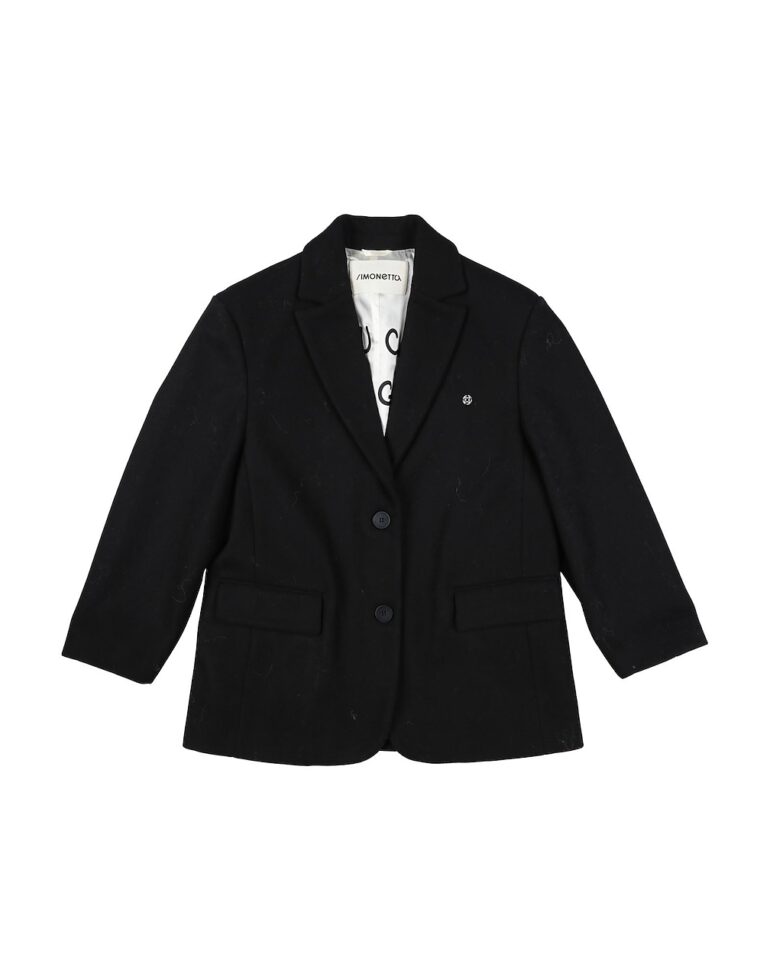
At age thirteen, Herno Kids is stepping outside the framework in which the line has grown. While the age might seem playful for a children’s collection, the change is primarily industrial: for the first time, Herno has agreed to entrust its junior line to an external partner. This handover raises a specific question: how can a brand let a specialist take the reins without losing its own signature style? With Simonetta Group, the Lesa-based brand has chosen to distinguish between two areas of expertise: that of a brand and that of children’s clothing. Their first joint collection is expected for Fall/Winter 2027–2028.
A brand identity alone is not enough to create a children’s clothing line
The most interesting aspect of this agreement is not the addition of another name to the Simonetta Group’s portfolio. It lies in what Herno recognizes by entrusting its line to the group: developing a children’s collection requires a specific set of skills. The brand already has its own identity, a history in outerwear, and thirteen years of experience with Herno Kids. However, it believes that another player can now help this business grow even further.
Claudio Marenzi, president of Herno, describes the decision to bring in a specialist as a way to open up new possibilities for the line. In his view, growth goes hand in hand with product loyalty. Simonetta’s expertise in children’s fashion should enable Herno Kids to better assert its personality, rather than blending it into an undifferentiated junior offering. The partner is chosen for what it does well, but also for its ability to work while respecting an existing design language.
Nuance matters. Herno is not launching a children’s collection from scratch, nor is it merely seeking to attach its name to a new category. The goal is to take over an already established business—with all the identity it carries—and then reshape the conditions for its growth. The challenge, therefore, will be less about creating a surprise than about making this continuity productive.
Simonetta, a specialist well-versed in luxury brands
Etro, Pucci, Missoni, Stella McCartney: The Simonetta Group already works with several international luxury brands. This list sheds light on the choice of Herno. The Italian group brings not only expertise in the high-end children’s segment but also experience collaborating with distinct brands. Welcoming Herno Kids adds a new brand to this portfolio, each with its own expectations.
For Niccolò Matteo Monicelli, CEO of Simonetta Group, the common ground lies particularly in the emphasis on quality and the craftsmanship involved in working with materials. He also emphasizes a shared vision for product design. These points of convergence give meaning to the partnership: the stated ambition is to leverage the group’s expertise without compromising Herno’s identity. International expansion is among the objectives, but it is tied to this requirement for consistency.
Simonetta brings experience spanning collection development, manufacturing, and distribution. The announced multi-year licensing agreement covers the development and production of Herno Kids. This distinction is worth noting: the scope of the partner’s expertise alone does not define every aspect of the contract. It does, however, explain why Herno sees this partnership as a foundation for the next phase of its brand.
Ages 4 to 14: A Target Market to Bring to Life
The collection is aimed at children ages 4–14 and also includes a selection for newborns. This scope gives the venture a concrete dimension. Under a single brand name, Herno Kids brings together several childhood age groups, along with a line designed for toddlers. The partner’s work must serve this entire range, not just a general image of the brand in a junior version.
This is where Simonetta’s specialization really comes into its own. The stated challenge is to develop a collection faithful to Herno’s design language across the entire line. The statements from both executives align on this point: the group’s expertise in children’s fashion must be put to work for the brand. Neither Marenzi nor Monicelli suggests an aesthetic departure. Instead, both emphasize ways to reinforce the brand’s identity and expand its reach.

For now, no description of future pieces accompanies the announcement. It would therefore be premature to interpret this agreement as a promise of a different silhouette or a wardrobe expanded to include specific new categories. The one certain change concerns the organizational structure that will give rise to the collections. How this will translate into the garments remains to be seen.
For Herno, growth no longer means doing everything in-house
For thirteen years, Herno Kids was developed within the Lesa-based company. The decision to license the line externally marks a departure from this approach, not from the line’s existence. This history of in-house development lends the handover a special significance: Herno is entrusting a partner with the development of a project that it itself launched and nurtured over time.
The decision is part of a broader evolution at the company. For several years now, Herno has been expanding its offerings beyond outerwear, its traditional territory. Its wardrobe and product categories have gradually grown. In this context, the children’s line raises an organizational question: should each business unit continue to grow using its own resources, or should the company opt for external expertise in certain areas? With Simonetta, Herno has chosen the latter path.
In Claudio Marenzi’s view, this choice is by no means a step backward. On the contrary, the president sees it as a way to provide Herno Kids with the conditions necessary for its growth. The international ambition is clear. However, according to the information provided, it is not accompanied by specific numerical targets or named markets. At this stage, the agreement sets a direction and identifies the partner responsible for helping the line follow it.
Fall-Winter 2027–2028 as the First Milestone
The multi-year duration of the license ensures this collaboration extends beyond a single season. The first collection, however, will be decisive in understanding what the change in approach brings to the product: the Fall-Winter 2027–2028 collection will inaugurate the new organization. It will allow us to assess the garments themselves, beyond the initial intentions.
Until then, the most concrete detail of this announcement remains the division of roles. Herno brings a line developed over thirteen years and an identity it intends to preserve; Simonetta brings her expertise in children’s wear to guide the brand’s next chapter. The details of the first collection have not yet been revealed. It is there—in the pieces designed for ages 4–14 as well as in the newborn collection—that this handoff will become apparent.