
London is once again establishing itself as the premier testing ground for structural changes in the art world. Beyond traditional exhibitions and seasonal art fairs, one initiative is drawing attention for its commitment to redefining production mechanisms: the Future Art Ecosystems R&D Fellowship. This research and development program, based in the British capital, does more than simply support artistic creation; it questions the viability of the systems surrounding it. By placing figures such as Refik Anadol and Cao Fei at the heart of its jury, the fellowship signals a clear break from academic selection criteria to embrace a resolutely technological and systemic vision.
Art as a Field of Research and Development
The introduction of the term “R&D” into the institutional lexicon of the arts marks a turning point. Traditionally reserved for the industrial and high-tech sectors, this concept of research and development suggests that the artwork is no longer an end in itself, but rather the result of a complex experimental process. The Future Art Ecosystems R&D Fellowship is founded on this conviction: contemporary art today requires infrastructures as sophisticated as those that govern our digital economies. In London, this research fellowship aims to explore the gray areas where creation intersects with engineering, code, and organizational strategy.
The jury’s selection is by no means random. By bringing together professionals who have made data and virtuality their raw material, the fellowship demonstrates its ambition to analyze artistic “ecosystems” from a technical perspective. It is no longer simply a matter of judging aesthetics, but of evaluating a project’s ability to generate new tools, new methods of dissemination, and innovative models of sustainability for culture.
The Perspectives of Refik Anadol and Cao Fei
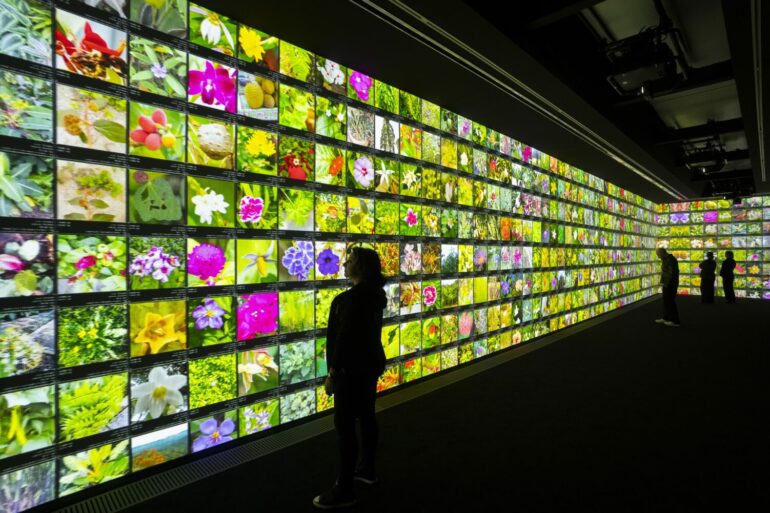
Refik Anadol’s presence among the decision-makers brings rare expertise in manipulating large-scale data flows. His work, which transforms massive archives into moving sculptures, embodies this fusion of pure aesthetics and computational power. His role as a jury member provides a nuanced perspective on how candidates integrate artificial intelligence and data analysis into an approach that goes beyond mere visual gimmicks to touch upon the very structure of knowledge.
Alongside him, Cao Fei offers an essential counterpoint. Known for her explorations of virtual worlds and urban transformations, the Chinese artist questions the place of humans in increasingly dematerialized environments. Her participation on the jury for the Future Art Ecosystems R&D Fellowship underscores the importance of reflecting on digital urbanism and the sociology of virtual spaces. Together, these two artists form a duo capable of deciphering the challenges of tomorrow, navigating the balance between algorithmic rigor and the poetic narrative of new realities.
The Transformation of London’s Structures
The fact that this fellowship is based in London is no coincidence. The city, a historic crossroads of finance and culture, becomes here a testing ground for experimentation in the governance of art. The Future Art Ecosystems program is particularly interested in how institutions can adapt to a form of production that is no longer necessarily material. Issues of ownership, distribution, and preservation in a networked world are central to this fellowship’s focus.
The stated goal is not to produce works intended to be hung on a wall, but to foster the emergence of systems. The term “Ecosystems,” used in the project’s very title, refers to a biological and interconnected vision of culture. Each fellowship participant is invited to conceive of their work as a building block of a larger structure, capable of influencing the way we perceive, fund, and consume art in the era of global digital transformation.
A New Ethic of Support for Creative Work
The very existence of this jury composed of artist-researchers demonstrates that the paradigm of support for artistic creation is shifting. Funding is no longer directed at isolated talent, but rather at the capacity to transform the field. The Future Art Ecosystems R&D Fellowship positions itself as an incubator for strategies. By engaging practitioners who are adept at using the tools of their time, the London-based initiative ensures that the research conducted will have a real impact on the cultural infrastructures of tomorrow.
This research-and-development approach helps break down barriers between disciplines. Looking at the names of Refik Anadol and Cao Fei, it becomes clear that the fellowship seeks projects capable of navigating the realms of architecture, philosophy, data science, and social design. It is this versatility that now defines the artist capable of building a viable ecosystem in an ever-accelerating technological landscape. With this fellowship, London is not content merely to observe the future; it is funding its technical development.
The jury’s task will therefore be to identify avenues not yet charted by the traditional art market. The Future Art Ecosystems R&D Fellowship serves as a unique vantage point for understanding how the next generations of artists will appropriate the tools of industrial research to invent forms that are still unknown to us. The final selection will depend on the ability to propose models that, beyond the image, lay new foundations for contemporary creative thought.