Make Texture a preferred source on Google to support us
Add Texture to GoogleWhen Leslie Townes Hope passed away in 2003 at his home in Toluca Lake, he had just turned 100. For the man the world knew as Bob Hope, his rise to fame was complete: from his arrival in the United States in 1920, leaving his native England behind, to becoming the embodiment of a certain kind of American success. But beyond movie sets and vaudeville stages, it was through stone and the California landscape that the comedian cemented his legacy. Married for 69 years to Dolores Reade, Bob Hope built a real estate empire that, on its own, tells the story of California’s aesthetic evolution in the 20th century, oscillating between the European classicism of the “French Revival” and the futuristic boldness of organic modernism.
Toluca Lake: The Cradle of a Dynasty
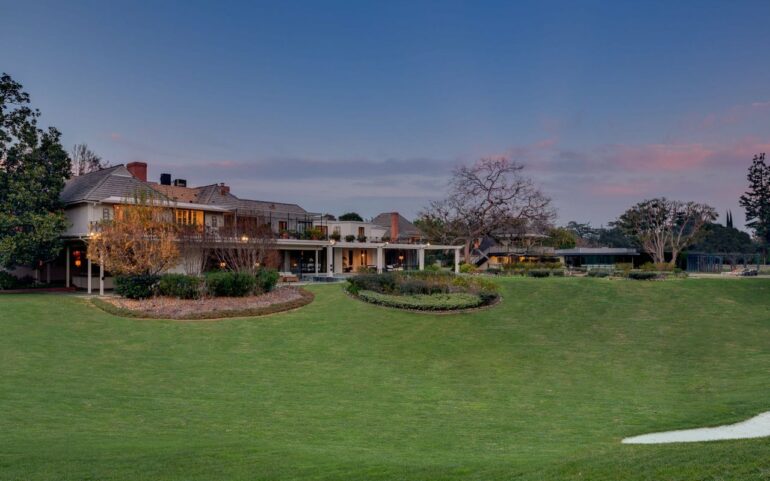
In 1939—the very year the couple adopted their first daughter, Linda—Bob and Dolores Hope purchased a former walnut orchard spanning more than 5 acres in the San Fernando Valley. Located at 10346 Moorpark Street, this estate became the family’s center of gravity, a family that would grow with the arrival of three more children: Anthony, Nora, and Kelly. For Hope, whose sharp wit often masked a keen business sense, real estate was a deep-seated passion. In his memoirs, published in 1990, he even joked about his marriage to Dolores, claiming that no one had ever brought him as much affection, honor, and real estate wealth.
The main residence, completed in 1939 by architect Robert Finkelhor, was built in the French Revival style, which was highly prized by the Hollywood elite seeking to bring a touch of European nobility to the West Coast. But it was in the mid-1950s that the property took on its final form. At the couple’s instigation, John Elgin Woolf, the undisputed master of the “Hollywood Regency” style, redesigned and expanded the property. Together with interior designer Robert Koch Woolf, they created a space where theatricality met domestic comfort. The nearly 1,400-square-meter residence became the setting for receptions where neighbors and close friends—from Bing Crosby to Frank Sinatra—would gather.
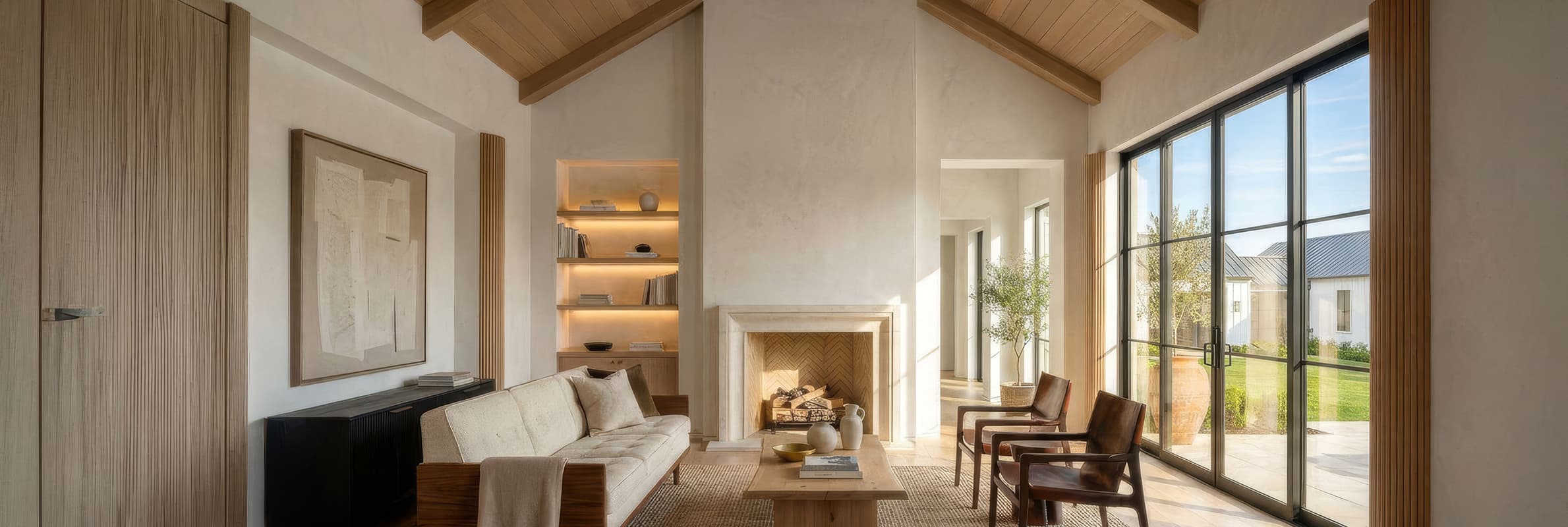
The Toluca Lake estate was not just a home, but a microcosm of leisure. Bob Hope had a private, single-flag golf hole installed there—a sport of which he was the most famous amateur ambassador. The property also includes a separate guest house, staff quarters, a swimming pool, and a tennis court. This historic property, now identified as eligible for the National Register of Historic Places, has seen a dizzying rollercoaster of prices since the death of Dolores Hope in 2011. Initially listed for around $27.5 million, the estate was ultimately purchased in 2018 by businessman Ronald Burkle for $15 million, before being resold in late 2023 for $26 million following a complete renovation.
Palm Springs: John Lautner’s Futurist Manifesto
While Toluca Lake represented stability and classicism, the Palm Springs residence, commissioned in 1969, embodies a radical break with tradition. Perched on Southridge Drive, overlooking the Coachella Valley, this structure is one of the most spectacular works by John Lautner, a former student of Frank Lloyd Wright. With its undulating concrete and copper roof, pierced by a circular skylight, the house evokes at times a volcano, at other times a spaceship perched on a desert rock.

The genesis of this project, however, was marked by chaos. In 1973, just as the house’s framework was in place, a fire sparked by a blowtorch ravaged the structure. Construction was halted for several years, bogged down in legal disputes, before resuming in 1977 and being completed in 1979. But the real conflict was aesthetic. John Lautner, a purist of organic architecture, eventually publicly distanced himself from the final result. The issue: the interior design changes imposed by Dolores Hope, who wanted to soften the austerity of the concrete with more traditional decor, which clashed with the architect’s radical vision.
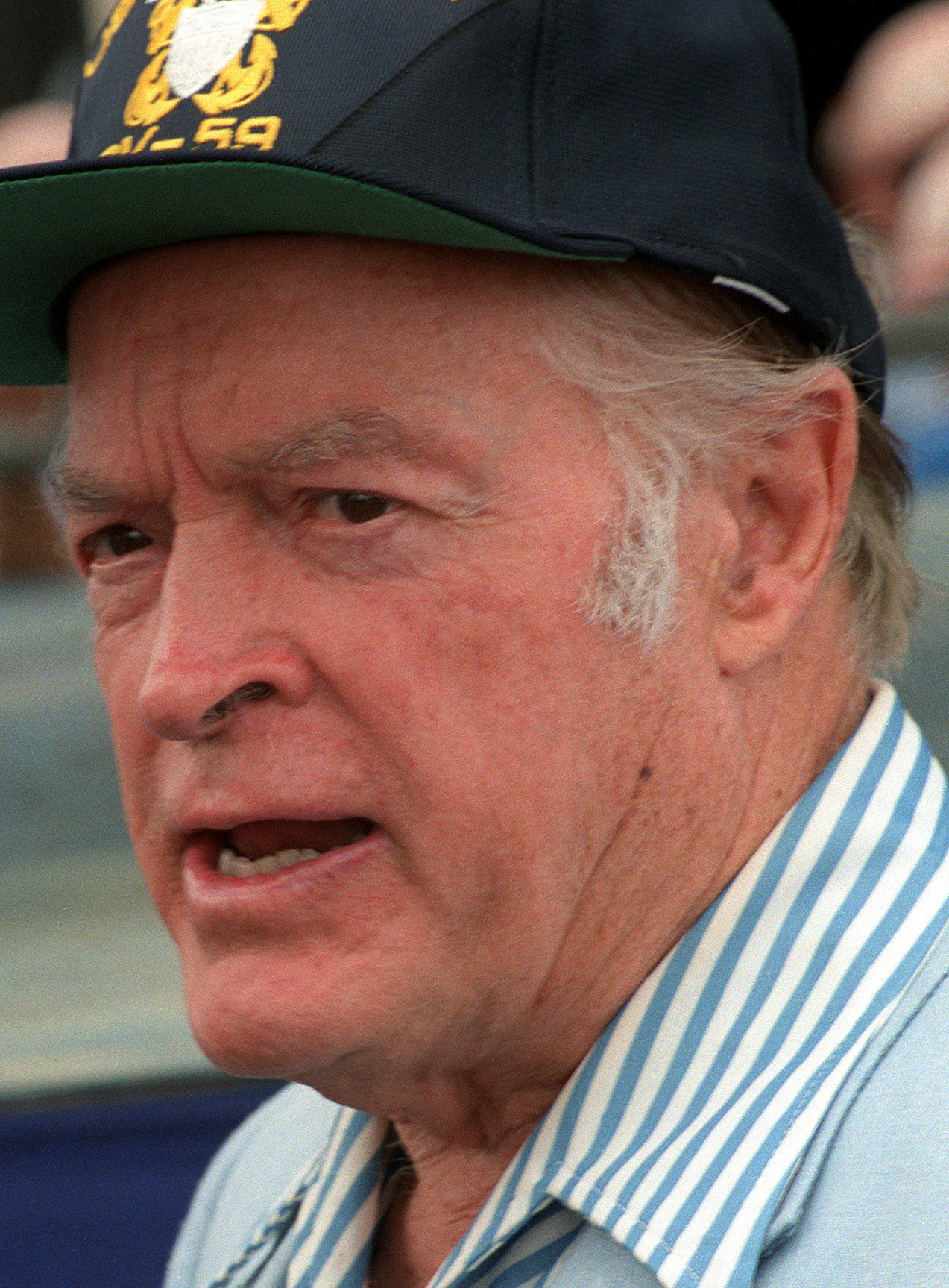
Despite these creative tensions, the “Hope Residence” became a hub of American social and political life. In 1991, it hosted “Bob Hope’s Yellow Ribbon Party,” a national celebration marking the return of American troops. On the terraces overlooking the desert, one could spot former President Gerald Ford and his wife Betty, alongside Brooke Shields and Jimmy Stewart. This blend of worlds—between political power and Hollywood glamour—perfectly captures the Hope family’s aura. In 2013, this feat of modernist engineering was listed on the market for $50 million, a testament to the property’s status as an absolute icon.
A Century of California Heritage
Bob Hope’s real estate history reflects a unique journey: that of a man born in the United Kingdom who, once naturalized as an American citizen, used architecture to establish his social legitimacy. From the history-steeped walls of Toluca Lake to the avant-garde curves of Palm Springs, Hope created spaces that were not merely residences but tools of self-representation.
These estates are now the last remaining witnesses to an era when the stars of Hollywood’s Golden Age shaped California’s urban landscape with monumental ambition. Whether through the Woolfs’ sophisticated “Hollywood Regency” style or Lautner’s sculptural modernism, Bob Hope’s properties remain essential milestones in the history of American design, illustrating the ongoing tension between respect for European traditions and the aspiration toward Californian futurism.