Make Texture a preferred source on Google to support us
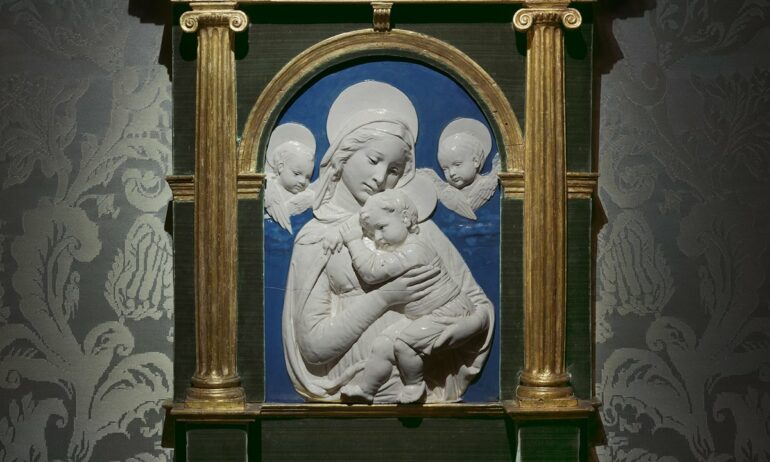
Add Texture to GoogleIn the subdued dim light of the Octagon Room, on the ground floor of The Frick Collection in New York, a glazed terracotta relief has just seen its fate transformed. Long dismissed as a workshop piece, this 43.2 × 30.5 cm panel depicting the Virgin and Child underwent a major reevaluation in November 2026. What was previously described only as a work “from the 16th century or later,” generically attributed to the circle of Andrea della Robbia, is now officially attributed to the Florentine master himself. This shift, which dates the work’s creation to the 1470s or 1480s, is not merely a catalog adjustment; it illustrates how modern technology and patient research can transform our perspective on an object we thought we knew.
Material Analysis in Support of the Master’s Hand
The reclassification of this “Madonna and Child” is the result of a year of rigorous investigation conducted at the Sherman Fairchild Center for Art Conservation, the institution’s new conservation laboratory. Under the direction of Greta Llanes Serrano, a conservator and researcher at the Frick Collection, the work underwent a series of scientific examinations that shed light on its origins. X-ray imaging revealed the internal structures of the buff-colored terracotta, while in-depth chemical analyses dissected the composition of the tin-based glazes—those white and blue enamels so characteristic of the Della Robbia dynasty.
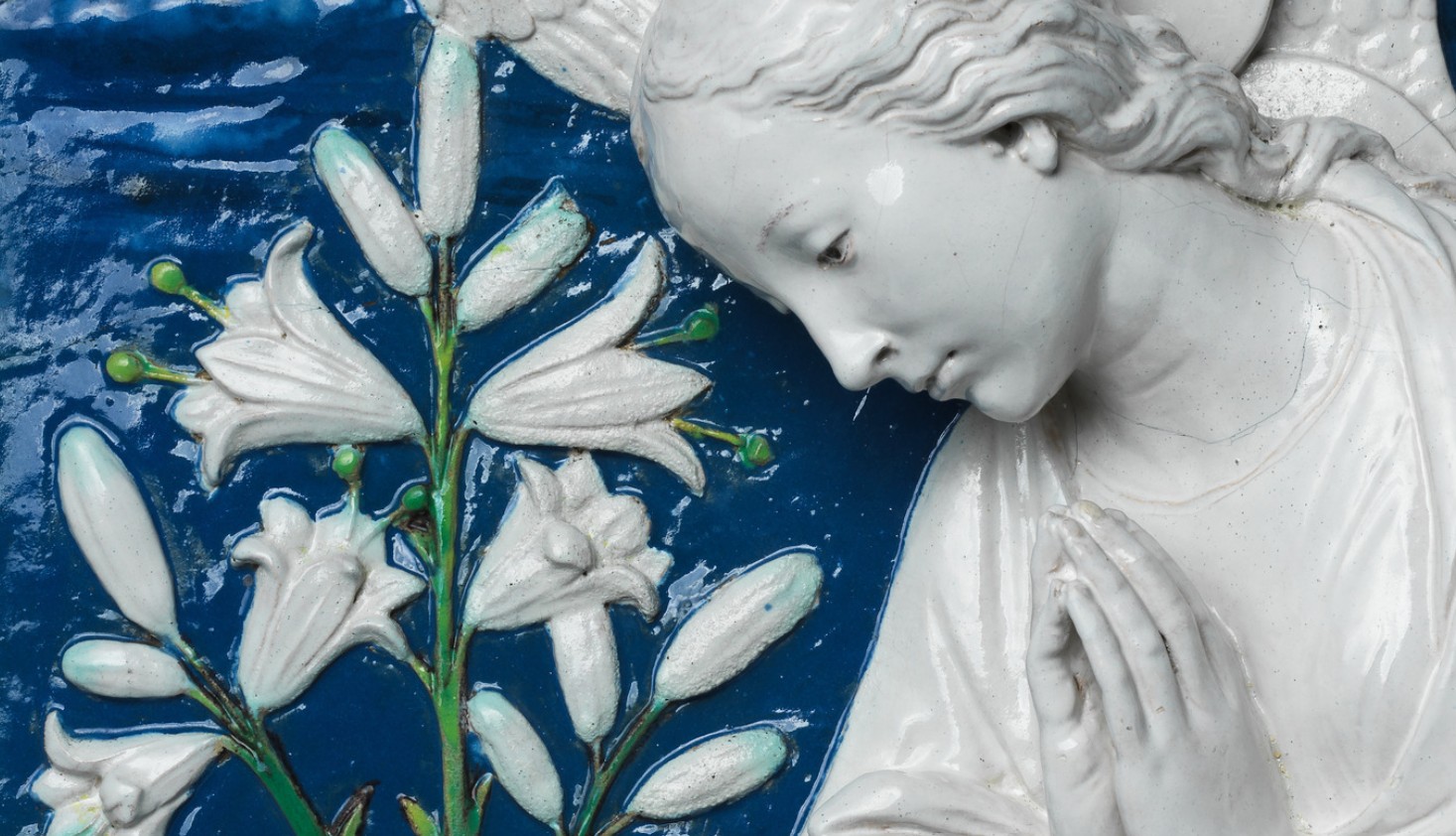
Beyond the chemistry, it was the study of the artist’s technique that convinced the experts. By observing the precision of the modeling and the subtlety of the traces of gilding remaining on the surface, the researchers identified a level of technical mastery incompatible with a simple routine execution by assistants. This material analysis, combined with the opinions of external specialists in the Italian Renaissance, made it possible to attribute the piece to the authentic body of work by Andrea della Robbia (1435–1525), successor to his uncle Luca and a central figure in Florentine sculpture of the Quattrocento.
An Iconography of Private Devotion
The work belongs to a specific iconographic type: that of the “Madonna of Impruneta.” The composition depicts a veiled Virgin, radiating great gentleness, holding the Infant Jesus in a protective embrace, surrounded by cherubs. This small format and the glazed earthenware technique—which combines the durability of terracotta with the almost mineral-like brilliance of the colors—were particularly prized for private devotion in 15th-century Tuscan palaces.
The object is presented in its original frame, a “ceramic on frame” that emphasizes its function as both a domestic devotional object and a work of art. The shades of blue, achieved using cobalt oxide, and the milky white of the tin create the chromatic contrast that has become the Della Robbia family’s global signature. For The Frick Collection, the value of this piece is inestimable: it is the only work by this dynasty of sculptors held in the museum’s permanent collections.

From the shadows of the library to the light of the Octagon Room
The history of this relief within the New York institution is one of belated rediscovery. Acquired in 1922 by Helen Clay Frick, the daughter of founder Henry Clay Frick, the relief remained in private hands for more than sixty years. It was not until 1984 that it officially entered the museum’s public collections through a donation by Miss Frick. Yet, despite this prestigious addition, the relief did not immediately find its place on the walls of the main galleries.
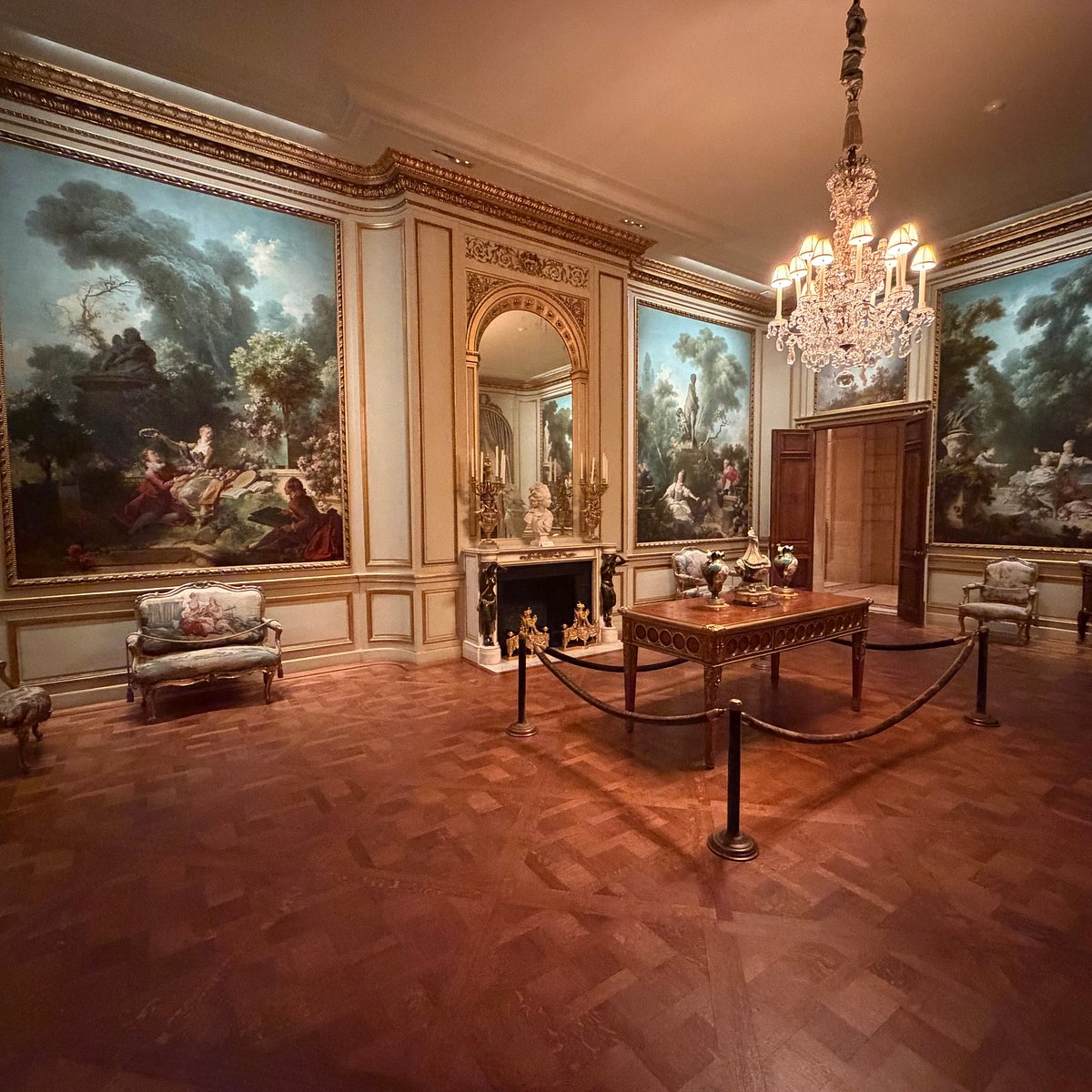
For most of the 20th century, the work remained in storage in a passageway—a hallway adjacent to the main reading room of the Frick Art Research Library. This relative anonymity partly explains why its attribution had not been questioned earlier. Its recent installation in the Octagon Room, at the heart of the tour route, marks its definitive rehabilitation. The transition from the status of “workshop piece” to that of “masterpiece” marks a shift in era: the relief is no longer a late decorative object, but a direct testament to the artistic innovation of Lorenzo the Magnificent’s Florence.
The researcher’s nuanced stance toward the market
While the institution’s official catalog now formally mentions Andrea della Robbia’s name, the research team maintains a strictly scientific caution. Greta Llanes Serrano explains that the institution suggests attribution to Andrea—a nuance that acknowledges the reality of Renaissance workshops. At that time, the master supervised, designed, and finished the pieces, but the work was often collaborative. This intellectual honesty in no way diminishes the heritage value of the discovery.
In terms of the art market, although the museum has not released any figures, such a reattribution radically alters the perception of the work. Works signed by Andrea della Robbia command much higher prices than those produced by his followers or his workshop in the 16th century. By redating the object to the 1470s–1480s rather than the following century, The Frick Collection does more than simply correct a historical error; it does justice to the vision of Helen Clay Frick, who, more than a century ago, recognized the exceptional quality of this enameled relief.