Make Texture a preferred source on Google to support us
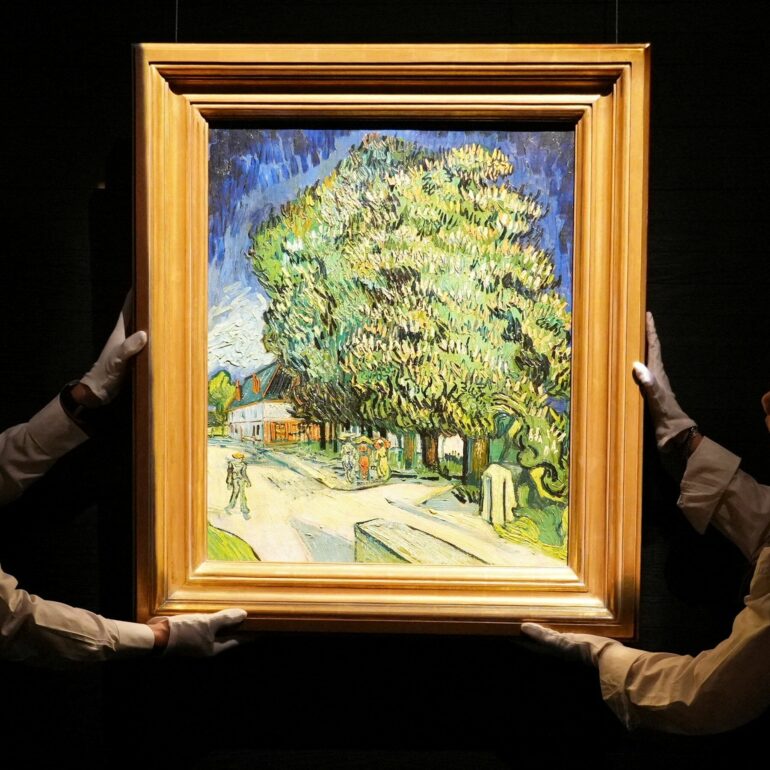
Add Texture to GoogleThe excitement that filled Sotheby’s auction room in New York on Wednesday, November 18, 2026, stemmed not only from the exceptional quality of the work on display, but also from the spectacular resolution of a historic dispute. Just hours before the hammer sealed the fate of Vincent van Gogh’s *Châtaigniers en fleurs*, a confidential agreement put an end to a dispute over the artwork’s provenance that threatened to paralyze one of the most anticipated auctions of the decade. This compromise, described as mutually satisfactory by the parties, allowed the masterpiece to fetch a record price of $180 million, including fees, confirming that clarity of provenance is now the primary driver of value in the ultra-contemporary art market.
The Last Breath of Auvers-sur-Oise
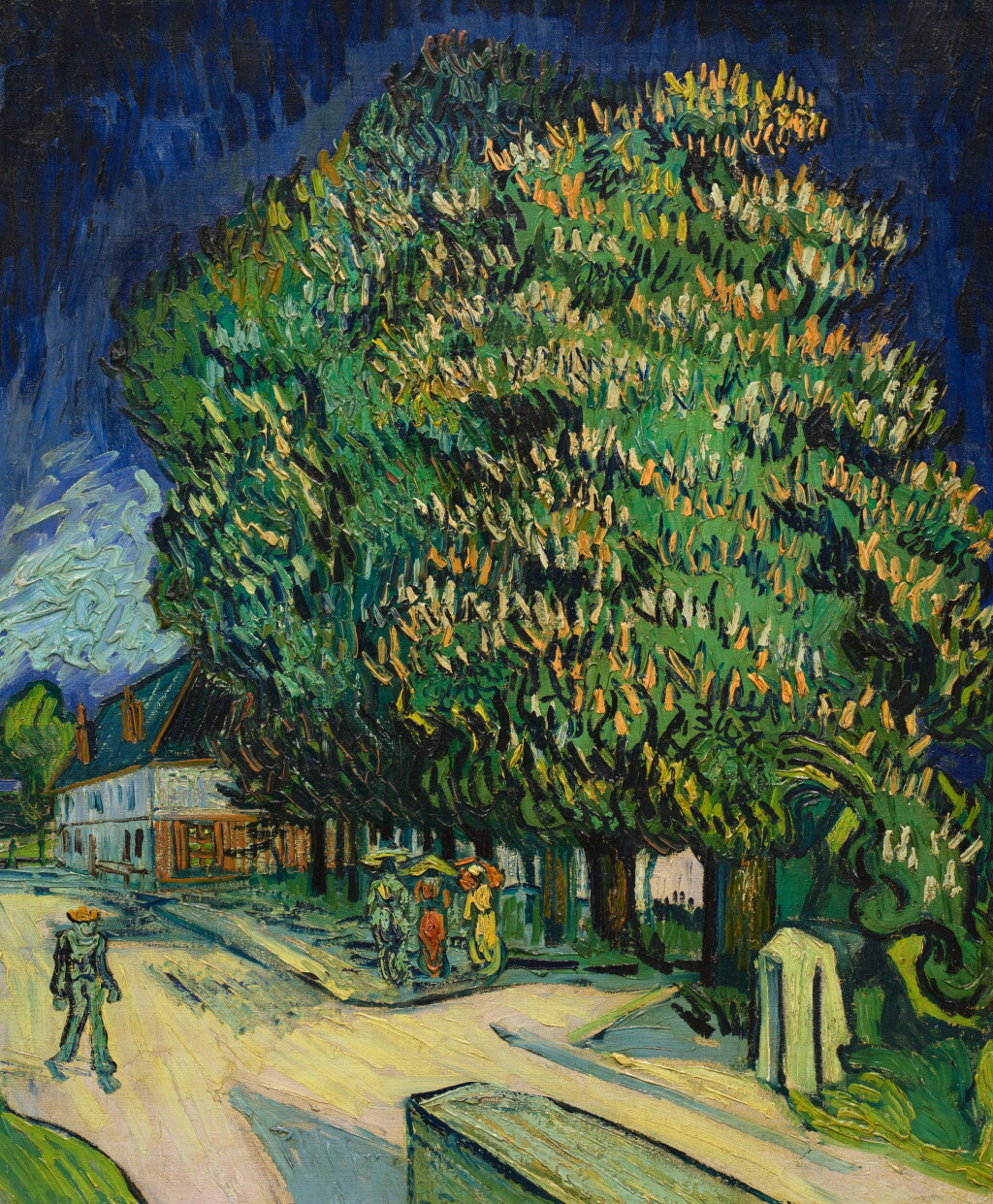
Painted in May 1890, the work belongs to the most intense and tragic period of Vincent van Gogh’s life. Settled in Auvers-sur-Oise, the artist had only two months left before his suicide. In this oil on canvas, he captures horse chestnut trees in full bloom, lining a village street where a few passersby are strolling. It is a mature work, in which the energetic brushstrokes and vibrant palette reflect the quest for serenity of a man at the end of his rope.
The painting’s historical significance explains its financial value, but its journey through the 20th century makes it a major sociological document. Acquired in Paris in 1909 by Samuel Fischer, the founder of the prestigious German publishing house S. Fischer Verlag, and his wife Hedwig, the painting remained at the heart of Berlin’s Jewish intellectual elite until the Nazi regime came to power. Upon Samuel Fischer’s death in 1934, his widow Hedwig inherited the work, and its management fell to her son-in-law, Gottfried Bermann Fischer.
The 1936 Sale: A Dispute at the Heart of the Nazi Era
The turning point came in 1936. While the Fischer family bore the full brunt of anti-Semitic persecution, the boycott of its artists, and the financial stranglehold imposed by the regime, the painting had been consigned to the Paul Cassirer Gallery in Amsterdam as early as 1932 or 1933. In 1936, it was finally sold to the Parisian collectors Henriette and Marcel Kapferer through that same gallery.
It was this specific transaction that triggered the legal action by the legal descendants of the Fischer family. Represented by Berlin attorney Gunnar Schnabel, the heirs asserted that this transfer constituted a “sale under duress.” They cited the context of fleeing Germany and the burden of the “tax on emigrant capital” (Reichsfluchtsteuer) to demand, in mid-November 2026, the withdrawal or suspension of the auction. Their request was based on the spirit of the 1998 Washington Principles, which govern the restitution of works of art looted or sold under duress during the Nazi era.
Sotheby’s Arbitration and the Last-Minute Resolution
Faced with these claims, Sotheby’s initial position was one of technical caution. The auction house argued that its thorough provenance research had not formally established that the 1936 transaction resulted from direct coercion, while acknowledging the inherent complexity of cases from that period.
The painting had been acquired in 1975 by the Argentine collectors Carlos Pedro Blaquier and his wife, Nelly Arrieta de Blaquier. It was the auction of their collection, titled “Legendary: The Blaquier-Arrieta Collection,” that reignited the ghosts of the past. However, on the eve of the sale, Tuesday, November 17, 2026, a decisive turning point occurred. An agreement was signed between the Blaquier-Arrieta family and all the descendants of Hedwig and Samuel Fischer.
Although the financial terms of this agreement remain strictly confidential, a joint statement formalized the reconciliation. The parties acknowledged the work’s complex history and, above all, the suffering endured by the Fischer family under the Third Reich. This moral acknowledgment, backed by a financial settlement, cleared any legal encumbrances on the work’s ownership before it went under the hammer.
A world record set under the watchful eye of an Asian collector
Freed from its legal burden, Lot No. 12 became the subject of a memorable bidding war. Initially estimated at around $150 million, *Châtaigniers en fleurs* was ultimately sold for a total of $180 million. This amount sets a world record for a work by Vincent van Gogh sold at auction.
The buyer is an anonymous Asian private collector who prevailed over other international bidders. This result underscores a major market trend: high-end buyers now demand absolute certainty regarding provenance. The agreement reached at the last minute not only rectified a historical injustice but also protected the work’s value by providing it with the legal “purity” essential for reaching such heights.
The sale of this Van Gogh thus stands as a textbook case in the history of restitution and the art market. It demonstrates that acknowledging the tragedies of the past—far from diminishing the value of masterpieces—actually allows for their full integration into the world’s cultural heritage and ensures their longevity in a market that has become extremely vigilant regarding the ethics of ownership.