Make Texture a preferred source on Google to support us
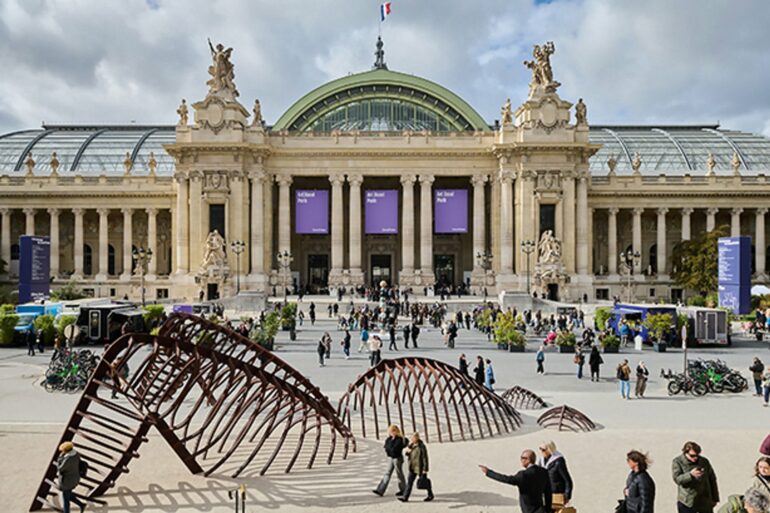
Add Texture to GoogleOn Friday, October 23, 2026, at exactly 7:00 p.m., the doors of the Grand Palais closed on an edition of Art Basel Paris that will go down in history for reasons other than its sales records. For the first time in the history of the prestigious fair, the event was cut short by two days, bringing the curtain down before a weekend that was originally scheduled to run through Sunday, October 25. Officially, the management, led by Karim Crippa, cited security concerns in light of threats of social protests. Unofficially, this premature closure serves as a stark revelation of the divide between an art industry that caters exclusively to the top 0.01% and a civil society from which it seems increasingly intent on shielding itself.
The Grand Palais Fortress
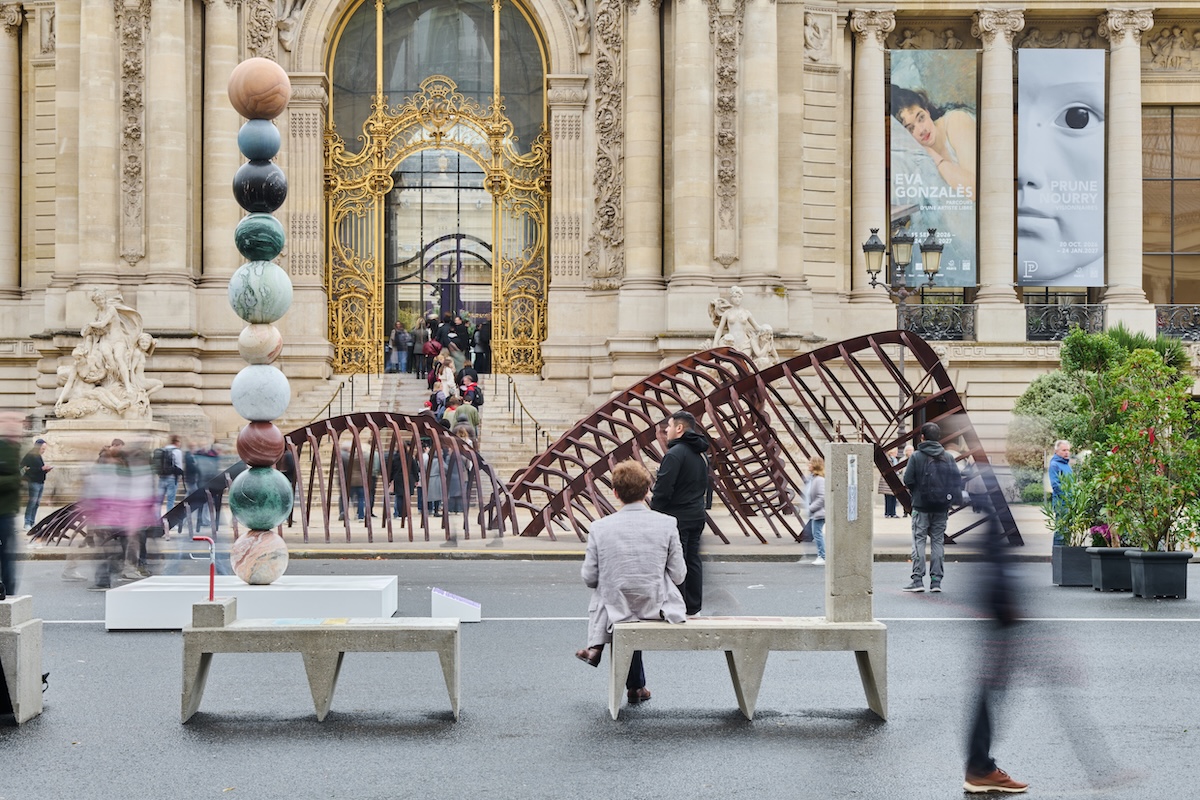
The announcement stunned the art world: a 36% reduction in the fair’s total duration. The reason for this unprecedented decision lies in the call to rally issued by the collective “Pillage de classe.” This activist group planned to “take over” the Grand Palais on Saturday, October 24, identifying the event as a symbol of fiscal opulence disconnected from the rest of the country. As a sign of this unrest, Alicja Kwade’s monumental work, *L’Élévation des Mondes*, which stood 4.5 meters high on Winston-Churchill Avenue, was urgently dismantled on Friday evening with the agreement of the Mennour Gallery.
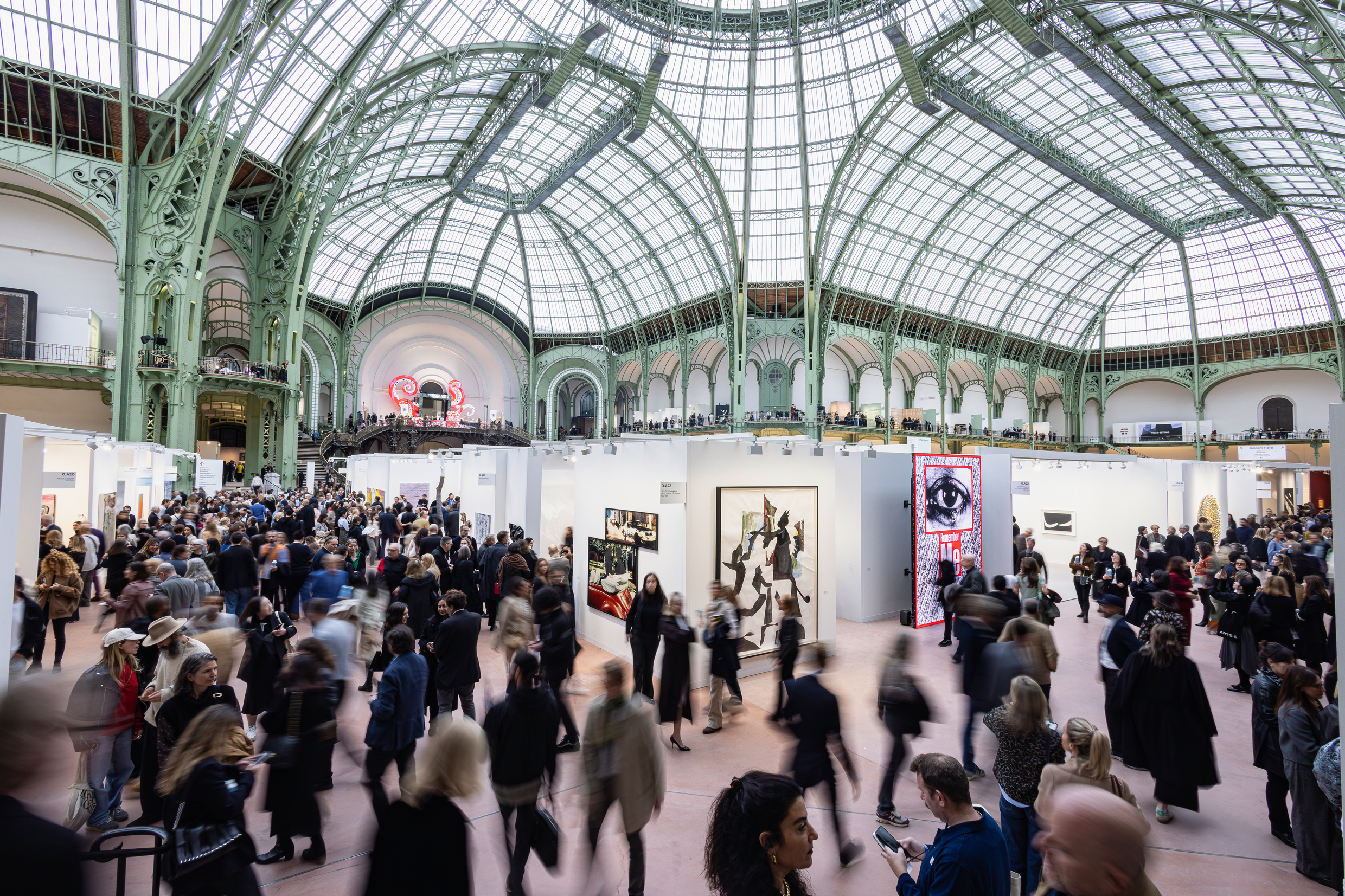
This precautionary move highlights a paradox: while neighboring institutions—such as the Cézanne and Us exhibition housed in the same building, or the seven other Parisian satellite fairs—kept their doors open on Sunday without any major incidents, Art Basel Paris chose to evacuate. This defensive retreat raises the question of the place of the non-VIP public at these major art market events. By shortening the fair, the organizers set aside the three and a half days reserved for major collectors, leaving only a single full day open to the general public.
The Weight of Privileges, the Price of Access
The economics of mega-fairs rest on a financial hierarchy in which the average visitor seems to be nothing more than a bit player. Industry estimates indicate that the booth rental fees paid by galleries generate at least 15 million euros for an event the size of Art Basel Paris. By comparison, revenue from public ticket sales is estimated to be less than 3 million euros. Yet the admission price remains a significant symbolic barrier: €47 for a full-price ticket in October 2026, while in London, the Frieze art fair charged around €56 per ticket.
The real action takes place behind closed doors anyway. During the first two days reserved for invited guests, 306 works found buyers for a reported total of approximately 140 million euros. Among the notable transactions, Gerhard Richter’s painting *Rococo Table* (1965) was sold for $10.5 million by the Hauser & Wirth gallery as soon as the previews opened on Tuesday. The disregard for the public opening days was blatantly evident when that same gallery cleared out most of its booth as early as Thursday—either anticipating the event’s closure or deeming the weekend crowd of little interest for sales—leaving behind only three paintings by Hélène Delprat.
Galleries’ discontent and social unease
This crisis management sparked an outcry within the Professional Committee of Art Galleries. The union denounced the closure as arbitrary and detrimental, pointing out that emerging and mid-sized galleries rely precisely on weekend foot traffic to offset the astronomical costs of exhibiting. To quell the backlash, Art Basel’s management finally granted a 20% discount on booth fees on November 11. But the damage is done: the perception of a “disconnected” fair is growing.
The French macroeconomic landscape in the fall of 2026 does nothing to ease tensions. With an unemployment rate among 15- to 24-year-olds standing at 21.5%, the contrast with the art market’s brazen vitality is striking. Wealth concentration has reached historic highs: in 2024, the combined wealth of France’s 500 richest individuals accounted for 42% of the national GDP, compared to just 6% thirty years earlier. In this context, an art fair that has set up shop at the Grand Palais under a seven-year lease worth 10.6 million euros can no longer ignore the signs of discontent rising from the streets.
The early cancellation of Art Basel Paris could mark a turning point. By prioritizing the security of transactions and an exclusive VIP circle at the expense of public accessibility, the art industry risks further isolating itself. If prestigious art fairs can no longer justify their presence in public spaces other than through stratospheric sales figures, their future editions may take place behind increasingly high barriers, far from an audience they no longer seem willing—or able—to welcome.