Make Texture a preferred source on Google to support us
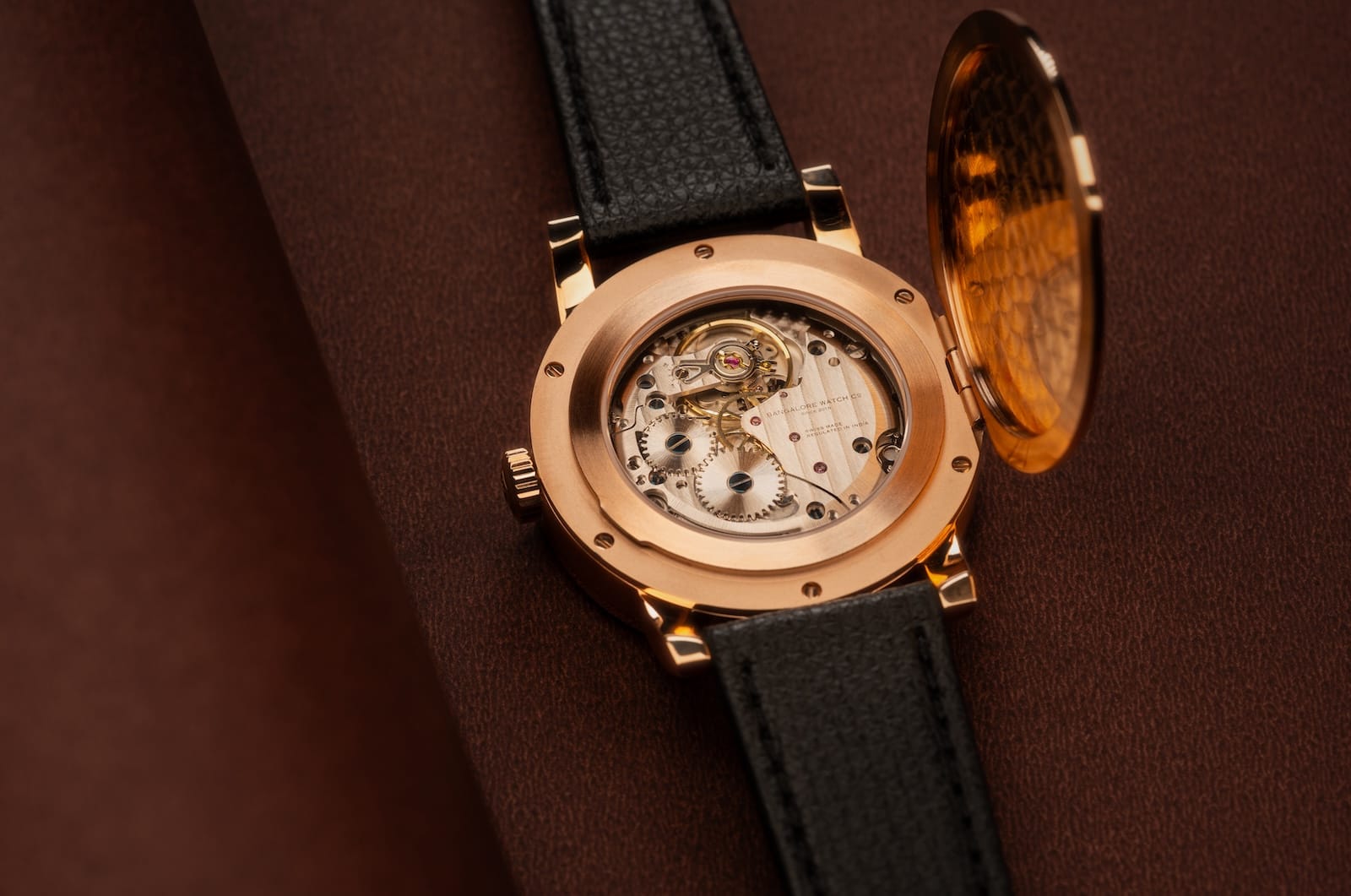
Add Texture to GoogleThe intimacy of a mechanical watch sometimes lies in a detail hidden from view. Resting against the skin, hidden beneath shirt sleeves, a simple hinge can radically transform the purpose of an object. It is precisely on this unique design that Bangalore Watch Company has chosen to build its new model, simply named Epoch. Rather than relying on the exuberance of an overloaded dial, the Indian brand has chosen to revive a discreet tradition, one that has been all but forgotten in mainstream watchmaking: the officer’s-style case. A light press flips open a thin metal flap. This action reveals the watch movement, protected by sapphire crystal, while exposing the inner surface of the case back, carefully decorated with a pearl-grain pattern. This metal reverse side serves more than just an aesthetic purpose. It was designed as a blank page, a pristine space intended to hold a personal engraving. Through this feature, Mercy Amalraj, the brand’s co-founder, champions a concept of the timepiece as a vessel for memories. A few words, a date, or the evocation of a memory can be enshrined there. The appeal of this feature lies in its strict confidentiality: once the watch is fastened on the wrist, the inscription becomes completely invisible again, belonging solely to its wearer.
This foray into the highly codified realm of dress watches represents a notable shift in the company’s strategy. Since its market debut in 2018, the brand had largely built its reputation on robust themes rooted in action. Its successive collections had drawn on narratives linked to aviation, the rigors of space exploration, cricket fields, and outdoor expeditions. With the Epoch, the narrative takes on a more subdued tone. The approach focuses on a refined formal language, directly reconnecting with the spirit of the Renaissance Automatic—the very first model that served as the foundation for the watchmaker’s collection in its early days.
The marriage of a Swiss heart and Indian hands
While the case exudes a classic exterior, the engineering within reflects the geographical reality of contemporary watchmaking. To power the Epoch, the choice fell on a hand-wound movement well known in the industry: the Sellita SW261. Through the sapphire crystal window in the hinged case back, this Swiss caliber reveals finishes that adhere to traditional standards, starting with broad bridges adorned with Côtes de Genève and secured by blued screws. The movement originates from the Swiss valleys, but the watch’s physical assembly is completed elsewhere. The components travel across continents to find their final home in South Asia. Watchmakers take over in the workshops of Bangalore to carry out the complete assembly of the timepiece, as well as its precision adjustment. This information, highlighted in the pages of Europa Star magazine, underscores a perfectly executed division of labor. The origin of the movement and the location of assembly are now two distinct elements in the story of a single watch.
This industrial pragmatism, however, is accompanied by a slight technical uncertainty that needs to be clarified. The actual power reserve of this caliber has been the subject of differing interpretations. In its official documentation, the manufacturer states that the mainspring barrel stores forty-five hours of power reserve. This is a flattering figure, yet it is qualified by publications in specialized magazines such as Monochrome and Dialtone, which agree that this capacity is capped at forty-two hours. Enthusiasts will need to scrutinize early feedback from future shipments to settle this debate among experts. The various sources do, however, agree on the watch’s robustness against the elements, with the case’s water resistance certified up to a depth of fifty meters.
The Demands of Proportions and Light
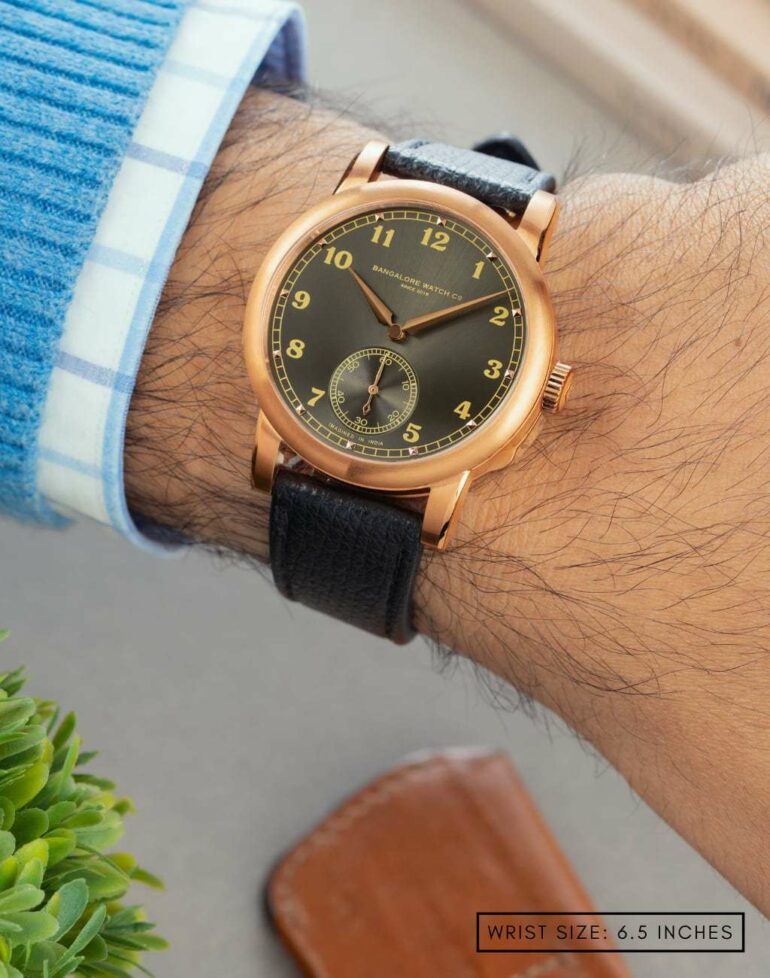
The design of a dress watch allows for no compromises. With its modest diameter of thirty-nine millimeters, the case immediately meets the proportions expected by connoisseurs of understated elegance. The Epoch’s face is available in two distinct aesthetic styles. The Executive version plays on the natural coolness of steel, softened by the shimmer of a champagne-colored dial. In contrast, the Statesman version offers a much warmer feel, combining a rose gold PVD coating with the depth of an anthracite background.

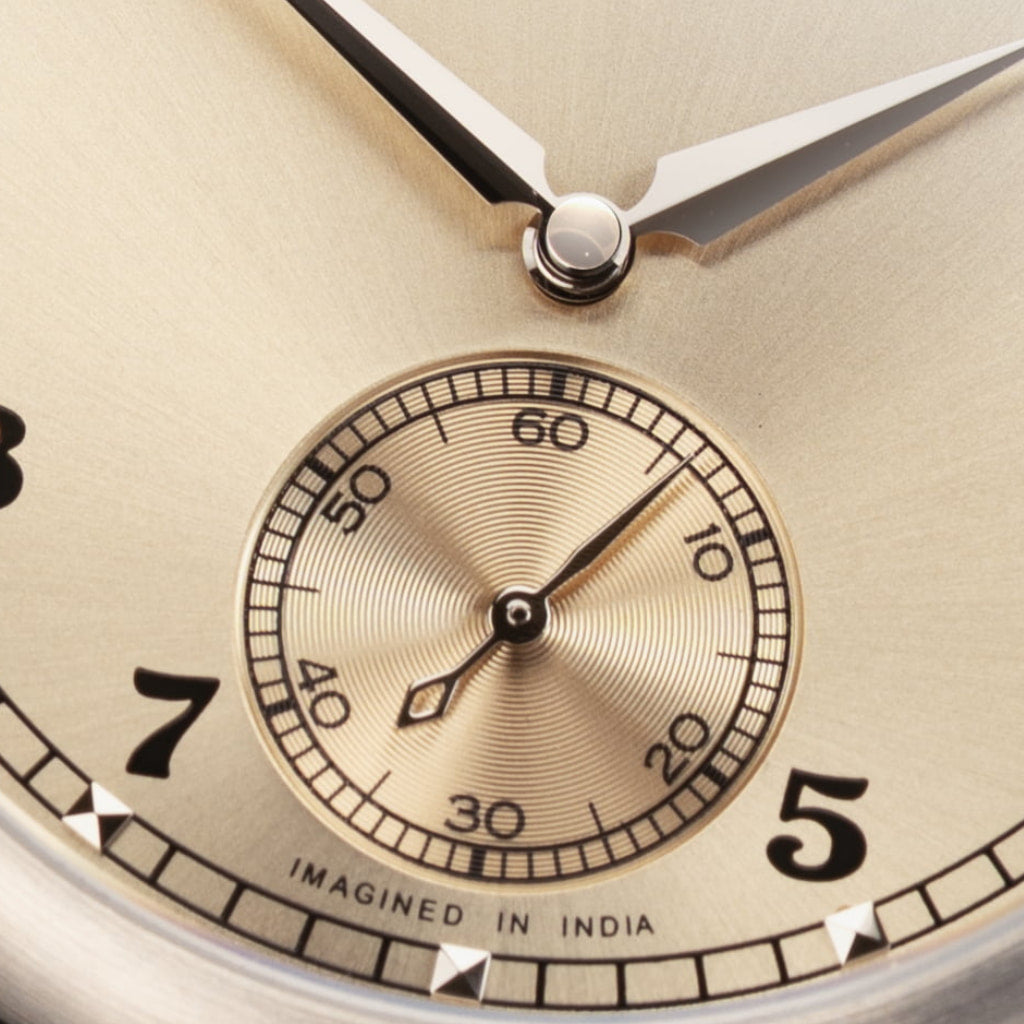
Regardless of the finish chosen, the layout of the dial adheres to the same rigorous standards. The eye is immediately drawn to a sub-dial dedicated to the small seconds, positioned at six o’clock in keeping with tradition. From this sub-dial emanates a sunburst pattern that structures the light across the entire movement plate. This pattern serves as a backdrop for a set of indications drawing on classic design elements. The hours are marked by Arabic numerals in the famous Breguet typeface, alternating with faceted hour markers cut in the shape of pyramids. The time display is framed by a railway-track minute scale, over which glide diamond-cut, rhodium-plated hands, according to the technical description accompanying the Statesman.
However, this visual delicacy comes up against an inescapable law of physics. The addition of a hinge, a metal flap, and an extra sapphire crystal adds extra thickness to the case structure. The Hodinkee platform thus measured a total thickness of 11.6 millimeters. This measurement raises a genuine ergonomic concern for a watch whose primary function is to complement formal attire. The ability of the case to slide smoothly under the cuff of a fitted shirt is a deal-breaker for many collectors. The emotional and mechanical appeal of the secret cover thus comes at the concrete cost of increased bulk on the wrist.
The True Price of Memory
Priced at $3,100—a price equivalent to approximately 297,600 rupees according to the company’s communications—the Epoch line ventures into a price segment where buyers’ expectations leave no room for error. The independent watchmaking sector is brimming with alternatives at this price point. Customers wishing to acquire this model will have to adhere to a specific schedule, as the brand has set the start of pre-orders for November 18, 2026.
At this price point, the mere presence of a hand-wound movement and a refined dial is no longer enough to win over buyers. The success of this creation will depend on the precision of its finishes, the brilliance of its invisible circular graining, and the accuracy of its faceted hour markers. Beyond the technical specifications and the debate over its dimensions, the Epoch asks its owner to accept a bit more thickness in order to prioritize intimacy. It doesn’t just sell the measurement of time, but a portable case in which to preserve an engraving that only the wearer can see.