Make Texture a preferred source on Google to support us
Add Texture to GoogleThe touch of the hand against the fabric often comes before reading the label. In the hushed silence of a fitting room, a coat with clean lines suddenly reveals its pedigree through an unexpected fluidity of movement and a warmth that feels weightless on the shoulders. The eye then drifts to the price tag, which defies the garment’s mere utilitarian function. Faced with skyrocketing prices, the contemporary customer—tired of logomania and overly flashy emblems—seeks refuge. The ultra-luxury industry has seized upon this tectonic shift: the justification for its prices now lies on a microscopic scale, in the very structure of the fiber. The raw material—due to its agricultural rarity, the complexity of its processing, and its geographical origins—has become the ultimate hallmark of understated luxury. To take an interest in this is to understand that purchasing an exceptional piece today is akin to acquiring a grand cru: one no longer buys a name; one supports a terroir, a climate, and a production process that the standard textile industry has long since rejected.
The Tyranny of the Micron and the Exiles of Altitude
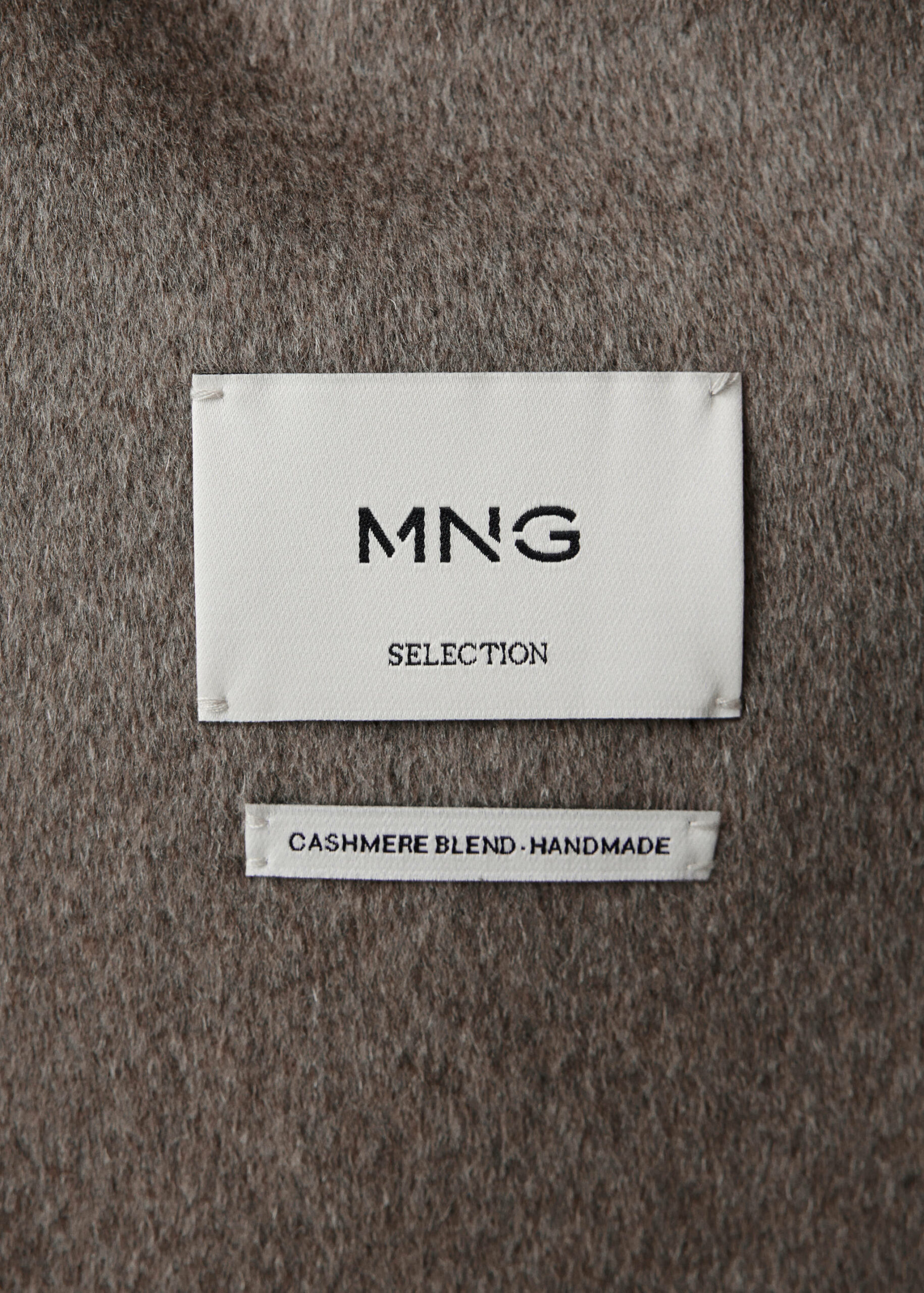
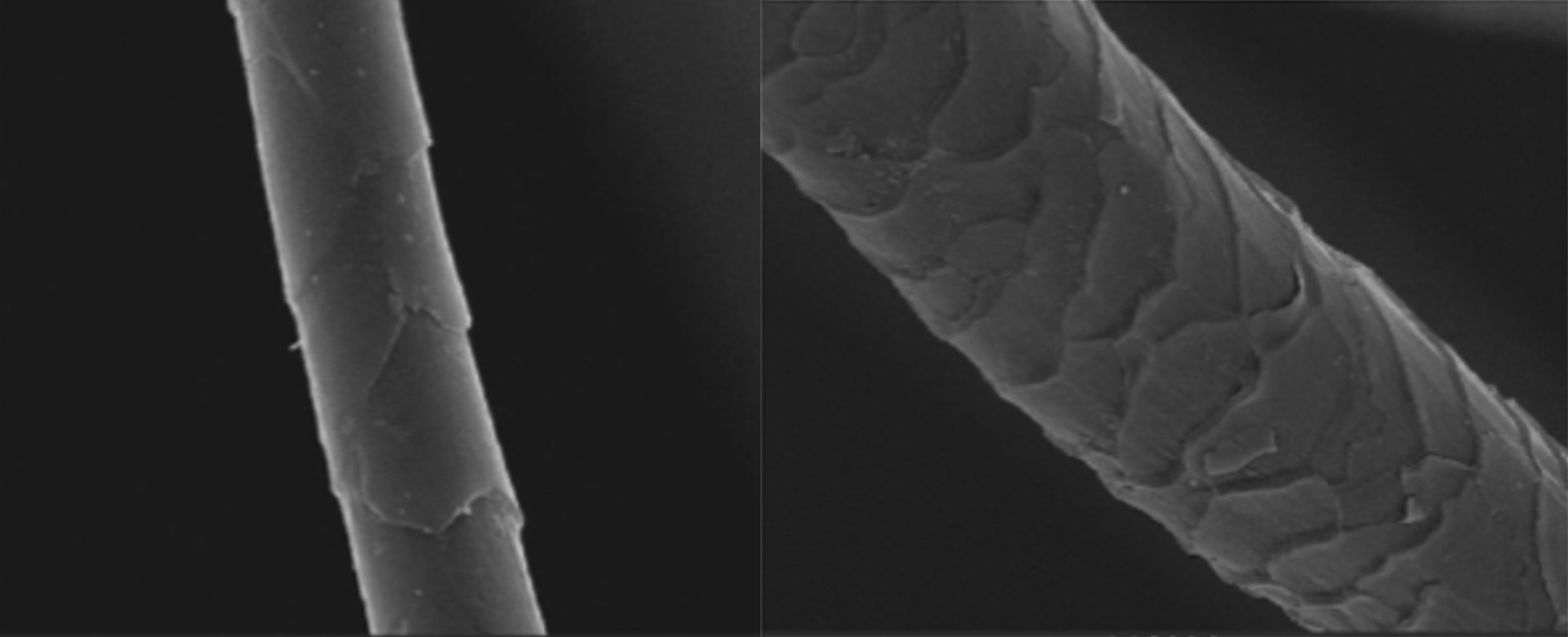
Cashmere, once the exclusive preserve of a select elite, has undergone a brutal democratization over the past two decades that has blurred the lines. To maintain their edge and justify their market positioning, historic houses have had to radicalize their quest for the ultra-fine. It is no longer simply a matter of sourcing Hircus goats from Inner Mongolia, but of isolating the specific down harvested from beneath the animal’s neck—where the fiber falls below the fateful threshold of 14 microns in diameter. At this scale, the material no longer behaves like ordinary wool; it takes on an ethereal quality.
This quest for the impalpable finds its most extreme expression with the vicuña. This small wild camelid, roaming the Andean highlands at altitudes of over 4,000 meters, embodies the archetype of a material that dictates its own economic terms. Sheared every two or three years during the ancestral ritual of the chaccu, a vicuña yields only a handful of grams of usable down. Historic spinning mills and luxury brands such as Loro Piana have made a massive commitment to preserving this species—which was threatened with extinction in the 1960s—to secure a resource that cannot be constrained by industrial logic. The astronomical price of a vicuña overcoat stems from this unyielding arithmetic: it requires shearing about thirty animals. What the customer is paying for is the freezing aridity of the Peruvian puna and the miracle of biological survival, translated into a fabric of a softness impossible to reproduce in a laboratory.
The obsession with traceability: clothing as a product of the earth
Until the early 2000s, creative directors selected their rolls of fabric from lavish catalogs, without always giving much thought to the supply chain. Today, a lack of transparency regarding the origin of fibers is viewed by discerning customers as a deal-breaker. The price of a high-end garment now reflects absolute control over its supply chain. Major luxury conglomerates are waging a silent war to buy out the last remaining independent spinning mills, acquire top-tier tanneries, and invest directly in livestock farms.
This vertical integration entails colossal costs. When a Parisian fashion house secures exclusive rights to a silkworm farm in Japan or a mulberry plantation whose cocoons guarantee silk thread of exceptional strength, it commits to financing a niche agricultural operation. Leather perfectly illustrates this dynamic of control. To obtain a full-grain calfskin completely free of even the slightest scratch or insect bite—intended for crafting a bag without any corrective sanding—the farms enforce strict monitoring protocols. It is no longer the final assembly that carries the heaviest weight in the cost calculation, but rather those years of observation and care even before the material crosses the workshop’s threshold.
The Lengthy Process of Finishing
A rare fiber, however exceptional it may be in its raw state, loses all its value if mishandled during processing. The finishing stage—which includes washing, weaving, dyeing, and finishing treatments—acts as a powerful price multiplier. Contemporary textile machines spin at breakneck speeds, tailored to fast fashion. Yet the finest yarns snap under such tension. They require looms set to deliberately slower speeds, sometimes reducing hourly profitability by a factor of ten.
Embracing this slowness defines the true artisanal approach. Even today, certain wool or alpaca fabrics undergo a carding process using plant-based thistles mounted on rotating cylinders. This ancient technique lifts the fibers with a delicacy that no metal spike can replicate, giving the fabric a unique fullness and patina. The washing process itself is no trivial matter: the use of exceptionally soft water, filtered through the rocks of certain regions of Scotland or the Italian Piedmont, chemically alters the feel of the cashmere. Finally, dyeing becomes a major expense when aggressive fixatives are rejected in favor of successive low-temperature baths, which preserve the structure of the animal proteins. The garment bears the financial burden of these weeks of invisible adjustments.

The Embraced Paradox of Fragility
There remains a persistent misconception linking very high prices to absolute durability. While military-grade cotton twill is designed to last for decades without damage, truly fine materials embrace a certain vulnerability. A sweater knitted from extremely fine-gauge wool, or a silk organza blouse whose weave is barely visible to the naked eye, requires constant care. The discerning customer knows they are not buying armor, but a sensory experience.
A fabric’s ability to capture light and drape fluidly without wrinkling depends on the fineness of its twist and the delicacy of its weave. This paradox lies at the heart of the luxury equation: paying more for an item that demands to be cared for—brushed by hand, laid flat, and aired out—rather than tossed about in a washing machine drum. It is a relationship with one’s wardrobe that involves a chosen constraint—a care ritual that extends the shopping experience. Price acts here as a filter, separating the casual consumer from the connoisseur willing to devote time to what they wear closest to their skin.
Soil restoration as a new standard of value
The very definition of a material’s nobility is undergoing a profound transformation. It is no longer enough for it to be soft or geographically isolated; new standards demand that it become regenerative. Affluent customers, closely scrutinizing the impact of their lifestyles, are pushing fashion houses to rethink the origins of their collections. Regenerative agriculture programs, aimed at restoring the quality of soils ravaged by overgrazing in Central Asia, require massive capital injections.
Paying herders above the global market rate so they agree to drastically reduce the size of their herds and promote land rotation is a net cost, directly passed on to the final retail price. The stakes go beyond mere seasonal supply; the goal is to ensure that the biome providing the raw material does not collapse over the next decade. Hanging on a solid-wood hanger, stripped of all marketing artifice, the garment has nothing left but the straightness of its hem and the depth of its hues to make its case. Its price is no longer a matter of social status; it becomes the quantified expression of a harsh climate, the tenacity of a craftsman, and the preservation of an ecosystem that, without this demanding business model, would be doomed to disappear.