Make Texture a preferred source on Google to support us
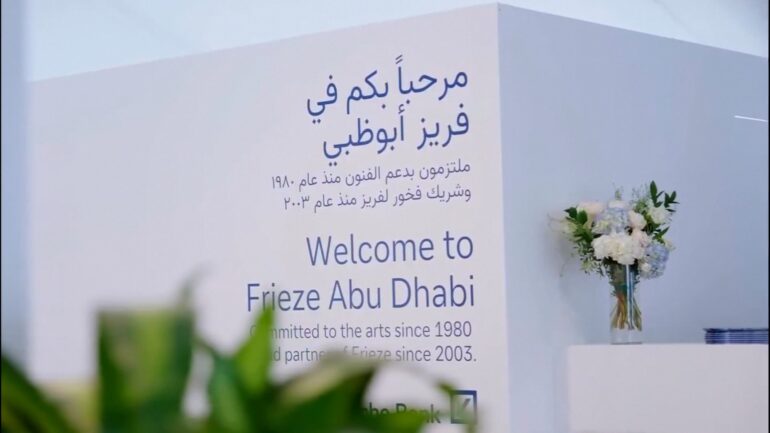
Add Texture to GoogleOn November 19, 2026, Saadiyat Island in Abu Dhabi reached a decisive milestone in establishing itself on the global cultural stage. Beneath the dome of light in the cultural district, Sheikh Khaled bin Mohamed bin Zayed Al Nahyan, Crown Prince of Abu Dhabi, officially opened the inaugural edition of Frieze Abu Dhabi. This event not only marks the arrival of a renowned international art fair franchise in the Gulf; it also marks the culmination of a two-decade strategy aimed at transforming the emirate into an essential hub for creative elites and collectors from the WANASA corridor (West Asia, North Africa, South Asia). By absorbing the historic Abu Dhabi Art and integrating it into its network alongside London, New York, Los Angeles, and Seoul, Frieze is ushering in a paradigm shift: the institutional maturity of an ecosystem that is no longer content to import models but seeks to catalyze the historic exchanges of the Indian Ocean.
From a National Fair to an International Brand
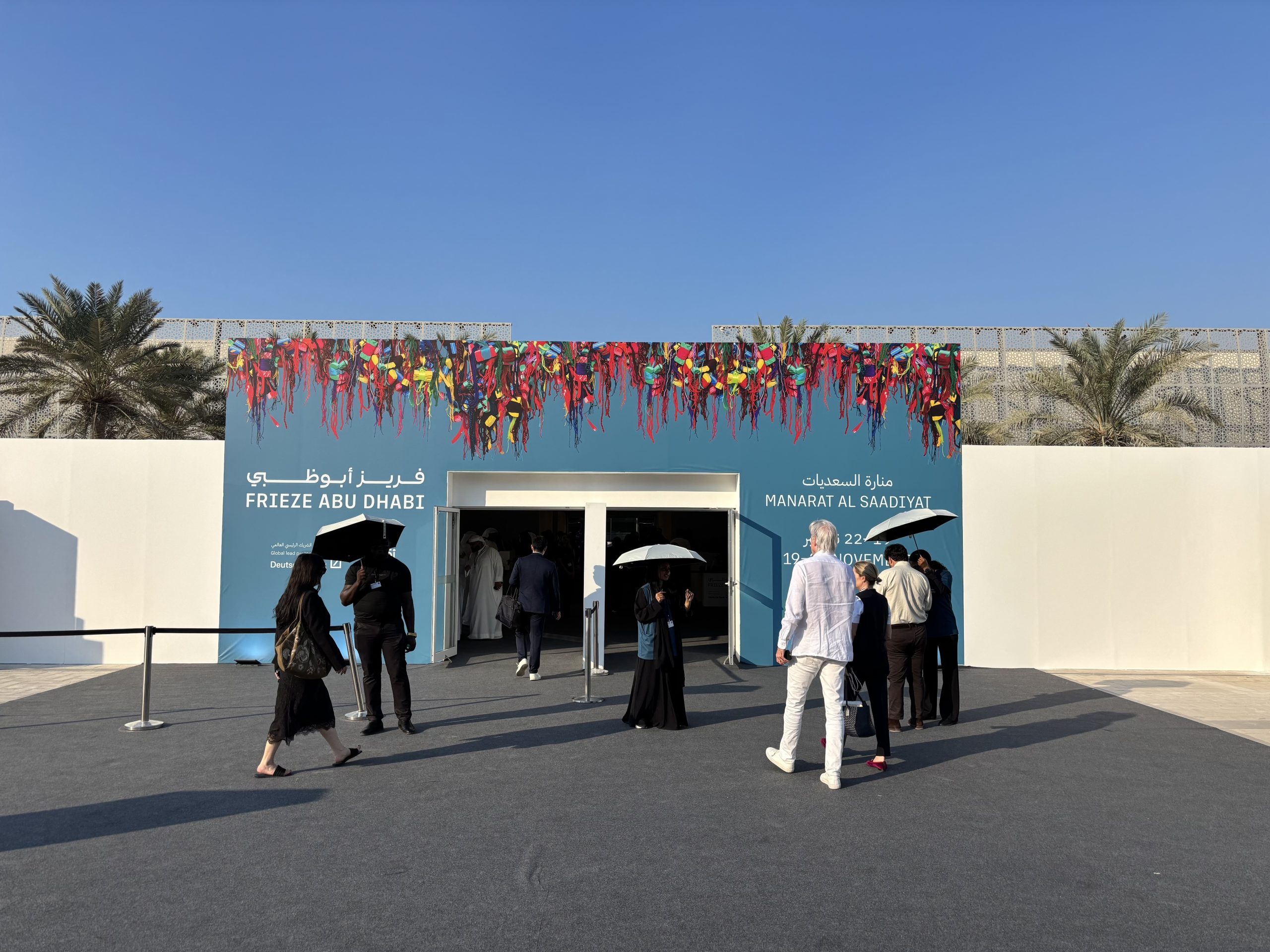
The partnership formalized on October 10, 2025, between the Department of Culture and Tourism – Abu Dhabi (DCT Abu Dhabi) and the Frieze brand is the result of a long process of development. The venture began in 2007 under the name ArtParis Abu Dhabi at the Emirates Palace, before the government took over the initiative in 2009 under the Abu Dhabi Art label. After fifteen years in the public eye and a move to the Manarat Al Saadiyat Center in 2011, the event underwent its most profound structural transformation in November 2026. Under the leadership of Dyala Nusseibeh, who has been at the helm of the local fair since 2016, and Kristell Chadé, executive director of fairs at Frieze, this inaugural edition opted for selectivity.
While the last edition of Abu Dhabi Art in 2025 featured 142 galleries, Frieze Abu Dhabi scaled back its format to showcase 89 exhibitors in 2026. This deliberate reduction in scale, in favor of greater curatorial coherence, has brought together heavyweights of the global art market—such as Gagosian, Pace Gallery, Thaddaeus Ropac, and Victoria Miro, alongside the most influential regional galleries, including The Third Line, Lawrie Shabibi, Carbon 12, Athr, and Dastan. This mix of 37 countries and regions underscores the emirate’s ambition to establish itself as the hub of art transactions for a geographic area extending well beyond the borders of the Gulf Cooperation Council.
An Identity Rooted in the WANASA Axis
The uniqueness of this initiative lies in its thematic focus. The inaugural edition explicitly highlighted the WANASA corridor, exploring the maritime and cultural exchanges that have shaped the Indian Ocean. This focus was brought to life through several specialized sections. Frieze Masters Abu Dhabi, curated by Marika Sardar, fostered a dialogue between historical objects and older works dating back to the early 20th century. Meanwhile, the Global Futures section, directed by Tarini Malik, focused on discovery through eight targeted monographic presentations.
Support for regional contemporary art was also demonstrated through awards and grants. The Focus section, designed for emerging galleries, benefited from a specific financial assistance program to facilitate their participation. Lebanese artist Dala Nasser was the first recipient of the Frieze Abu Dhabi Artist Award for her site-specific installation titled *Qubbat Duris*, a project curated by Nabila Abdel Nabi of the Tate Modern. Finally, the dialogue between generations of local artists was highlighted in the annual “In Dialogue” exhibition, which this year brought together Mohammed Kazem, a leading figure in the Emirati art scene, and emerging artist Alia Zaal, under the auspices of the Dirwaza Curatorial Lab.
NOMA: The Creative District’s Integration into the City
Beyond the walls of the Manarat Al Saadiyat center, Frieze’s influence now extends to the very fabric of the city. On November 20, 2026, the second day of the fair, developer Aldar unveiled the NOMA (North of Manarat Al Saadiyat) project. This 88,000-square-meter pedestrian-friendly creative district embodies the fusion of luxury real estate development and cultural infrastructure. This new district will feature residences licensed by The Hoxton Homes, a hotel, artists’ studios, and an Akil cinema, as well as permanent offices for Frieze and the organization Public Art Abu Dhabi.
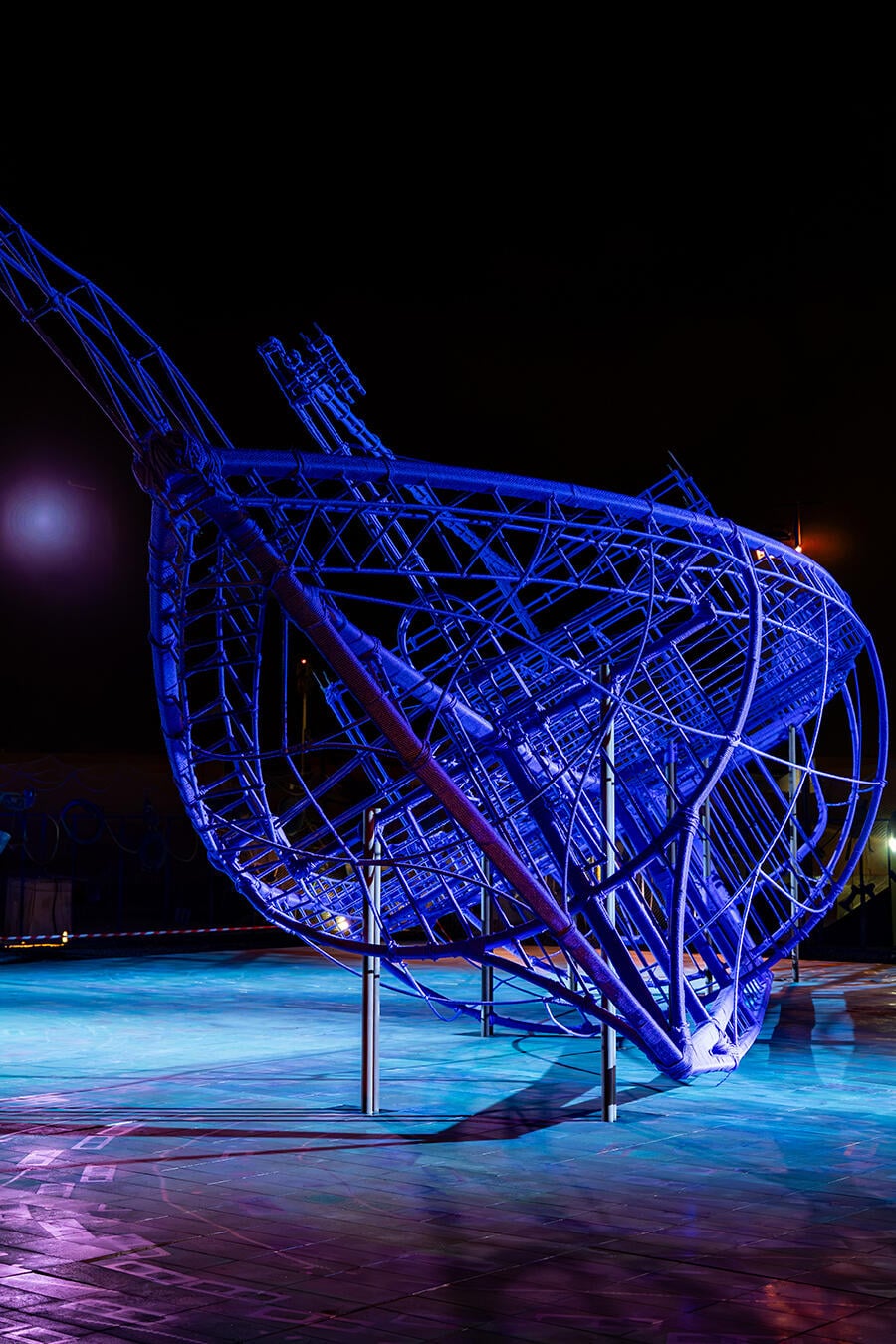
This synergy between urban planning and the art market is driven by a unique cross-appointment structure: Mohamed Khalifa Al Mubarak chairs both the DCT Abu Dhabi, the cultural oversight authority, and the developer Aldar Properties. This integration ensures continuity between temporary events and the long-term development of Saadiyat Island. The Frieze Sculpture Abu Dhabi trail is a prime example of this: situated along the waterfront on the Mamsha Al Saadiyat promenade, it integrates public art into the daily lives of the island’s residents and visitors.
The 2027 Horizon and Museum Completion
Frieze’s arrival is part of a packed institutional schedule. While the Louvre Abu Dhabi paved the way in 2017, the coming months will mark the completion of world-class projects. The Zayed National Museum, the Abu Dhabi Natural History Museum, and the immersive teamLab Phenomena space are entering their final stages of construction. The year 2026 also concluded with a major announcement for the cultural district: the official opening of the Guggenheim Abu Dhabi, designed by architect Frank Gehry, is scheduled for December 11, 2026.
Supported by its long-standing financial partner, Deutsche Bank, the Frieze Abu Dhabi art fair thus positions itself as the commercial arm of a comprehensive cultural master plan. By choosing to take place every November, it creates a gathering point for international collectors just before the major museum openings in the winter. The challenge for the emirate is now to sustain this hybrid model, in which the power of a global art brand serves as a catalyst for a strong regional identity, redefining the art routes between East and West.