Make Texture a preferred source on Google to support us
Add Texture to GoogleThe Importance of Provenance: When Collectible Watches Embrace Secrecy
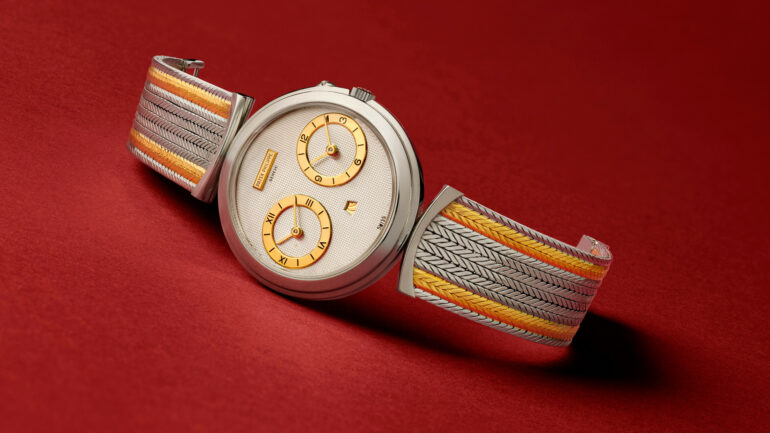
For sixty-five years, it remained hidden from view, confined to the family of its first owner. Purchased in 1961 and rigorously kept out of the public eye ever since, a Patek Philippe dual-time-zone watch is set to see the light of day once again as it goes under the hammer at Rockefeller Center. Through this Reference 3452/1, designed by Louis Cottier—the undisputed master of universal time for the Geneva-based manufacturer—the market is dictating a new rule: beyond mechanical virtuosity, it is now prolonged obscurity and absolute traceability that determine a piece’s value. Crafted in yellow and white gold, featuring an integrated bracelet that sets it apart, this watch—of which there are reportedly only seven known examples in the world (including all 3452 and 3452/1 references combined)—will go up for auction in New York on December 4, with an estimate topping $1.6 million.
This Christie’s auction, aptly named “Important Watches,” comes at a turning point for North American collectors. Enthusiasm is shifting, and acquisition criteria are becoming more selective. Behind the quest for rarity lies a well-established purchasing strategy, in which the location of the sale plays an increasingly decisive role.
New York: The New Haven for High-Yield Auctions
The shift in focus from Europe to the United States is no coincidence. The past few weeks have set a massive milestone in Switzerland: on November 9, Christie’s closed its Geneva auction with 100% of lots sold, generating 47.8 million Swiss francs. This spectacular 221% year-over-year surge was part of a global frenzy that saw the trio of Phillips, Christie’s, and Sotheby’s rake in no less than $203 million on the shores of Lake Geneva, according to data compiled by WatchPro. Phillips even reached a historic milestone there by surpassing the 100-million mark for a single live watch auction.
However, the U.S. market offers a playing field with very concrete advantages. Purchasing a timepiece directly on U.S. soil allows buyers to avoid the administrative red tape and import fees associated with purchasing from Switzerland. These tax and customs advantages motivate some bidders, paving the way for Phillips’ next auction, scheduled for December 5 and 6 in New York, which is already touting the highest catalog value ever assembled in the country.
The Spectacular Comeback of Independent Watchmakers
While watches fresh from decades of obscurity are attracting keen interest, independent watchmakers are literally upending the traditional price hierarchy. American buyers have discovered a fascination with these ultra-limited-edition pieces, free from the influence of major conglomerates. The tone was set last spring, when an F.P. Journe Chronomètre à Résonance Souscription shattered records at Phillips in New York by fetching $13.9 million—a sum that redefined the status of contemporary craftsmanship.
Christie’s is riding this wave by offering two seminal pieces by François-Paul Journe. The first, a 2001 Chronomètre à Résonance, is unique in that it retains its original rhodium-plated brass movement—a technical detail that places it in the $500,000 to $1 million range. The second, an Octa Réserve de Marche produced a year later and offering five days of self-winding power reserve, is expected to fetch between $300,000 and $500,000. By way of comparison, the auction house’s recent success in Geneva was largely driven by a “Vagabondage” trilogy from the same watchmaker, which sold for $8.2 million.
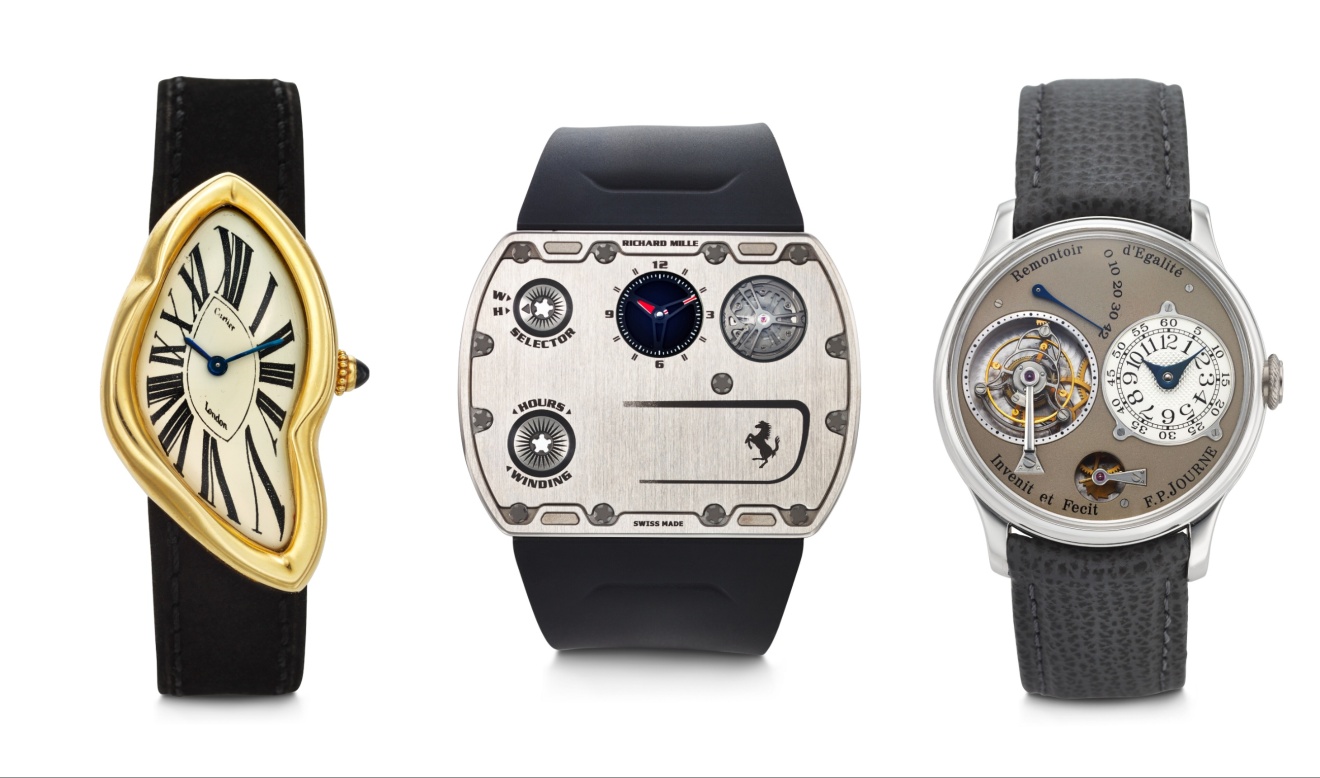
This thirst for independence is bringing brands with extremely limited production into the spotlight. Ferdinand Berthoud thus makes its debut with the FB 2RE.2. Winner of the Chronometry Prize at the Grand Prix d’Horlogerie de Genève in 2020, this technical marvel featuring a rack-and-pinion transmission exists in only ten pieces worldwide. The auction house expects it to fetch between $120,000 and $220,000. More visually striking is Kari Voutilainen’s one-of-a-kind creation, crafted for the 2024 Only Watch charity event, which combines a titanium cushion-shaped case with a deep green hand-guilloché dial featuring a world time function. Expectations for this unexpected combination of materials and complications are as high as $1.2 million.

Micro-details and heritage: the anatomy of desirability
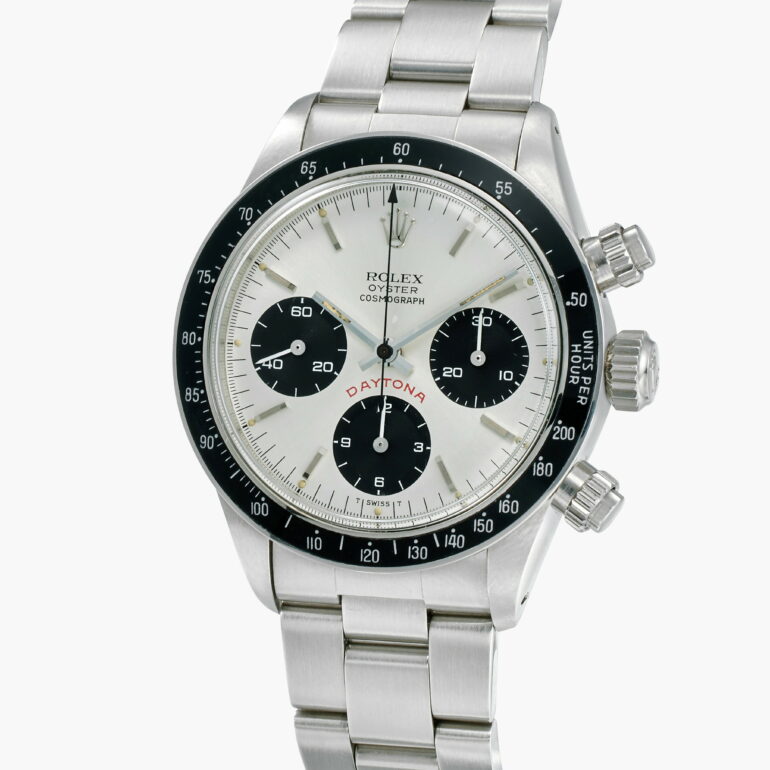
For historic watchmakers, the battle for exclusivity now hinges on minute variations or a connection to a formative era. A single line of red text is enough to propel a Rolex Daytona. The 14-karat yellow gold Reference 6264, nicknamed the “Cherry Logo,” comes directly from the estate of its first owner. Given that fewer than ten dials with this precise configuration have been identified to date, the hammer price could soar to as high as $400,000.
At Audemars Piguet, the focus is on the pre-Royal Oak era, a period when the production of complications remained particularly limited. A 1953 triple-calendar watch, reference 5504, evokes the classic style of the Le Brassus-based manufacturer. Its appearance on the market is a statistical anomaly: WatchPro’s research indicates that only ten pieces have resurfaced publicly, nearly half of which are permanently housed in the brand’s museum display cases. This museum-quality rarity is estimated to be worth between $80,000 and $160,000.
The narrative power of an object is also expressed through its geography. Cartier illustrates this dynamic with two radically different interpretations of its famous Crash. One, dated 1991, belongs to a series of 400 pieces crafted in yellow gold under the Parisian house’s auspices. The other, a skeletonized platinum version from 2016, was produced in a limited edition of just 67 pieces. Both share the same estimated value, ranging from $200,000 to $400,000, proving that the market values recent mechanical innovations just as much as the classic style of the 1990s.
The catalog also highlights the importance of Cartier’s foreign branches in its creative history. A 1969 ultra-thin Tank Louis, with a much more modest estimate of $20,000 to $40,000, captivates with its hallmarks. Crafted in the London workshops, it retains its original clasp and bears the name of its sole owner, American filmmaker Robert Sallin. It embodies that vibrant era when London dictated a distinctive aesthetic within the jewelry empire.
From the mechanical extravagance of a platinum Patek Philippe with 549 components (reference 5207/700P-001, combining an instant perpetual calendar, a tourbillon, and a minute repeater) to the moving gold petals of a Richard Mille RM 19-02 Tourbillon Fleur, the in-person auction will be followed by an online session. From December 2 to 11, 127 additional lots will make up the Watches Online: The New York Edit edition, bridging the gap between the fiercely exclusive world of the auction house and more accessible collecting opportunities.