Make Texture a preferred source on Google to support us
Add Texture to GoogleArchitecture in the American Midwest is more than just a geographical transition between the two coasts. From the vertical structures of the Chicago School to the horizontal lines of the Prairie School, and including the modernism inherited from the Bauhaus, this region serves as a laboratory of forms where light plays a structural role. Documenting these spaces requires a sensibility capable of conveying both the austerity of concrete and the warmth of varnished woodwork. A selection of eight photographers, compiled in November 2026, highlights those who succeed in capturing the soul of these residences, whether they are industrial lofts or historic mansions in Ohio.
Chicago’s Legacy and the Science of Natural Light
At the heart of this scene, Chicago remains the central hub. For Aimée Mazzenga, photography runs in the family. As the granddaughter of Val Mazzenga, a respected photojournalist for the Chicago Tribune, she has inherited an eye capable of capturing the moment without artifice. Her method relies almost exclusively on natural light—a technical choice that allows her to capture the true spatial depth of rooms, from the strictest minimalism to eclectic interiors. This approach has earned her multiple honors as one of the industry’s 100 most influential professionals in 2024.
Dividing her time between Chicago and Los Angeles, Petra Ford infuses Midwest interiors with a warmth characteristic of California. Her aesthetic, described as “sun-drenched,” lies at the intersection of architecture, fashion, and travel. Drawing inspiration from street photography, she favors candid compositions, avoiding the rigidity of traditional staging to allow the space to breathe.
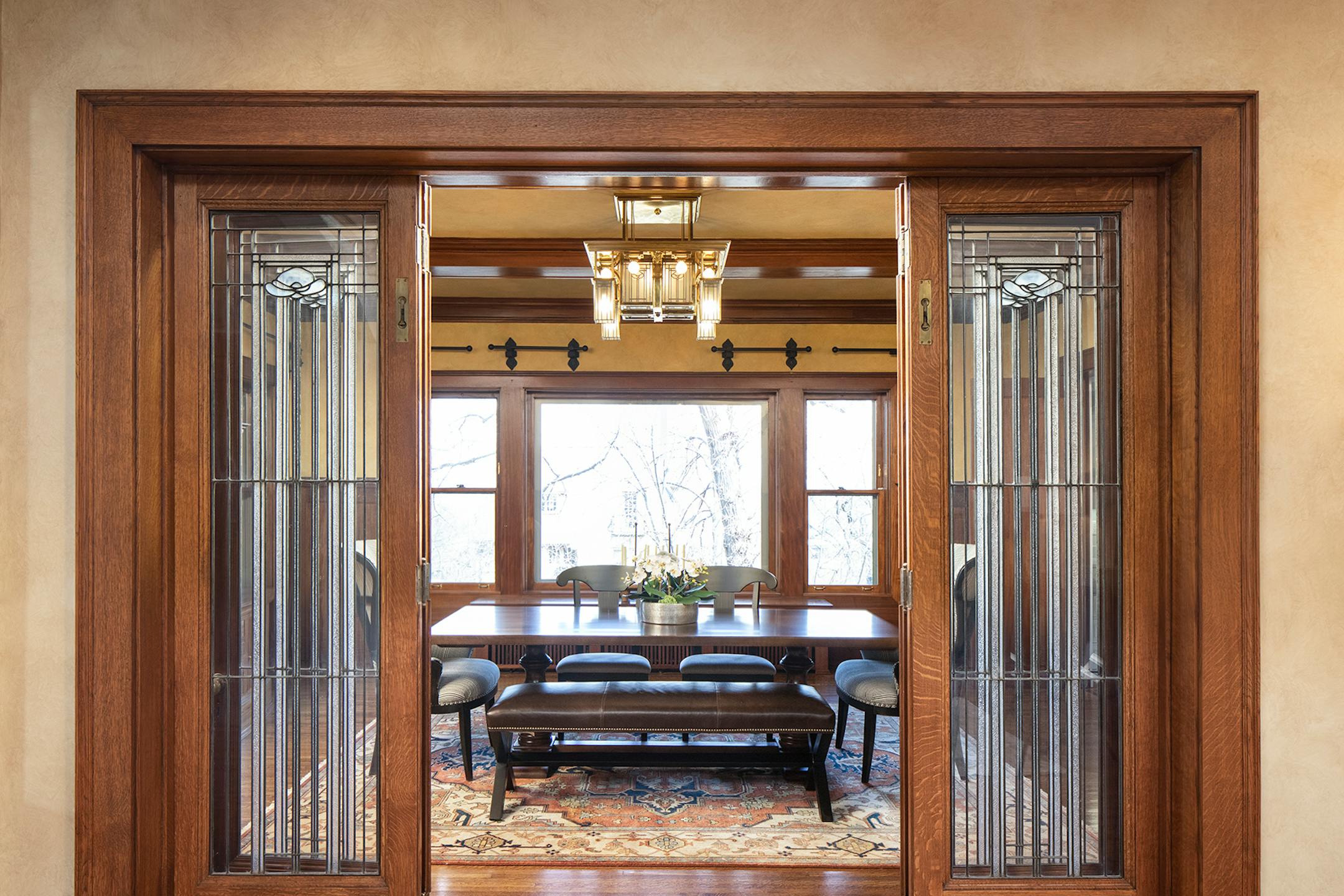
Taking a more human-centered approach, Ryan McDonald strives to give the projects he captures a “lived-in patina.” Whether working on urban lofts or private residences designed by renowned architects, his lens seeks to capture the resident’s imprint—an organic dimension that has also earned him a place among the top photographers of 2024.
From Missouri to Ohio: Rigorous Management of Space
The work of Nate Sheets, based in Kansas City, illustrates another facet of the profession: that of technical precision applied to civic and residential spaces. A regular collaborator with firms such as Hufft and Kobel + Co, Sheets stands out for his meticulous handling of perspectives. His ability to frame volume solely through the lens of natural light transforms often imposing structures into livable and accessible spaces.
Further east, in Cincinnati, Ryan Kurtz covers a particularly broad stylistic spectrum. His portfolio ranges from colonial mansions to mid-century modernism, reflecting Ohio’s diverse architectural heritage. One of his notable projects is an exceptional residence designed by architect Peter Pennoyer, with interior design by the duo Miles Redd and David Kaihoi, illustrating his ability to collaborate with the biggest names in contemporary design.
The Documentary and Artistic Approach to the Great Lakes
Interior photography in the Midwest is also enriched by approaches drawn from contemporary art and publishing. Kevin J. Miyazaki, based in Milwaukee but active as far afield as Hawaii, situates his practice within a broader reflection on history and place. In addition to his work for cookbooks, his images are recognized for their dynamism, as evidenced by his photo essay on artist Theaster Gates’ studio in Chicago. His style avoids static compositions in favor of a liveliness that does justice to the creative function of the spaces.
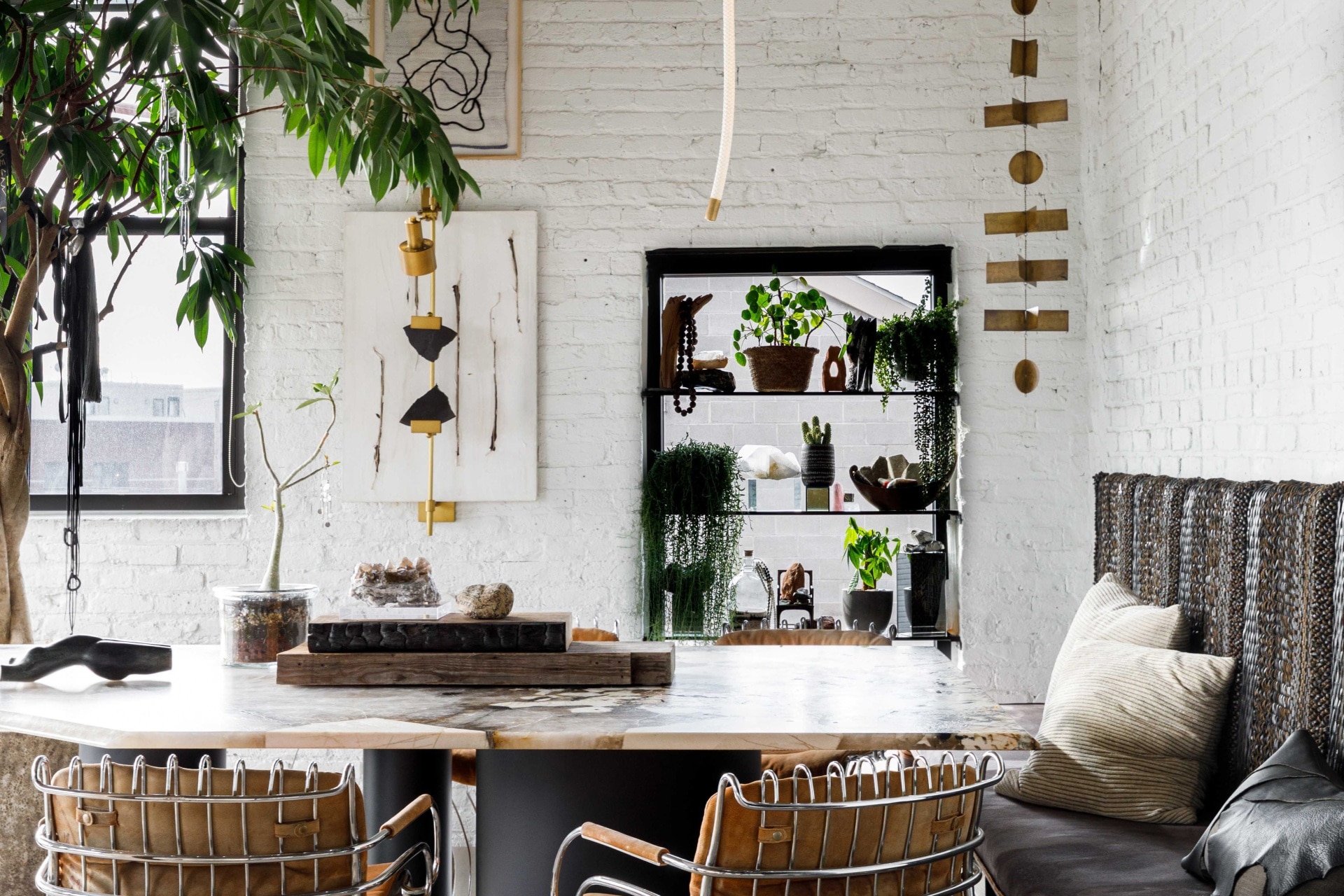
In Detroit, Marta Xochitl Perez explores the relationship between craftsmanship and space. A native of Miami, she has made a name for herself in Michigan through portraits of artisans and still lifes that complement her interior shots. Her recent work includes documentation of a dining room in a 1970s home on the shores of Lake Michigan—an image that encapsulates her taste for interiors with character. Her regular collaborations with specialized publications attest to the insightfulness of her eye for textures and materials.
Finally, Sarah Crowley rounds out this overview from Chicago with a versatile portfolio. In addition to her feature stories for furniture brands such as Burrow, she documents interiors designed by studios including Randy Heller, Studio Eidos, and Pompeo Home. Her practice, which extends to food photography, allows her to approach interiors from the perspective of a holistic lifestyle, where every object contributes to the home’s visual narrative.
These professionals are typically hired on a fee-for-service basis, with photography fees depending on the nature of the assignment—editorial or commercial—the scope of distribution rights, and the complexity of the on-site styling required. Although firmly rooted in the Midwest, most of these photographers operate nationwide, showcasing a vision of space where architectural precision gives way to the clarity of light.