Make Texture a preferred source on Google to support us
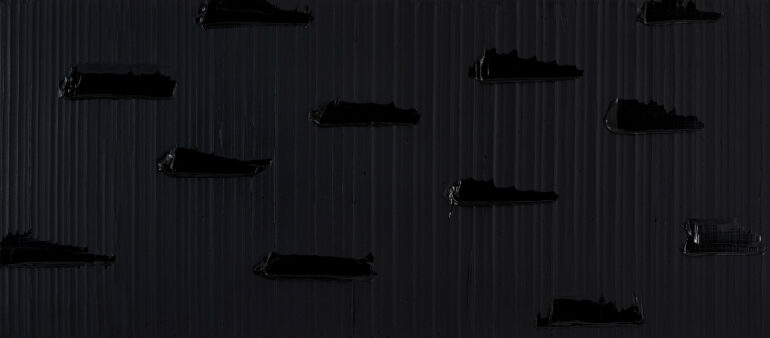
Add Texture to GoogleJanuary 1979, in a Paris studio. Pierre Soulages had been laboring for hours on a large canvas. The dark paint was piling up, becoming bogged down. The artist felt stuck, convinced he had ruined his work. The next morning, bathed in low-angle light, the unexpected happens: the surface he thought was lifeless—that flat expanse of black he deemed a failure—begins to vibrate. The morning light catches the ridges of the paint, glides into the grooves traced by the brush, and transforms the darkness into a vast source of light. “Outrenoir” has just been born. For the contemporary art lover, this pivotal moment transcends mere studio anecdote. It marks a fundamental break in twentieth-century French painting. Soulages did not merely invent a new shade; he turned light into a raw, sculptable, and shifting material, demanding a physical engagement from the viewer to grasp a work that eludes stillness.
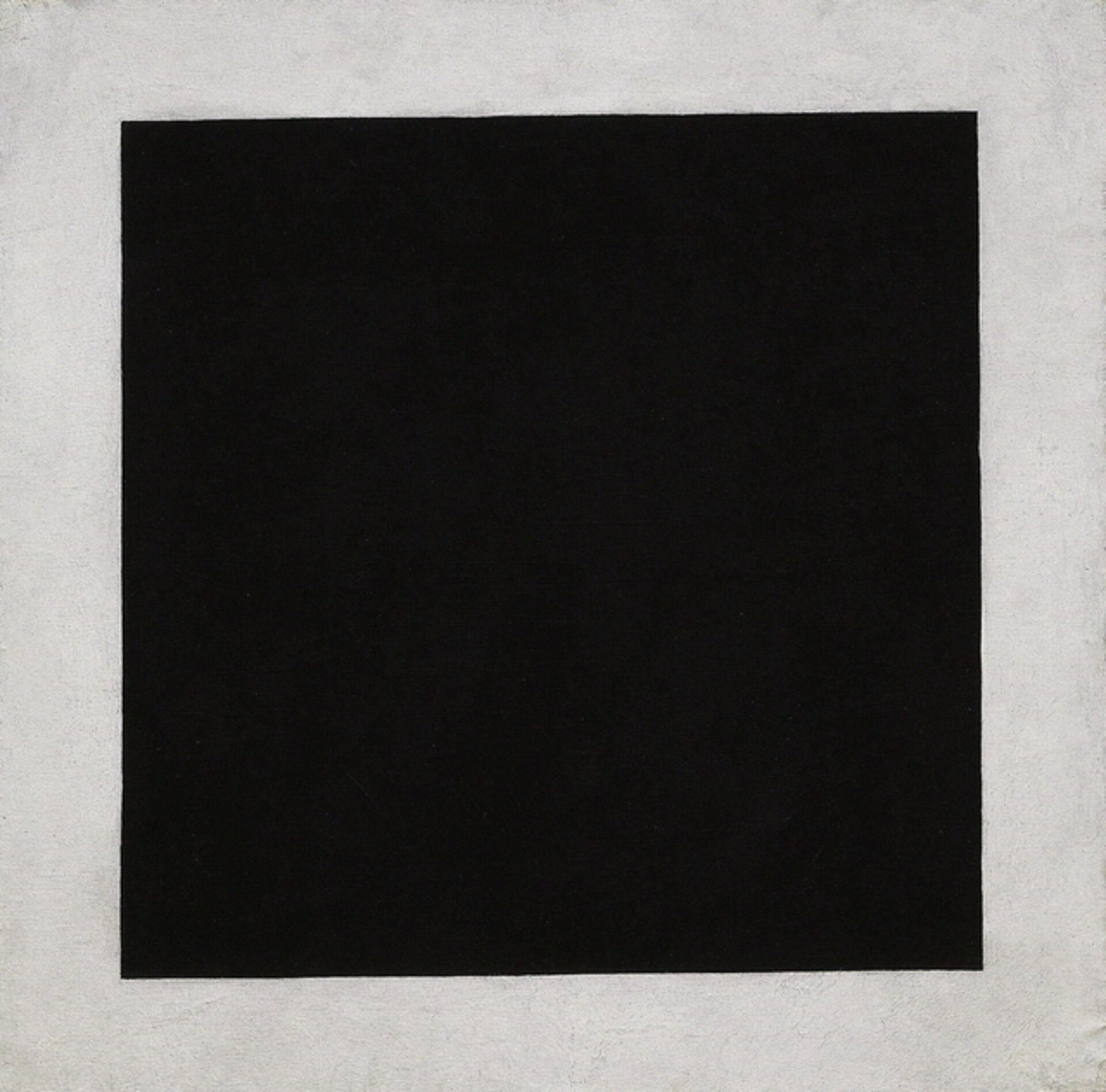
The term itself, coined for the occasion, refers to a mental geography rather than a color. “Outrenoir,” modeled on “outre-Manche” or “outre-Rhin,” denotes a land beyond black. Whereas Kasimir Malevich used this hue to assert pure abstraction with his square on a white background, and whereas Mark Rothko explored it for its qualities of tragic absorption, the painter from Aveyron turns it into a mirror. The canvas no longer holds the viewer’s gaze: it pushes it outward, toward the room, toward the observer. This is a complete reversal of the traditional role of painting. The painting is no longer a window onto an imaginary world, but a physical presence that alters the real space in which it hangs.
Raw Material as the Sole Vocabulary
This redefinition of pictorial space is based on a technique of deliberate roughness. From the very beginning, Pierre Soulages turned his back on the delicacy of sable-hair brushes and the traditional palettes of the École des Beaux-Arts. His artistic vocabulary was developed using construction tools. He used rubber scrapers, house painters’ brushes, putty knives, and pieces of leather. Oil paint—and later acrylic, which he adopted for its quick drying time and viscosity—is spread, scratched, smoothed, or torn away with an almost sculptural force.
The thickness of the material dictates the composition. Large, smooth, glossy areas that reflect the surroundings like a blackened mirror contrast with deeply striated, matte areas that hold the shadow. Even before the formal invention of Outrenoir, this obsession with raw materials had manifested itself through the use of walnut stain. This inexpensive dye, usually reserved for woodworking to stain wood, allowed him in the 1940s to trace powerful, almost calligraphic forms on paper. He also used tar on glass plates, constantly seeking the point of tension between total opacity and translucency.
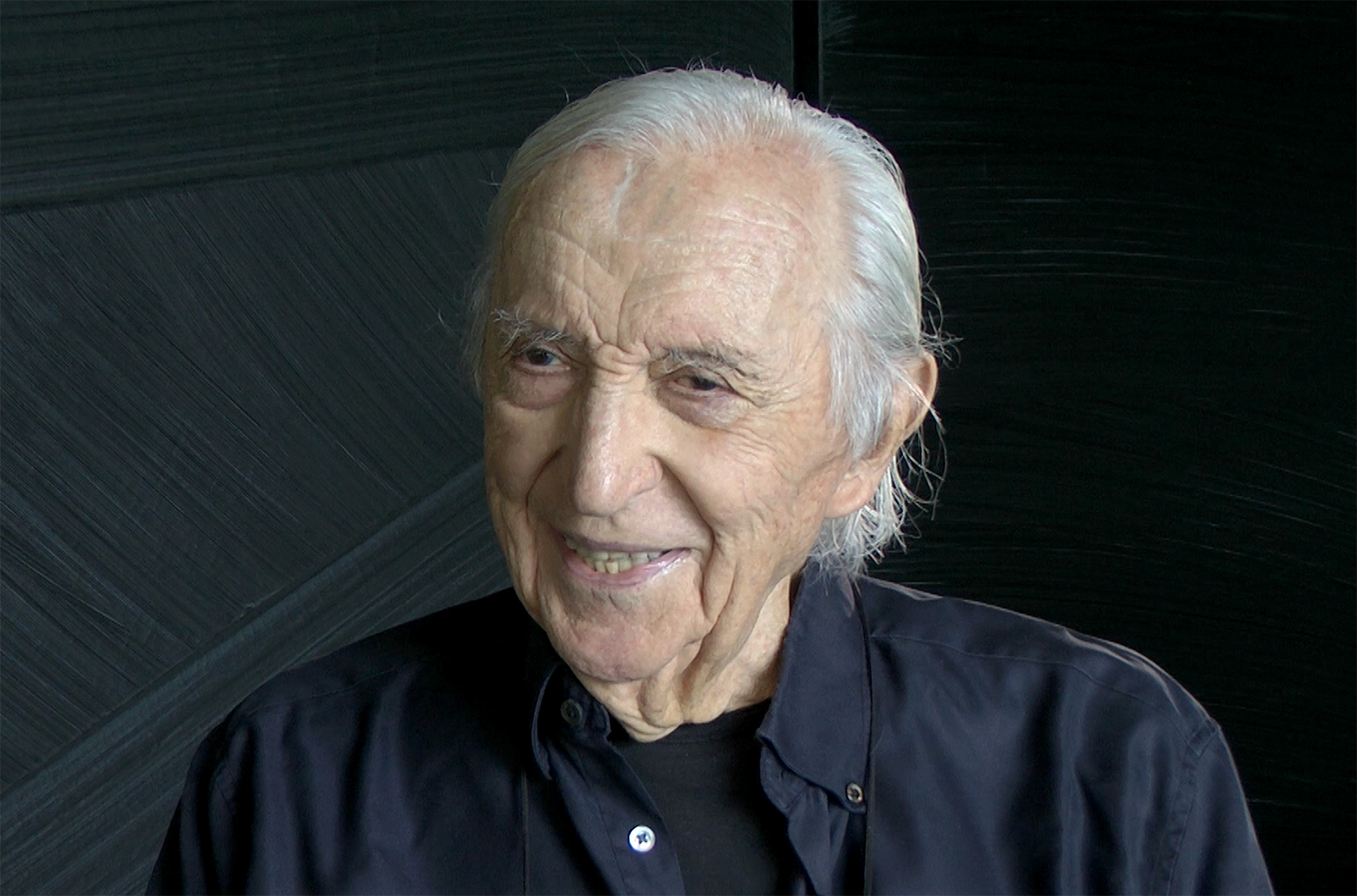
The viewer of an *outrenoir* is thus compelled to move. Standing still in front of one of these large canvases means seeing only a fraction of it. One must step to the side, step back, or step closer. As you move, the smooth surfaces fade while the ridges light up, taking on silvery, coppery, or bluish hues depending on the daylight or the gallery lighting. Time and the weather become co-creators of the work.
The Dialogue Between Stone and Glass in Conques
While “outrenoir” flourishes on canvas, Soulages’s exploration of light finds its culmination in glass. The public commission awarded in the late 1980s for the Abbey Church of Sainte-Foy in Conques represents the deepest roots of his artistic approach in the cultural heritage. This major example of Romanesque architecture, located along the pilgrimage routes to Santiago de Compostela, left a lasting impression on the artist from his childhood. It was beneath its vaults, at the age of fourteen, that he experienced the aesthetic revelation that determined his calling.
Faced with the abbey church’s 104 windows, the painter imposed a radical constraint: to reject color. Introducing classic polychrome stained glass would, in his view, have disrupted the mineral austerity of the Romanesque architecture. He then embarked on years of research in collaboration with master glassmakers in Germany to develop a novel type of glass. Neither transparent nor completely opaque, this unique material is permeated with microbubbles and fragments of crushed glass. It does not filter external light to color it; rather, it captures it and diffuses it evenly throughout the nave.
The lead lines, traditionally used to outline the design of a stained-glass window, have been reimagined here. They traverse the openings with geometric fluidity, following the rhythm of the columns and arches. Visitors entering the Conques Abbey do not look at the stained-glass windows to discern a biblical scene. Instead, they experience a shifting, luminous atmosphere, where natural light softens and shapes the building’s gray and ochre stone—a direct result of the spatial concept of “outrenoir” transposed to an architectural scale.

A rusted-steel setting in the Aveyron region
The realization of this vision is embodied geographically in his hometown. The 2014 opening of the Soulages Museum in Rodez provided his work with the monumental setting it demanded. The building’s design, entrusted to the Catalan firm RCR Arquitectes (later awarded the Pritzker Prize), resonates immediately with the painter’s artistic vocabulary. Composed of geometric blocks of Corten steel, the museum features a facade that oxidizes over time, taking on hues of rust, earth, and bark that directly evoke the walnut-stained canvases of his early years.
Inside, the vast galleries house the exceptional donations from the artist and his wife, Colette. They feature not only the immense “outrenoir” polyptychs suspended by ropes, appearing to float in space. The exhibition also features the copper plates from his etchings. These reveal the effects of acid etching on the metal, proving that, regardless of the medium, Soulages remains a sculptor of surfaces. This museum is not merely a mausoleum for preservation, but an optical installation specifically designed so that natural light, controlled by the architecture, strikes the canvases at calculated angles.
Physical Presence in the Age of Dematerialization
The artist’s extraordinary longevity—he passed away at the age of 102 after receiving the rare honor of a solo exhibition at the Salon Carré in the Louvre for his centennial in 2019—has allowed his work to span several eras. But why does this obsessive, almost monastic work of striation continue to fascinate collectors, museums around the world, and lovers of contemporary design?
The answer undoubtedly lies in the “outrenoir” style’s fierce resistance to reproduction. At a time when images are consumed by swiping across backlit screens, and art is frequently reduced to a flat digital file, Soulages’ canvases offer an indomitable materiality. A photograph cannot capture an “outrenoir.” The lens freezes a state of light at the fraction of a second when the shutter is released, thereby killing the kinetic nature of the painting.
Owning such a painting, or taking the time to sit before it in an exhibition space, is an act of grounding. It means accepting that the artwork does not convey its message instantly. The “outrenoir” imposes its silent, massive presence, requiring the eye to adjust to the dim light in order to discern flashes of light within it. As the sun sets and artificial light takes over in a room, the black paint slowly transforms. The recesses grow darker, the metallic reliefs fade, giving way to a dense surface that draws the viewer back to the physical reality of the space around them.