Make Texture a preferred source on Google to support us
Add Texture to GoogleThe auctioneer’s gavel coming down on an eight-figure painting has ultimately distorted our perception. By constantly equating the art market with a handful of astronomical transactions reserved for a few private foundations or collectors seeking tax breaks, the sincere art lover ends up feeling excluded from a world that, in fact, rightfully belongs to them. Building a meaningful collection, one with true aesthetic coherence, does not necessarily require an inexhaustible bank account. The contemporary challenge of collecting is quite different: budgetary constraints act as a ruthless yet salutary filter. It forces us to set aside the ease of relying on reassuring names and return to the very essence of the act of collecting. The eye must take the place of the wallet, and instinct must replace pure financial speculation.
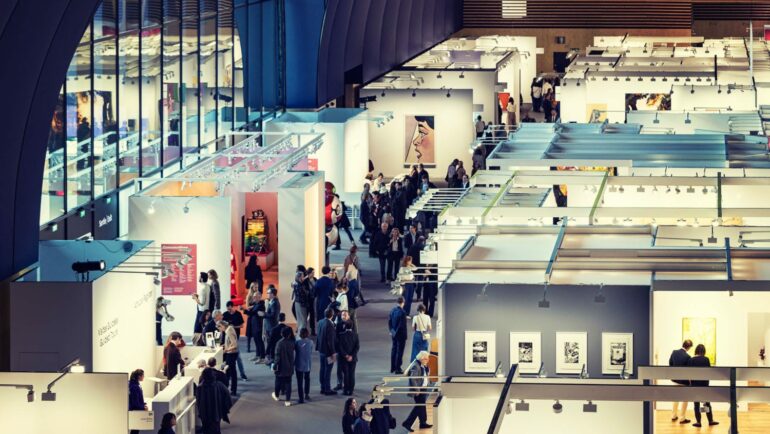
This shift radically alters the collector’s mindset. Buying a work while keeping a close eye on expenses requires abandoning the idea of prudent investment in favor of embracing personal risk. The collector who scours secondary art fairs or steps into spaces run by the artists themselves is not seeking social validation through status symbols. They are hunting for a vibration, a visual jolt, a sense of strangeness that will come to inhabit their daily life. This approach is part of an eminently French tradition of the “cabinet d’amateur”—that of a curious mind who cultivates their taste through regular visits to creative spaces, weaving a network of personal references independent of the dictates of the dominant market.
The Multiple: The Aristocracy of the Paper Medium
The primary avenue of access—still too often misunderstood—lies in art printing. Engraving, stone lithography, and screen-printing techniques sometimes suffer from a reputation as the “poor relation” compared to the unique canvas. This overlooks the very nature of these mediums. A limited edition is never merely a mechanical reproduction of a pre-existing painting. It is a creation that is conceived, carefully considered, and structured specifically for its final medium. The coarse grain of Arches vellum paper, the deep etching of the aquatint into the copper plate, and the matte, velvety layering of the inks possess a powerful materiality.
Delving into the print collections allows you to bring into your home the work of artists whose oil-on-canvas paintings are otherwise inaccessible. Working on paper demands formidable technical mastery, often entrusted to master artisans whose historic presses continue to operate out of public view. Acquiring one of these sheets—signed by the artist’s own hand and numbered—means becoming part of this chain of transmission. It also means acknowledging that a piece’s exclusivity lies not in its absolute uniqueness, but in the meticulous care taken in its creation. Photography follows a similar dynamic. Turning to silver-gelatin prints by artists early or mid-career—printed in editions of five or ten—offers an inexhaustible depth of field to those willing to step away from overexposed fashion clichés.
Taking a Step Aside Toward Emerging Territories
For the enthusiast who swears by unique works, the hunting ground must shift. One must move away from the institutional hubs to venture into the outlying neighborhoods, where young gallery owners take every risk. These spaces function as open-air laboratories. Their founders champion their generation with a fervor that more than makes up for the lack of capital. Acquiring a piece at the first exhibition of a painter fresh out of art school is probably the most noble act in contemporary collecting.
In this context, dialogue takes place without intermediaries. Stepping through the door of an artist’s studio remains a deeply physical experience. The smell of turpentine, the canvases stacked face-down against the wall, and the dried splatters on the hardwood floor tell the story of the creative process even before the canvas is unveiled. It is from this primal chaos that the buyer comes to select a piece. The sale price, often modest, then serves as immediate fuel for creation. The buyer becomes a patron in their own right. They provide the artist with the financial breathing room needed to produce the next work. The painting that eventually hangs on the living room wall ceases to be a silent trophy; it crystallizes an encounter, marking the starting point of a journey that the collector will follow for decades.
Thought laid bare through the line
In this quest for an affordable gem, drawing occupies a strategic and prominent place. Long relegated to the status of a mere preparatory sketch, the graphite line, charcoal, or India ink wash now assert their complete autonomy. Drawing offers an immediacy that painting—with its slow execution and alchemical complexity—sometimes tends to obscure. On the whiteness of the sheet, no shortcuts are allowed. Hesitation, corrections, and the suddenness of a wrist movement are frozen there for eternity.

In today’s market, a work on paper by an established visual artist often remains more affordable than their monumental works. This medium also demands a special kind of respect from its owner. Paper lives; it reacts to its environment and is sensitive to direct light and sudden changes in humidity. Framing it requires meticulous care: pH-neutral materials, insulating backing boards, and anti-reflective glass that filters UV rays. This inherent fragility adds to the allure of the acquisition. The collector becomes the guardian of a delicate object, fostering an intimate relationship with it—one that reveals itself more readily in the dim light of a hallway or the soft glow of a bedroom than under the blinding spotlights of a reception hall.
Clay and Volume: A Return to Materiality
The expansion of the collection also reflects the resurgence of the arts of fire and sculpted materials. The once rigid and snobbish boundary between arts and crafts and contemporary art has been shattered by creators unbound by academic hierarchies. Ceramics, raw porcelain, textiles, and blown glass now offer vast territories for exploration at prices incomparable to those of monumental bronze sculpture. Young visual artists are embracing clay, pinching it, coating it with experimental glazes, and warping it during firing to create forms that transcend any utilitarian purpose.
Acquiring a chamotte stoneware sculpture introduces a unique spatial dynamic into the home. The work steps out from the wall plane to exist in three dimensions, catching the low light of late afternoon and claiming its place on a vintage sideboard or in the center of a living space. Terracotta retains the imprint of the human hand, offering a self-assured rawness that contrasts sharply with the smooth, digitized surfaces of our domestic environments. The art lover finds in it a visceral connection, a need to return to the tangible.
The Collector’s Wall Syntax
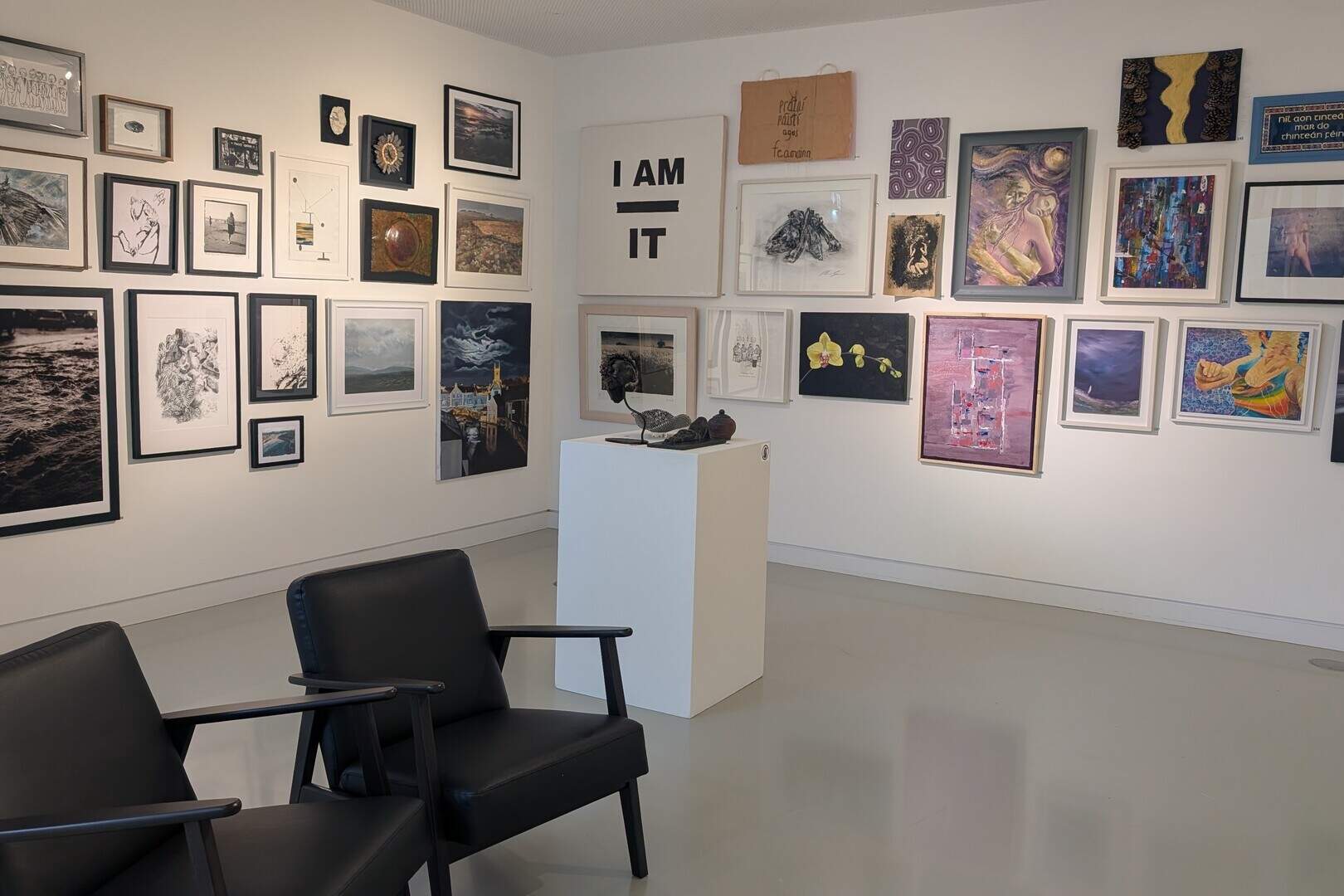
Gathering a motley collection of pieces acquired on a whim—driven by visual flashes of inspiration and budget constraints—inevitably raises the question of how they coexist. It is here, on the wall’s surface, that the collection takes on its true depth. A constellation of modest works, brought together by the consistency of a discerning eye, will forever exude a narrative power greater than that of a row of masterpieces mechanically purchased from a catalog. The wall becomes a blank page upon which the owner’s unique syntax is written.
Visual connections emerge silently over time. An optical print from the 1970s will challenge an archaic ceramic piece picked up a few weeks earlier. A stark photographic portrait will serve as a counterpoint to the softness of an abstract watercolor. The absence of excessive financial stakes frees up curatorial boldness. One does not hesitate to take pieces down, move them around, or rotate them with the changing seasons. The frame itself contributes to this vocabulary: the choice of a raw oak molding with an inverted profile or a gold-leafed reed frame radically alters the tone of the conversation between the object and its space. Standing before the finished wall, the insurance value fades into the background. All that remains is the intensity of the gaze, proving irrefutably that taste cannot be bought: it is cultivated.