Make Texture a preferred source on Google to support us
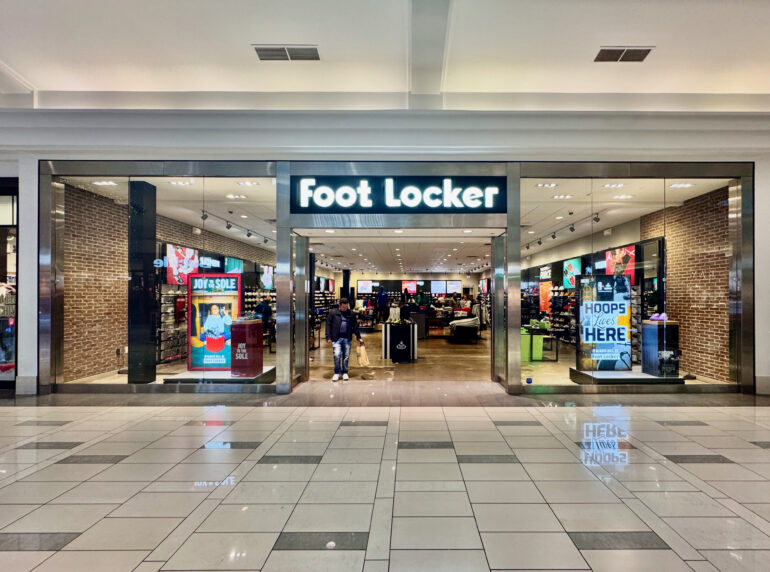
Add Texture to GoogleAt Foot Locker, the most telling figure may not be the one that makes the biggest impression: In the United States, same-store sales are up more than 4 percent. Behind the spectacular jumps linked to its acquisition by Dick’s Sporting Goods, this progress provides a more concrete measure of the sports shoe retailer’s situation. For anyone interested in the sneaker market, the challenge lies here: distinguishing between what the change in ownership contributes to the bottom line and what the retailers are actually managing to gain in a market that remains challenging.
A Significant Change, but Not Yet a Shift in Pace
The results for the first nine months of fiscal year 2026 might give the impression of a meteoric rise. The Foot Locker segment reported $5.32 billion in net sales, a 471.5% increase. But this surge is primarily due to timing. Since the acquisition was completed in September 2025, the previous year’s financial statements only included the business’s operations from that date onward. In 2026, the reporting period covers thirty-nine weeks, ending October 31. The two bases for comparison are therefore very different.
The same discrepancy is evident in the quarterly figures. Foot Locker now accounts for $1.80 billion in sales, compared to $930.91 million in the third quarter of 2025. This near-doubling does not mean that customers suddenly bought twice as much. It reflects, in particular, the shift from a partial contribution to a full-quarter presence in Dick’s Sporting Goods’ financials. This nuance is crucial: it prevents us from confusing the group’s expansion with an equivalent surge in demand.
Overall, sales for the first nine months reached $15.88 billion, compared with $10.99 billion a year earlier—a 44.6% increase. Dick’s Sporting Goods has entered a new league. Another question remains—less spectacular but more useful for assessing the impact of the merger: how are operations faring once the effect of their inclusion in the financial statements is factored out?
Foot Locker’s U.S. Performance
It is in this area that Ed Stack, CEO of Dick’s Sporting Goods, attributes part of the progress made. In his earnings statement, he reported slightly positive comparable sales for Foot Locker, despite a sports footwear market he described as still challenging. The wording is just as important as the number: a “slightly” positive trend indicates progress, not a surge.
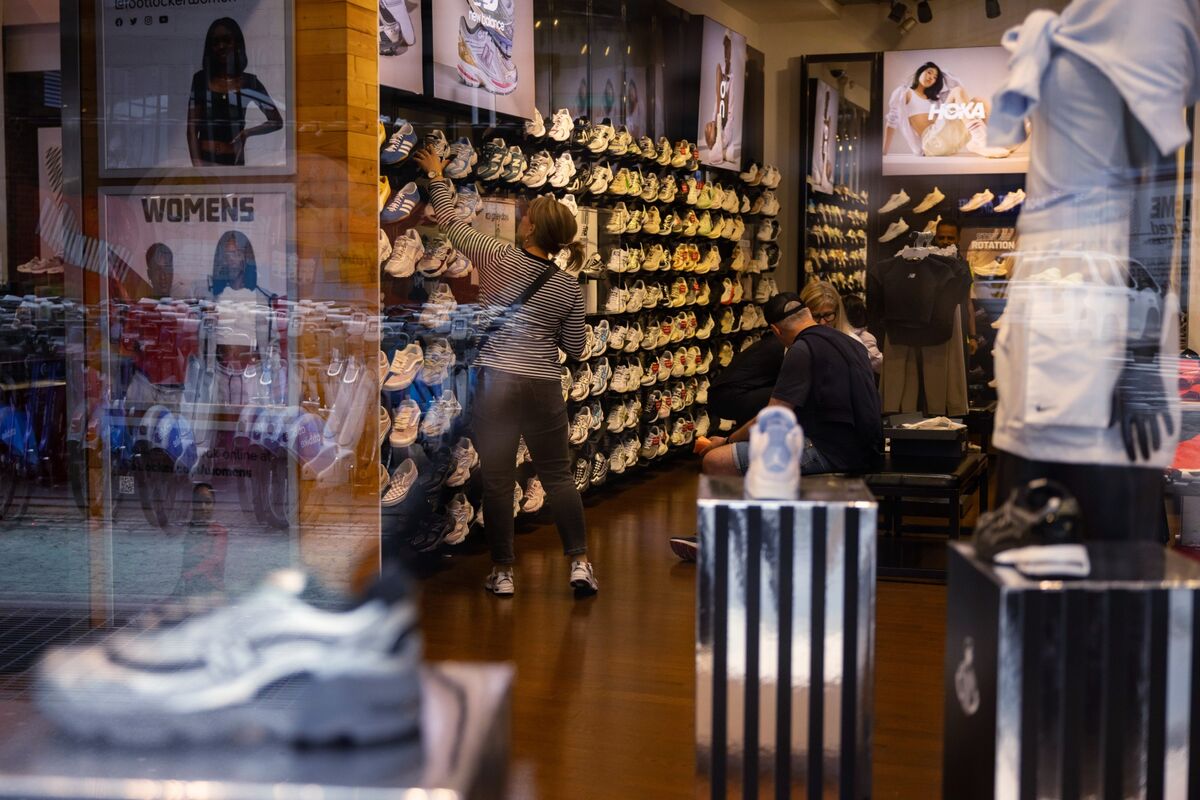
The United States posted stronger results, with growth of more than 4% on a comparable basis. This metric provides a better picture of sales momentum than the sharp increase in consolidated sales. It is based on a comparable foundation, rather than on business activity whose duration in the financial statements has changed. For the retailer, this is a tangible source of strength in a challenging environment.
However, it is important to keep things in perspective. The U.S. results alone do not reflect the entire Foot Locker segment, where comparable growth remains modest. The discrepancy between these two figures suggests that the strength observed in the United States should not be extrapolated to the entire business. The group’s communication thus paints a picture of real, though still modest, improvement.
Ed Stack also states that Dick’s Sporting Goods is gaining market share and expresses great confidence in its competitive position. This assessment complements the results without replacing them. The U.S. figures lend weight to this narrative; the weak comparable sales growth of the Foot Locker segment as a whole sets its limits. It is within this tension that the current state of the merger can be understood.
Two groups of brands, two perspectives on growth
The name Dick’s Sporting Goods now encompasses two segments that would be misleading to view as a homogeneous unit. The first includes Dick’s Sporting Goods, Golf Galaxy, Going Going Gone!, Public Lands, and GameChanger. The second comprises Foot Locker, Kids Foot Locker, Champs Sports, WSS, and Atmos. The published results pertain to these groups as a whole; they do not allow for the attribution of specific performance metrics to each individual brand.
This distinction sheds light, in particular, on Foot Locker’s role within the new organizational structure. Its financial weight has become considerable, but its reported growth remains heavily influenced by the date of the acquisition. The Dick’s segment, on the other hand, offers a more direct comparison with the previous fiscal year: its quarterly sales reached $3.34 billion, up approximately 3% compared to the third quarter of 2025.

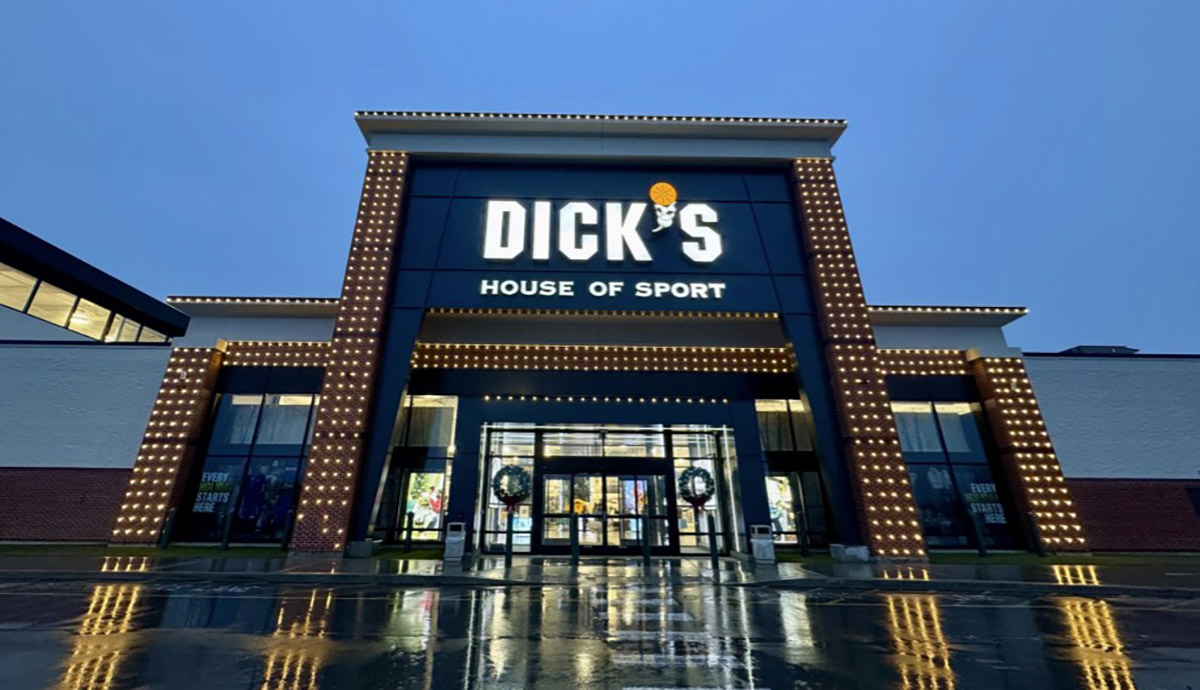
Over the first nine months, this same segment generated $10.56 billion in net sales, representing a 5% increase. This stands in stark contrast to Foot Locker’s triple-digit growth rates. However, it does not necessarily indicate a less dynamic business; rather, it serves as a reminder that the metrics do not tell the same story. On the one hand, measured sales growth; on the other, a contribution transformed by integration into the group.
Profit Is Not Holding Up as Well as Sales
Another figure prevents this quarter from being dismissed as a mere display of strength. Net income came in at $168 million—approximately 153 million euros—down 7% year-over-year. At the same time, the group’s net sales rose 23.2% to $5.13 billion. The company is therefore growing in size while net income is declining.
The information provided does not allow this decline to be attributed to a specific cause. Based on this information alone, there is no justification for attributing this decline directly to the acquisition or to Foot Locker’s situation. Nevertheless, this observation is enough to qualify the interpretation: higher sales did not translate into higher net income this quarter.
The group nevertheless exceeded Wall Street’s expectations, which had projected revenue of $5.08 billion. These two observations are not contradictory. A report can show better-than-expected sales but lower profits than the previous year. To assess this new dimension, sales volume cannot therefore be the sole criterion.
Raised Targets, But Not for Foot Locker
The annual forecasts reinforce this cautious outlook. For fiscal year 2026, Dick’s Sporting Goods is now targeting net sales of between $22 billion and $22.2 billion, up from the previous range of $21.9 billion to $22.1 billion. The upward revision remains modest given the weight the company has gained since the acquisition.
Above all, it is not accompanied by a revision to Foot Locker’s target, which remains set at between $7.4 billion and $7.5 billion. It is in the Dick’s segment where the lower end of the range has been raised: expected sales now stand between $14.6 billion and $14.7 billion, up from the previous range of $14.5 billion to $14.7 billion. Despite the reported comparable sales growth, Foot Locker is therefore maintaining exactly the same annual target. The U.S. signal is encouraging; at this stage, however, the company is not translating it into a promise of additional sales for this segment.