
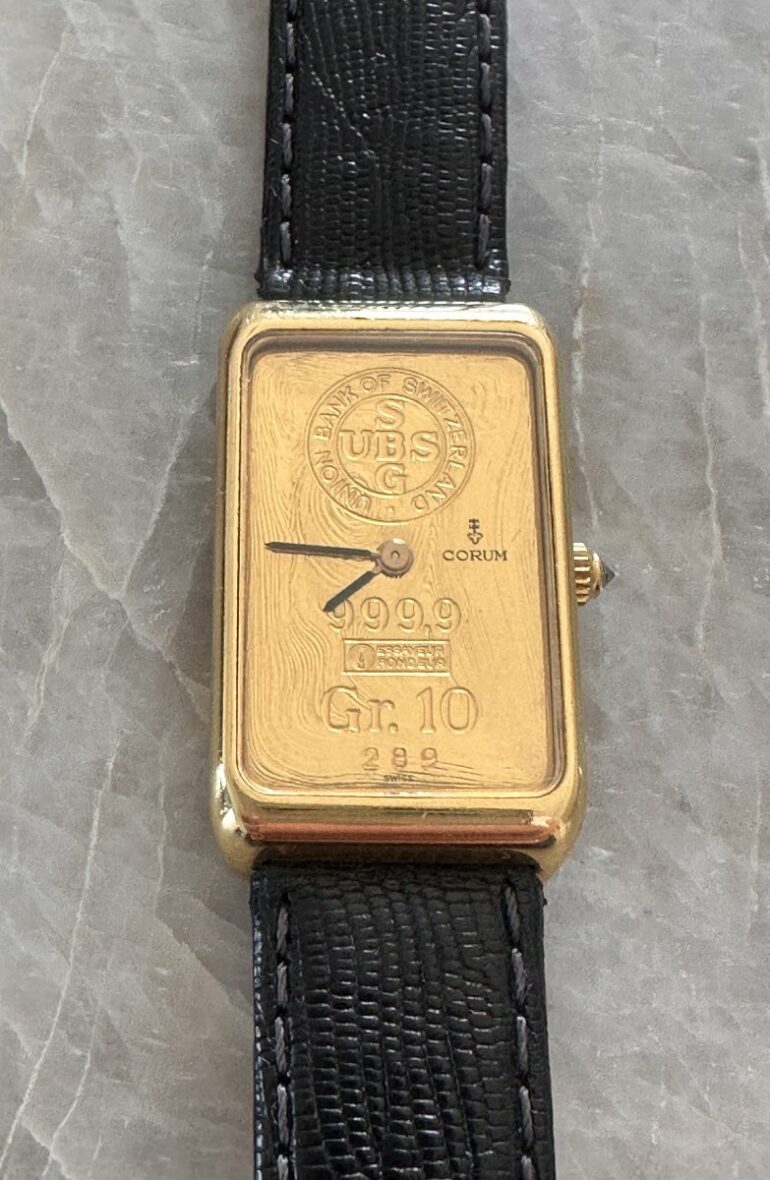
The surge in gold prices is shaking up the luxury watch market. From a purely financial standpoint, timepieces that were once cherished are now being melted down for their raw material, causing consternation among purists as they witness the silent disappearance of a piece of our watchmaking heritage.
When the Precious Metal Reclaims Its Rightful Place
The phenomenon is tantamount to sacrilege in the hushed world of luxury: watches, born under the auspices of prestigious campaigns and meant to be passed down through generations, end up in a crucible. According to Reuters, the meteoric rise in gold prices is redefining the rules of the game. When the intrinsic value of the metal exceeds the watch’s market value on the secondhand market, certain models lose their status as collector’s items and revert to being mere raw materials. This pragmatic reality is shaking the certainties of enthusiasts.
This trend is hitting pre-owned watches from major manufacturers such as Omega and TAG Heuer particularly hard. Jon White, a British dealer at Gold Traders, illustrates this shift: he reveals that he recently had an 18-karat gold Omega Constellation from the late 1970s melted down, even though it was in excellent condition. The conclusion is clear: the weight-based value of the gold far exceeded the watch’s estimated resale value. While the watch itself no longer held any appeal for collectors, its alloy, on the other hand, represented a genuine financial windfall.
The gold contained in this timepiece was valued at nearly 5,750 pounds sterling—an amount that dwarfs the 4,000 to 4,500 pounds that an auction sale might have hoped to fetch. This simple calculation highlights an era in which, unfortunately, the weight of the precious metal takes precedence over the design, patina, or history of a timepiece.
The Twilight of Mid-Range Models
James Lamdin, founder of the pre-owned division Analog Shift at Watches of Switzerland, notes that this wave of reselling primarily targets recent or vintage models that lack desirability. Timeless icons and models highly prized by connoisseurs are, of course, spared. It is the mid-range models—those that have not yet forged their own legend—that pay the highest price for this market-driven “natural selection.”
For Adrian Hailwood, a specialist in watchmaking history, this development is tinged with deep melancholy. The destruction of a watch by fire does not merely erase its gears and dial; it obliterates the expression of an era, an aesthetic vision, and artisanal craftsmanship. It is no exaggeration to say that every melted case carries with it a silent witness to the history of design.
A Secondhand Market Left Behind by the Gold Rush
This imbalance can be explained by the dizzying rise in the price of gold, propelled to historic highs by geopolitical tensions and macroeconomic uncertainties. Meanwhile, the pre-owned watch market has not followed a similar trajectory, creating a fatal gap for the heaviest pieces.
The trend is particularly pronounced for jewelry watches containing a substantial amount of gold, sometimes exceeding 200 grams. In the case of an all-gold Omega Constellation, the value of the case and the solid bracelet creates such an imbalance that selling the metal becomes the most rational option for sellers.
The Rise of the Watch as a Hybrid Asset
The World Gold Council has also noted a resurgence in global gold recycling at the start of the year, attesting to the vitality of this sector. While certain segments of the luxury market are experiencing a slowdown, the appetite for the precious metal remains strong. In this context, the gold watch is evolving into a hybrid asset, straddling the line between a coveted object and a pure safe-haven asset.
This phenomenon extends beyond the strictly secondhand market. The market is also seeing stocks of Swiss watches—sometimes new but unsold—being sent for remelting. This harsh reality serves as a reminder to the industry of the limits of overproduction, underscoring that an approach prioritizing rarity and excellence remains the most sustainable strategy.
Prestige Put to the Test
This situation comes as high-end watchmakers continue their strategy of moving upmarket. For example, Rolex reportedly recently implemented global price increases of about 5% for its gold models, following in the footsteps of other brands such as Cartier. While the wealthiest clientele absorbs these increases without batting an eye, this “luxury umbrella” is not enough to protect less iconic models on the secondary market.
Appraisal experts, such as Tavel & Simon, point out that a piece’s value is intrinsically tied to its model, its condition, and current market trends. When gold prices soar, the gap between a timepiece’s material value and its symbolic prestige becomes glaringly obvious. Intrinsic value eventually overshadows the brand’s aura.
It’s hard not to feel a twinge of sadness at this realization. A watch bearing the signature of a great brand is much more than a simple combination of gold and steel; it is a stroke of aesthetic genius, the spirit of a decade, and sometimes even a reflection of the iconic figures—such as George Clooney or Nicole Kidman—who have worn it. Yet, in the face of the market’s relentless laws, this extra touch of soul is no longer always enough to save the creation. Gold, in its unalterable purity, continues its course and reasserts its dominance, indifferent to the poetry it destroys.