Make Texture a preferred source on Google to support us
Add Texture to GoogleThe Past Is No Longer Under a Bell Jar: The Art of Fragmentation
Heritage preservation has traditionally involved placing objects under lock and key. The institutional reflex is to freeze the material, to place the artifact behind a thick layer of protective glass, and to impose absolute silence around the relic. Yet the vitality of a heritage is measured precisely by its ability to withstand shocks and survive its own desecration. As 2026 draws to a close, Seoul is shaping an intellectual and visual rebellion against the museumification of thought. Far from polished and dusty tributes, the galleries and foundations of the South Korean capital are orchestrating the systematic dismantling of grand narratives. Whether it involves centuries-old Asian literature, material archives of the African diaspora, or ancient imperial architecture, the approach remains the same: historical material must be twisted, fractured, and then reassembled. This surgical work unfolds across three exhibitions that share the same outright rejection of deference.
Choe Sooryeon and the Subversion of the Copy
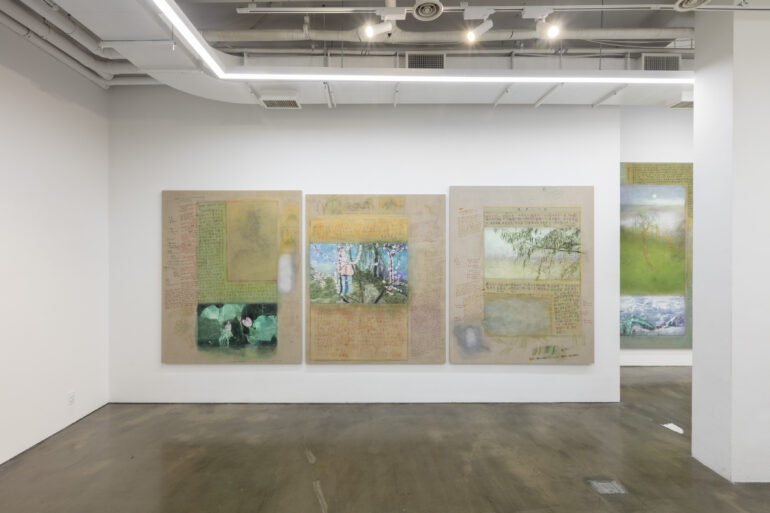
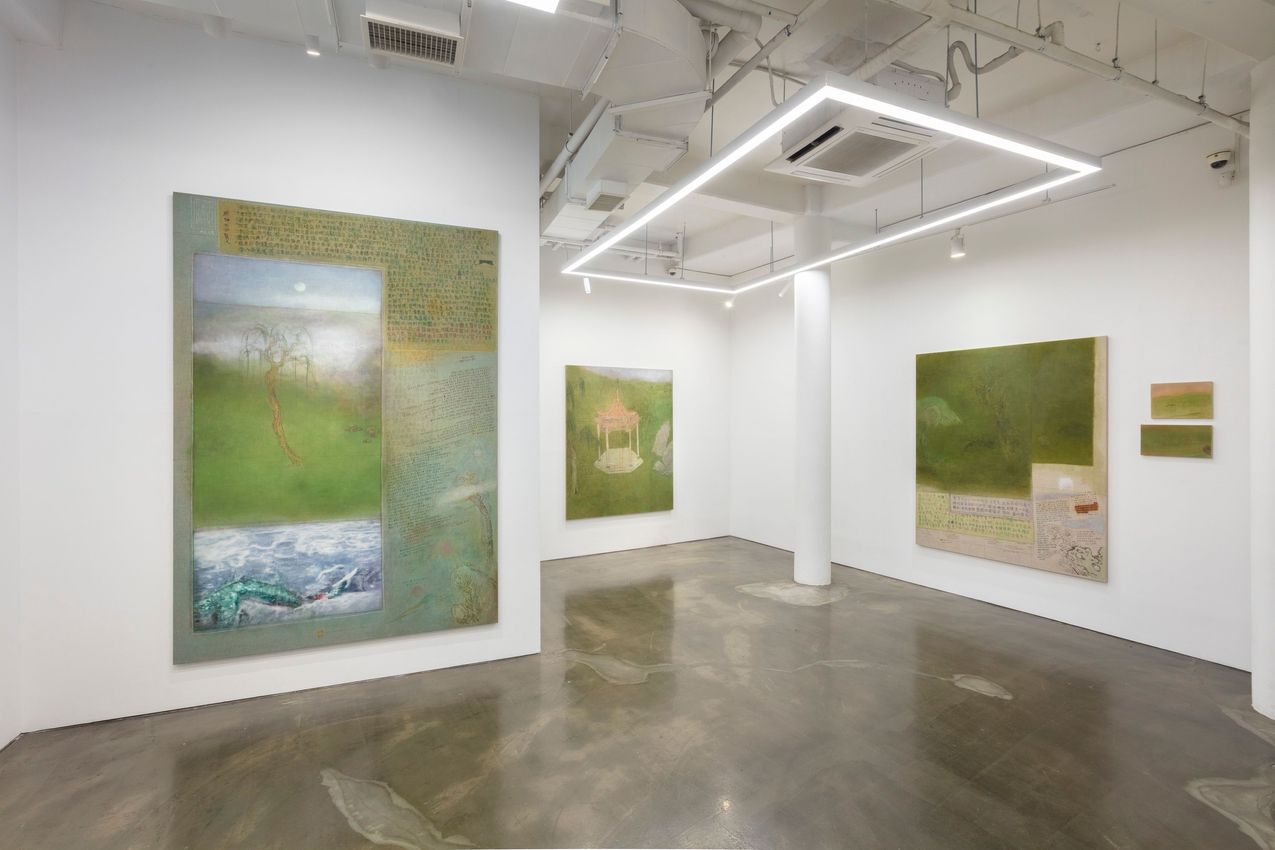
This dismantling finds its most intimate foundation in the manipulation of language and convention. At the Chosun Gallery, the solo exhibition “Mustard Seed Garden Grave,” which opened on October 10 and runs through December 9, 2026, tackles the tyranny of foundational texts. In it, Choe Sooryeon targets the stifling imagery conveyed by narratives in Classical Chinese. For centuries, this language held sway in the region, dictating the parameters of literature while also imposing the rigid contours of a feminine identity often reduced to a purely decorative role. It is this Orientalizing strangeness—this disembodied figure described by Vogue Korea as a “papercut vision”—that the artist sets out to defuse.
The South Korean artist’s method rests on a formidable paradox: she uses the quintessential tool of academic submission to orchestrate her own escape. In the East Asian calligraphic and pictorial tradition, meticulous imitation of the masters constitutes the indisputable foundation of learning. Study involves exact reproduction. Choe Sooryeon takes this normative exercise and slowly pushes it to its breaking point. Under the guidance of her hand, the act of copying ceases to validate the original narrative and transforms into a space of calculated deviation.
The viewer witnesses a fundamental shift. The classical characters traced onto the surface gradually lose their linguistic authority and semantic rigidity, shifting toward the materiality of the painting. This blurring of formal boundaries dismantles the unambiguous interpretation imposed by tradition. By transforming yesterday’s directive into a space of aesthetic deviation, the artist strips the frozen narrative of its substance. Heritage no longer functions as a prison or an instruction manual, but becomes an open lexicon, permeable to unauthorized interpretations.
Theaster Gates: The Sonic Memory of Matter
Physical matter undergoes an equally subversive treatment on the gallery walls of White Cube Seoul. Since November 4, Theaster Gates has been occupying the space for his very first solo exhibition in South Korea. The American visual artist presents “African Still Life,” a title that sounds like a semantic challenge. Still life—a pictorial genre historically associated with absolute stillness and the silence of domestic interiors—is forcibly reanimated here. The objects do not simply rest; they act.
The body of work assembled by the artist deliberately disregards the classical hierarchy that pits the noble materials of the fine arts against the tools of craftsmanship. The selection revolves around objects of profound everyday banality: a weathered stool, a fragment of ceramic, a rough stone, or an abandoned shoe. Where a superficial reading would see only the inventory of an abandoned studio, Gates perceives intense cultural seismographs. Each piece lays bare the traces of complex—and at times violent—movements between the American, African, and Asian continents. The stool crystallizes a stance, a social order; the shoe maps the trajectories of movement. The assembly of these elements is never a matter of aesthetic chance, but functions as a genuine method of thought.
The spatial installation conceived by the artist categorically rejects the clinical silence of the contemporary gallery. The exhibition incorporates a powerful sonic dimension that permeates the architecture of the space, with the music literally striking the ceramics and the sculptural assemblage. Through this deliberate intersection of architecture, visual performance, and sound, Gates shatters categorical boundaries. In his approach, there is no desire to smooth over the rough edges or erase the rough spots of history. Geographical references collide, brilliantly demonstrating that the construction of a cultural identity rejects the fantasy of original purity, instead forging itself through abrasion, displacement, and constant friction.
Bulgari and SongEun: The Monument Confronted by Wear and Tear
This rejection of passive contemplation reaches an unexpected peak when the subject of study turns out to be one of the most massive and intimidating monuments in Western history. Since October 29, 2026, the SongEun Foundation has lent its architecture to “Light, Form and Vision.” The exhibition, organized in collaboration with Bulgari, takes the B.zero1 collection as its conceptual starting point. Launched in 1999, this jewelry line already created a radical clash by juxtaposing the colossal curves of the Roman Colosseum with the strict industrial functionality of Tubogas tubing. Building on this precedent, the exhibition entrusts this grammar of modernity to the local art scene to push it to its limits.
Reports on the event from the Kiaf Seoul art fair and the Yonhap News Agency confirm the participation of six South Korean artists and collectives who have chosen to deconstruct the monumental aesthetic rather than celebrate it. The colossal Roman amphitheater never appears as a picture-perfect image, but instead becomes a formal vocabulary that artists feel free to deconstruct through video, sound, scent, or installation. Jung Youngho, for example, challenges the illusion of mineral permanence. Using long-exposure photography, the photographer stretches perception, dissolves the architecture’s immediate solidity, and transforms stone into a mere notion of duration.
The duo Graycode and jiiiiin enacts another form of spatial evaporation. Their installation retains the circular geometry of the ancient arena but strips it of all its weight, replacing it with a musical composition generated in real time. Mass gives way to sound frequency. Even more radically, other invited visual artists plunge the very idea of a prestigious monument into the absolute triviality of the ordinary. They employ humble, unstable, and ephemeral materials—common coins or roughly crumpled paper tickets. Linking the overwhelming architectural machinery of an empire to the fragility of everyday trash amounts to methodical sabotage. The expected institutional homage is transformed into a jubilant dismantling of the codes of luxury.
These intersecting curatorial trajectories paint a portrait of contemporary art that has definitively ceased to bow down before its ghosts. Whether the target is calligraphic norms, diasporic relics, or imposing Roman marble, the dynamic remains the same: cultural appropriation demands a breach. The vitality of an era no longer lies in the obsessive preservation of traditions, but in the precision—sometimes brutal—with which we are willing to disrupt them to force them to breathe new life.