Make Texture a preferred source on Google to support us
Add Texture to GoogleWithin the vast architectural expanse of the Guggenheim Museum Bilbao, one room remains hidden from view, revealing itself only to the ears. Sir Steve McQueen, a visual artist and filmmaker whose career spans both the Turner Prize and an Oscar, presents a radical work there. Titled “66–76–26,” this installation strips away all visual artifice—no screens, no photographs, no projections—to explore the sculptural power of the voice. In near-total darkness, broken only by a faint glow, visitors are immersed in a sonic encounter where two music legends, Nina Simone and David Bowie, seem to respond to one another across the decades.
The Architecture of an Imaginary Duet
Steve McQueen’s scenographic design is based on absolute minimalism. The space is traversed by two spatially distinct vocal beams, emanating from opposite sides of the room. The artist has performed a surgical stripping-down of the original recordings: the instrumentation has been completely removed, leaving only the a cappella tracks. This vocal dialogue, which lasts approximately eleven minutes without interruption, creates a palpable tension in the emptiness of the room. The audience no longer watches; they inhabit the sound.
At the heart of this experience lies a single song: “Wild Is the Wind.” Composed in 1957 by Dimitri Tiomkin with lyrics by Ned Washington, it was originally created for George Cukor’s film of the same name and performed by Johnny Mathis. McQueen draws on two iconic renditions: Nina Simone’s, recorded in 1966, and David Bowie’s, released in 1976 on the album “Station to Station.” By isolating these voices, the artist reveals the breaths, inflections, and fragility of these two performers, bringing them together in an encounter that never took place during their lifetimes.
An Emotional Timeline: 66–76–26
The title of the work functions as a temporal equation. “66” refers to the year of Simone’s recording, “76” to Bowie’s, and “26” marks the year 2026, the date of the installation’s creation and presentation in Bilbao. This temporal triptych underscores the enduring nature of a work of art across the ages and its ability to reinvent itself depending on the context in which it is heard. For Steve McQueen, his connection to this song is longstanding and personal. Although he discovered Bowie’s version in the mid-1990s before hearing Nina Simone’s, he had already incorporated this theme into the soundtrack of his 2018 film “Widows.”
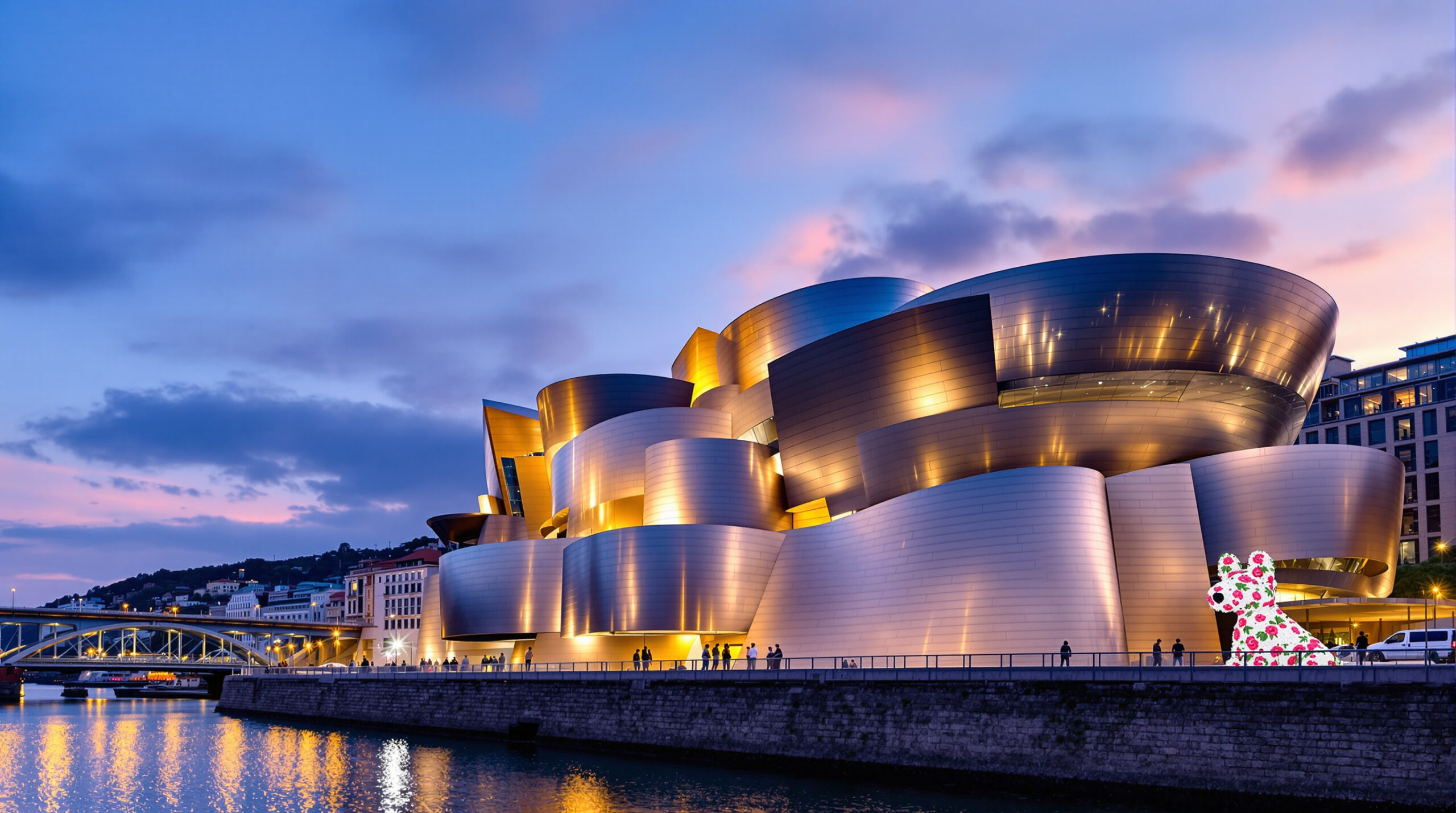
This installation does more than simply play music; it explores collective memory and the physical presence of absence. The choice of October 9, 2026, for the opening is no coincidence, as it marks the British artist’s 57th birthday. Curated by Lekha Hileman Waitoller, the exhibition is supported by the insurance company Occident, anchoring this ambitious artistic project in the season’s international cultural calendar.
Resonances Between Art, Fashion, and Design
Even before its opening at the Guggenheim, the sonic essence of this vocal montage had already found an unexpected echo on the runways. The soundtrack of this dialogue between Simone and Bowie set the pace for the Bottega Veneta runway show for the Spring/Summer 2026 collection, under the creative direction of Louise Trotter. This circulation of the work—from the world of fashion to the museum—attests to the permeability of disciplines and the immediate impact of McQueen’s vision on contemporary aesthetics.
To accompany the exhibition, a special catalog was designed by Steve McQueen himself, in collaboration with Dutch designer Irma Boom, a leading figure in art publishing. This book, available for €48.00 at the museum’s official store, features an in-depth interview between the artist and Lekha Hileman Waitoller. It extends, through text and graphic design, an experience that, by definition, fades away once the gallery door closes.
The installation “66–76–26” remains open to the public until mid-February 2027, offering a moment of contemplation and acoustic purity amid the hustle and bustle of the museum. In this juxtaposition of 1966 and 1976, Steve McQueen presents not only a work about music, but also a reflection on the traces voices leave behind once the wind has stopped blowing.