Make Texture a preferred source on Google to support us
Add Texture to GoogleIn the heart of the Sierra Norte in the state of Puebla, where the peaks of the Sierra de Chignautla cut across the Mexican horizon, the site of Teteles de Ávila Castillo—also known by its vernacular name, Tetelihtic, or “Los cerritos ”—has just revealed one of the most significant secrets of contemporary Mesoamerican archaeology. Systematic research, conducted since 2014 by the National Institute of Anthropology and History (INAH), confirms the identification of a solar observatory dating back more than 2,500 years. This discovery, officially announced on October 13, 2026, is revolutionizing our understanding of ancient knowledge: it is the oldest documented astronomical complex in Mexico, and, more importantly, the first example of its kind identified outside the traditional sphere of Mayan influence.
Architecture in Tune with Celestial Cycles
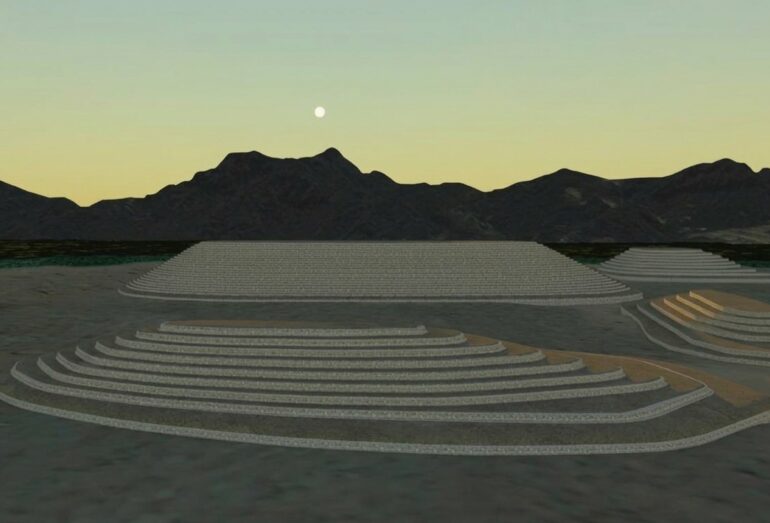
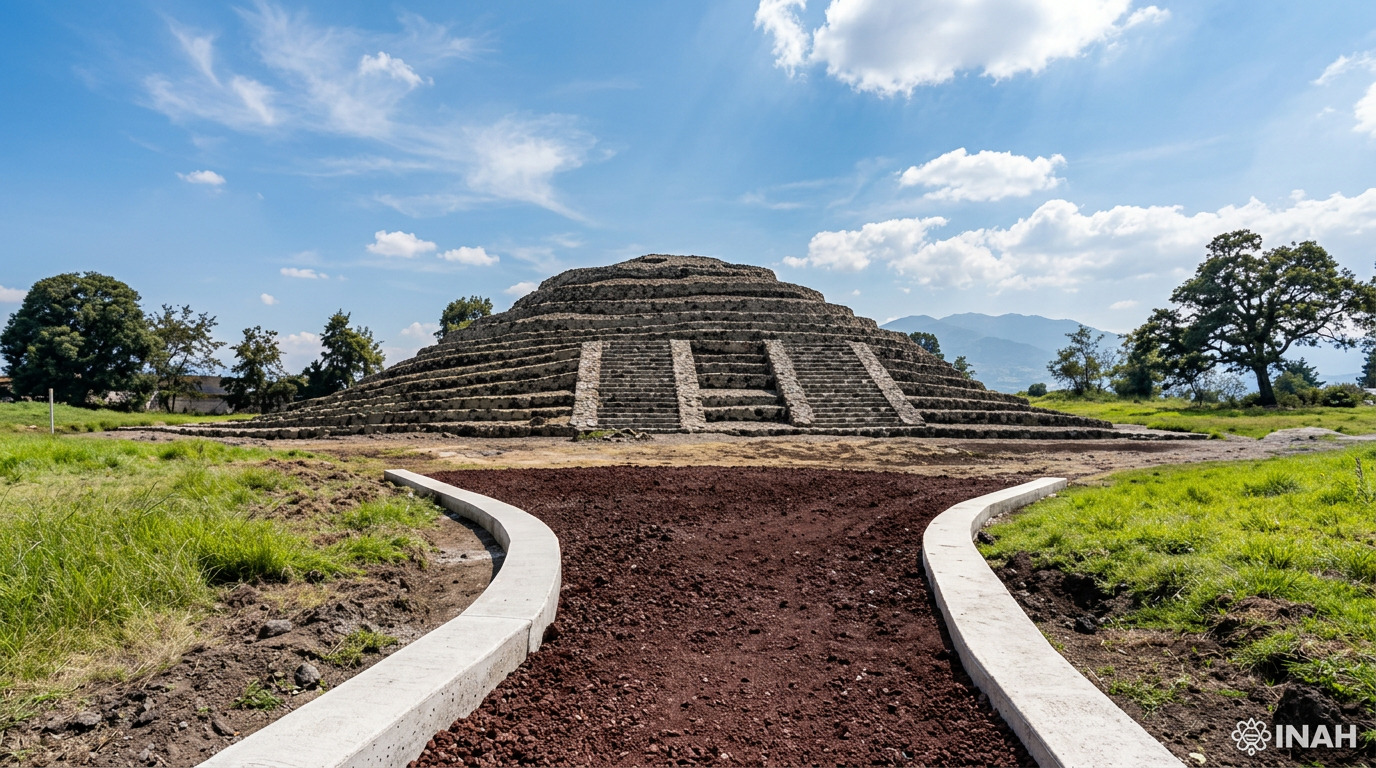
The Teteles de Ávila Castillo complex is organized around a rigorous structure typical of so-called “Group E” complexes. This architectural model, whose historical counterpart is found at Uaxactún in Guatemala, is based on a sacred geometry designed to capture the movement of the stars. To the east of a large central plaza, archaeologists have unearthed a quadrangular courtyard flanked by two opposing pyramidal bases. The eastern platform, of remarkable size, stretches approximately 90 meters long along a north-south axis and is 40 meters wide. By comparison, this structure is twice as large as the one found at Uaxactún, underscoring the site’s political and ritual importance as early as the Middle Preclassic period (between 1000 and 600 B.C.).
Under the direction of Alberto Diez Barroso Repizo, director of the Proyecto Arqueológico Teteles de Ávila Castillo, excavations revealed that this alignment was by no means accidental. The builders used the surrounding terrain of the Sierra de Chignautla as natural markers to align their astronomical horizon. This system made it possible to precisely mark the solstices and equinoxes, as well as key moments in social and agricultural life: the start of the Mesoamerican calendar year in February and the harvest cycle in October. Beyond the sun, a secondary alignment has been identified with Canopus, the second-brightest star in the night sky. In later regional cosmogonies, this star is closely associated with the goddess Nantehuitz, reflecting a spiritual depth rooted in the observation of luminous phenomena.
Green Obsidian and Rites of Passage
Analysis of the archaeological artifacts unearthed at the site reveals the contours of a complex society integrated into vast trade networks. Excavations have revealed a significant presence of obsidian, particularly in the form of blades, tools, and beads with a characteristic green hue. This volcanic rock comes from deposits in the Sierra de las Navajas, located in the present-day state of Hidalgo, a considerable distance from the site. The presence of these materials suggests that Teteles de Ávila Castillo occupied a strategic position along a trade corridor linking the central highlands to the Gulf of Mexico, providing access to the same supply sources that would later serve the metropolis of Teotihuacan.
The site’s sacred nature is also underscored by poignant ritual deposits. Archaeologists have discovered ceramic urns and vessels containing the skeletal remains of young children. These infant burials, often associated with green obsidian beads, illustrate the votive practices of this period. However, our understanding of these human remains remains incomplete: the extreme humidity and harsh climatic conditions of this mountainous region have caused significant degradation of the biological remains, limiting in-depth anthropological analysis. Although the site was abandoned as a settlement around 100 CE, its symbolic significance persisted for centuries. Deposits from the Totonaque period, dating to the Late Classic (between 600 and 900 CE), demonstrate that local populations continued to honor this site long after its political decline.

A Cultural Genealogy Between the Plateau and the Coast
The existence of such an observatory at Teteles de Ávila Castillo raises the question of the origin of astronomical knowledge in Mesoamerica. The site’s main period of occupation, spanning from 900 B.C. to 100 A.D., makes it a precursor. Researchers are exploring the hypothesis of a connection between the original builders of Teteles and the groups that would later found major cities such as Yohualichan or El Tajín. This connection to the Totonac culture, while intriguing, remains for now a line of research awaiting further confirmation.
The city’s decline around the year 100 CE may be linked to the emergence of a neighboring power: Cantona. This chronological correlation suggests possible competition for control of trade routes and resources. Teteles appears to have been a hub where Huastekan, Maya, and Central Mexican influences converged, creating a crossroads of knowledge with the observatory as its nerve center. There is also evidence of local obsidian workshops, reinforcing the image of an active center of production and redistribution throughout the Preclassic period.
The Challenges of Preserving a Sanctuary
The modern history of Teteles de Ávila Castillo is one of gradual preservation. Although the site was first documented as early as 1939, it remained on private land for decades, suffering episodes of looting that threatened its integrity. The total area of the site is estimated at approximately 9 hectares, containing 16 pyramidal structures. To date, only 3.5 hectares have been donated to the INAH in 2007, allowing for the protection of the main excavations. The rest of the complex remains in private hands, which currently limits the scope of archaeological research.
Thanks to the support of the local municipality and the Tzoncóyotl civic association, the INAH has expressed its intention to open the site to the public and establish a site museum. This project would showcase the discoveries—from cinerary urns to stone tools—while protecting the pyramidal structures from erosion. Although no timeline for ticket sales or federal funding has yet been established for this opening, the recognition of the universal value of this solar observatory now places Teteles de Ávila Castillo among the jewels of the world’s archaeological heritage.