
Gold or the Watch: The Dilemma Dividing the World of Fine Watchmaking
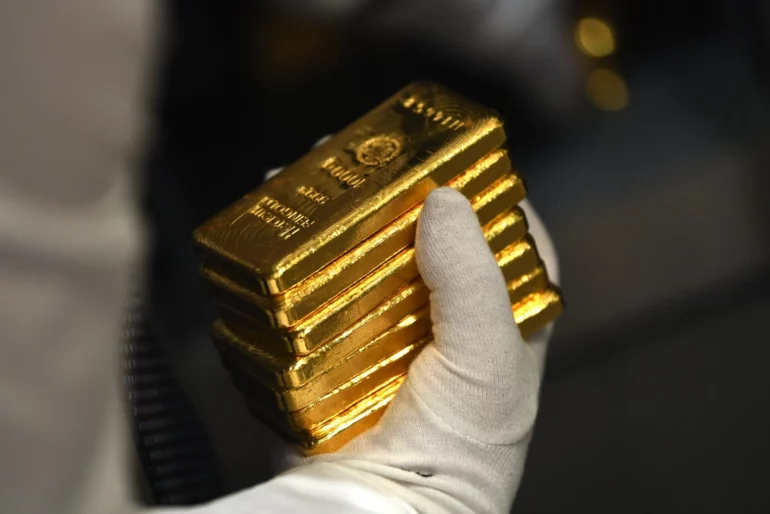
The luxury watch market is experiencing unprecedented turbulence, marked by an increasingly sharp divide between untouchable icons and mid-range models. At the heart of this shift: the soaring price of gold. As the price of gold approaches $4,200 per ounce (after hitting a historic high of $5,000 last January), a dramatic shift is taking hold. On one hand, prestigious brands are raising their prices to cement their exclusivity; on the other, historic timepieces are simply being sent to the foundry.
This phenomenon, documented by Reuters, reveals a ruthless mathematical reality for collectors of so-called “mass-market” models. For certain 18-karat gold pieces, the value of the precious metal has ultimately exceeded the watch’s market value on the secondhand market. The example of the Omega Constellation is striking: a model from the 1970s in perfect condition was recently melted down because its gold weight was worth approximately 6,664 euros—35% more than its estimated auction price. This “short-sighted tragedy,” as industry experts describe it, primarily affects vintage models that have not yet attained collector’s status or unsold pieces from recent production resulting from past overproduction.
The Unshakable Health of the Giants: The Case of Rolex
In contrast to this “creative destruction,” the masters of Geneva are setting their own rules. Far from being subject to the volatility of raw materials, Rolex is using rising costs to justify an aggressive pricing strategy. Last June, the brand with the crown surprised the market with an average global price increase of 5% on its gold models—the second increase of the year following the one in January. The result is spectacular: a white-gold Cosmograph Daytona now sells in the United States for approximately $59,100, a 33% increase compared to 2024.
This strategy of engineered scarcity is paying off. In 2024, Rolex alone accounted for 61% of the value of new Swiss watch sales priced at over 3,000 Swiss francs. At the same time, Swiss exports of timepieces priced above 20,000 francs have more than doubled compared to the pre-pandemic era, now accounting for two-thirds of the sector’s total value. At Cartier (Richemont Group), the trend is similar, with price adjustments of up to 10% on gold models last month.
Jewelry, the driving force behind the global luxury market
Global financial analysis confirms this shift. According to data from Barclays, the “Watches & Jewelry” segment significantly outperforms “soft luxury” (leather goods and ready-to-wear). Between late 2025 and mid-2026, major jewelry houses implemented cumulative price increases of up to 13%, while apparel prices remained flat at 3%. Brands such as Bulgari and Tiffany & Co. particularly capitalized on this opportunity to boost their second-quarter 2026 results, thereby supporting the growth of giants like LVMH.

Geographically, the momentum is shifting. While Europe is marking time, held back by geopolitical tensions in the Middle East, the United States is showing remarkable resilience with a 17% increase in luxury spending. South Korea is also emerging as a strategic market, driven by an influx of tourists and a strong local stock market, directly benefiting brands such as Prada and Moncler.
An irreversible polarization?
The sector’s future appears to be shaped by a process of natural selection dictated by the intrinsic value of materials. With forecasts placing the price of an ounce of gold between $5,400 and $6,300 by the end of the year, pressure on mid-range models will only intensify. The luxury watch is no longer merely a technical object or a status symbol; for investors, it is once again becoming a store of precious metal.
For owners of rare Patek Philippe or Rolex timepieces, their status as a safe haven is stronger than ever. For others, the risk of seeing their watch collection end up in a smelter’s furnace is becoming a concrete economic reality. The luxury of tomorrow will be ultra-exclusive or it will cease to exist, sacrificing part of mid-range watchmaking history on the altar of profitability.