
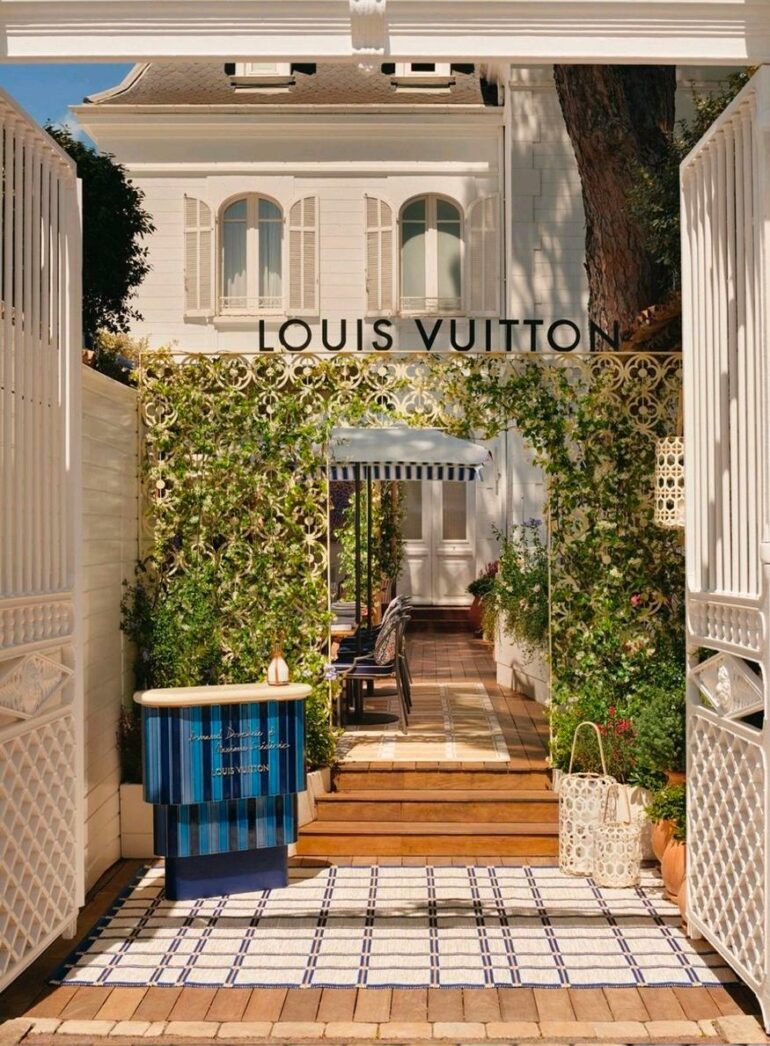
The clinking of a silver spoon against a stamped saucer now sets the pace of mass consumption. Once conceived as a purely transactional space, the retail store is slowly transforming before our eyes. Yesterday we entered it to acquire a silhouette; today we settle in to spend time. By incorporating the simple coffee break into their vast narrative machines, international brands are making a radical strategic shift. Clothing is no longer the sole point of contact: the goal is to envelop the visitor in a coded atmosphere, to imprint memories through other senses, and to transform the one-time act of purchasing into a ritual of belonging.
The last century followed a linear logic. The great names in haute couture dictated cuts, prescribed the use of fabrics, and subtly suggested a certain idea of elegance. The transaction ended with the shopping bag. The landscape has changed under the influence of a fully globalized fashion industry, where runway shows—once confined to the exclusive circles of Parisian or Milanese salons—are now broadcast live on screens around the world. The image of luxury has become ubiquitous, almost elusive due to how widely it is shared. To preserve their aura and justify their positioning, industry players have had to rethink their physical presence. They have turned to art, interior design, the hotel industry, and—more unexpectedly—casual dining. The challenge is no longer simply to clothe, but to welcome.
The Geometry of Origins and the Architecture of Taste
This new kind of hospitality takes on extremely assertive visual forms, designed to extend the aesthetic of the collections without the slightest break in tone. The approach developed by Prada perfectly illustrates this obsession with continuity. Inside the Prada Caffè, the eye is immediately drawn to the brand’s signature green, which is omnipresent and interacts with patterns taken directly from the label’s fashion archives. Nothing is left to chance, not even the floor. Beneath customers’ feet, a black-and-white checkerboard pattern replicates with surgical precision that of the original boutique, which opened in 1913.
This meticulously crafted design is more than just a matter of style. It is part of a comprehensive ecosystem that the Italian group has been meticulously weaving for years, linking its commitment to contemporary art through its foundation to its investments in culinary heritage, as exemplified by the Marchesi 1824 pastry shop. The plate and the decor become components of a single architectural language. Visitors come here not only seeking a warm, welcoming atmosphere, but also to affirm their place within a comprehensive creative universe.
Heritage on the plate and staged splendor
In Paris, this approach takes on an even more intimate heritage dimension. The Dior café is nestled on Avenue Montaigne, on the site of the historic ateliers where the legend of the New Look was forged. Named Monsieur Dior, the space was entrusted to architect Peter Marino, who drew on the brand’s rich archives to design a theatrical setting. The menu itself reads like a biographical tribute, modeled after the founder’s culinary preferences. The line between fashion and gastronomy is completely blurred here: the dishes are named after famous dresses, while the creations blend strawberries, whipped cream, and bell peppers in constant nods to the vocabulary of haute couture.
The tone shifts toward exuberance when examining Dolce & Gabbana’s strategy. The Milanese house chose the bar scene as the setting for its DG Martini. Far from understated, the venue celebrates the brand’s unapologetic taste for opera and Italian Baroque. The gilding, velvets, and ornate decor serve as an immediate statement. Whether or not the customer grasps the brand’s intellectual subtleties, they are instantly captivated by its visual intensity. With a variety of cocktails—including non-alcoholic options to cater to all clientele—the brand proves that a flamboyant decor can be just as effective as an advertising campaign in asserting its identity.

Roasted America: The Luxury of Familiarity
While some European brands play the hyper-sophistication card, others capitalize on a sense of reassurance. Ralph Lauren understood the power of warm classicism long before many others. As early as 2014, the American designer opened his first Ralph’s Coffee in New York. The success of this concept quickly paved the way for international expansion, which reached London, Paris, and Tokyo, before setting its sights on the U.S. West Coast with a planned January 2026 opening at Fashion Island in Newport Beach, California.
Paradoxically, the brand’s strength lies in its apparent simplicity. The menu focuses on essentials: teas, pastries, infused coffees, and espresso-based drinks. The organically grown beans are sourced from Africa, Central, and South America, then roasted and packaged in Philadelphia by La Colombe. No extravagant ingredients disrupt the menu. It is precisely this simplicity that builds customer loyalty. By translating its most recognizable stylistic hallmarks—a love of vintage, respect for tradition, and bourgeois elegance—into a simple, steaming cup, the brand demystifies its aura. It makes itself accessible, everyday, almost reassuring. The cup of coffee acts as a powerful draw for a demographic that might not otherwise dare to step into a boutique to try on a tweed blazer.
An Economy of Attention
Behind these porcelain cups and marble counters lies a very clear-eyed reading of the times. The luxury industry has realized that a single purchase is no longer enough to establish cultural dominance. It is now necessary to establish frequency and recurrence. The dining area perfectly meets these requirements by establishing a different sense of time. An evening gown is rarely purchased every month; an espresso can be enjoyed every morning.
This hospitality strategy helps break down psychological barriers. The tasting area functions as an airlock, an antechamber where the customer soaks up the atmosphere without feeling the pressure of a fitting room. The commercial transaction takes on an emotional dimension. Anyone who sits down inevitably leaves with a memento of their visit: a photo quickly shared on a screen, the tactile memory of a bench, or the object itself, transformed into a modest trophy. By funding these living spaces, fashion houses are sending a clear signal about the nature of their current business. Selling fabrics is now just one facet of their business; their true raw material today is capturing people’s free time. And in an economic landscape where the public’s attention is fiercely contested, managing to keep a visitor for the duration of a hot drink constitutes a major commercial victory.