
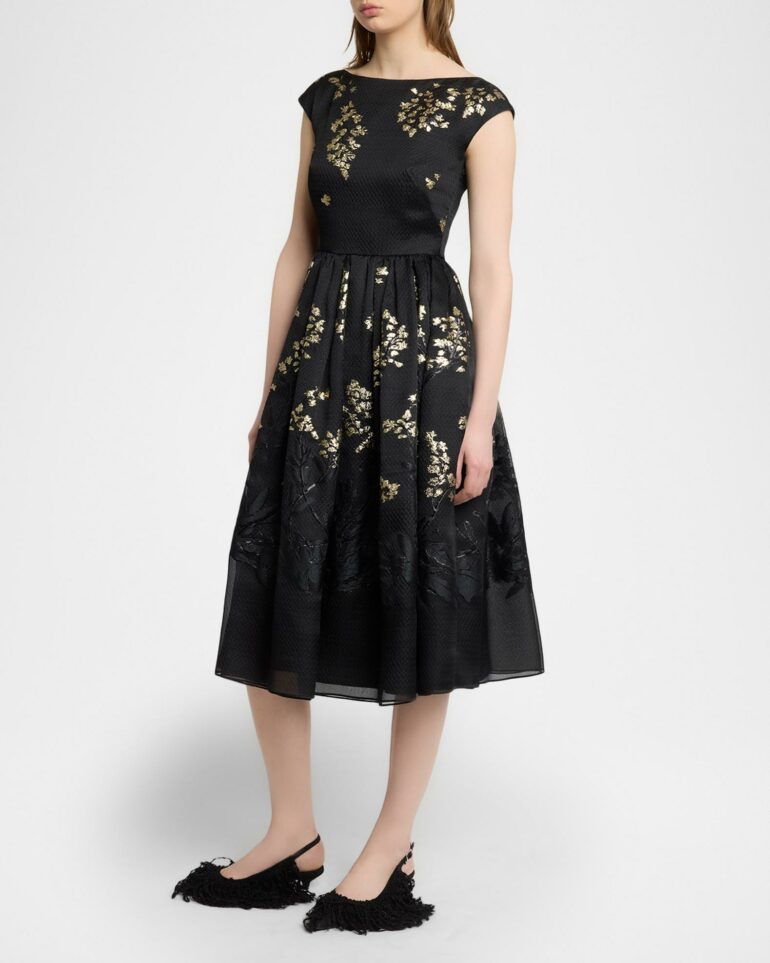
Forget airy chiffon, pastel shades, and the innocence of spring buds. The Fall-Winter 2026–2027 collection marks a sharp break from the bucolic imagery that has long defined the floral motif. This season’s wardrobe features a mutated, darkened botanical motif, carved from solid form. The flower no longer serves to soften a silhouette; it deliberately weighs it down, structuring it and lending it an almost architectural density. Gone are the days of simple, flat prints on cotton poplin: the motif now demands to be touched as much as it is looked at, asserting itself as a full-fledged element of textile construction.
Fabric as a New Creative Canvas
This stylistic shift rests above all on a radical change in fabric. The winter season abandons smooth surfaces in favor of an unapologetic three-dimensionality. Design studios are embracing heavy, tactile fabrics capable of absorbing light rather than reflecting it. Embossed velvet, dense brocades, intricate quilting, fur inserts, shearling, and fringe details become the new canvases for this winter collection. The depth of the fabric alters the very perception of the pattern, which better withstands the weight of a cold season on a thick jacquard than on a fine weave.
Naturally, the color palette follows this shift toward darkness. Powdery pink and sky blue give way to deep, earthy, and nocturnal hues. Burgundy, plum, forest green, chocolate, and midnight blue set the mood for the collections. The small, repetitive, and naive bouquet gives way to broad brushstrokes and oversized flowers painted with bold lines. This precision does not preclude bold combinations: the floral motif now embraces direct juxtaposition with strict checks or polka dots, rejecting visual uniformity in favor of a controlled and skillfully textured chaos.
From London Archives to Parisian Ateliers
The turning point for this aesthetic dates back to the Spring 2025 haute couture shows. In Milan, Alessandro Michele presented his first collection for Valentino, introducing a treatment of the floral motif reminiscent of fine jewelry. Plants appeared as precious artifacts, born of complex layering and recycled materials. This approach permeated the entire industry, paving the way for the Fall/Winter 2026 collections.
In London, the trend is viewed through the lens of history. The vintage-inspired silhouettes of Richard Quinn and Patrick McDowell embrace this new sense of gravity. At Erdem, which is celebrating its 20th anniversary, the flower acts as a temporal slider. Far from being a mere ornament, it weaves a link between the aesthetics of the Elizabethan era, Victorian austerity, and the raw minimalism of the 1990s. In Paris, haute couture is embracing the trend with an approach centered on contrasting volumes. Chanel juxtaposes the delicacy of meticulous floral appliqués with deliberately rustic-cut jackets, creating a visual tension that rejects the predictability of an overly demure silhouette.
A Manifesto of Artisanal Patience
Behind this omnipresence of texture lies a broader discourse on the temporality of fashion. The demands of these new floral motifs necessitate a return to slow, deliberate gestures, repetition, and the memory of the hand. Antique embroidery, complex weaving techniques, and visible finishes transform the garment into an object that evokes historic draperies, domestic tapestries, or the melancholic composition of pictorial still lifes.
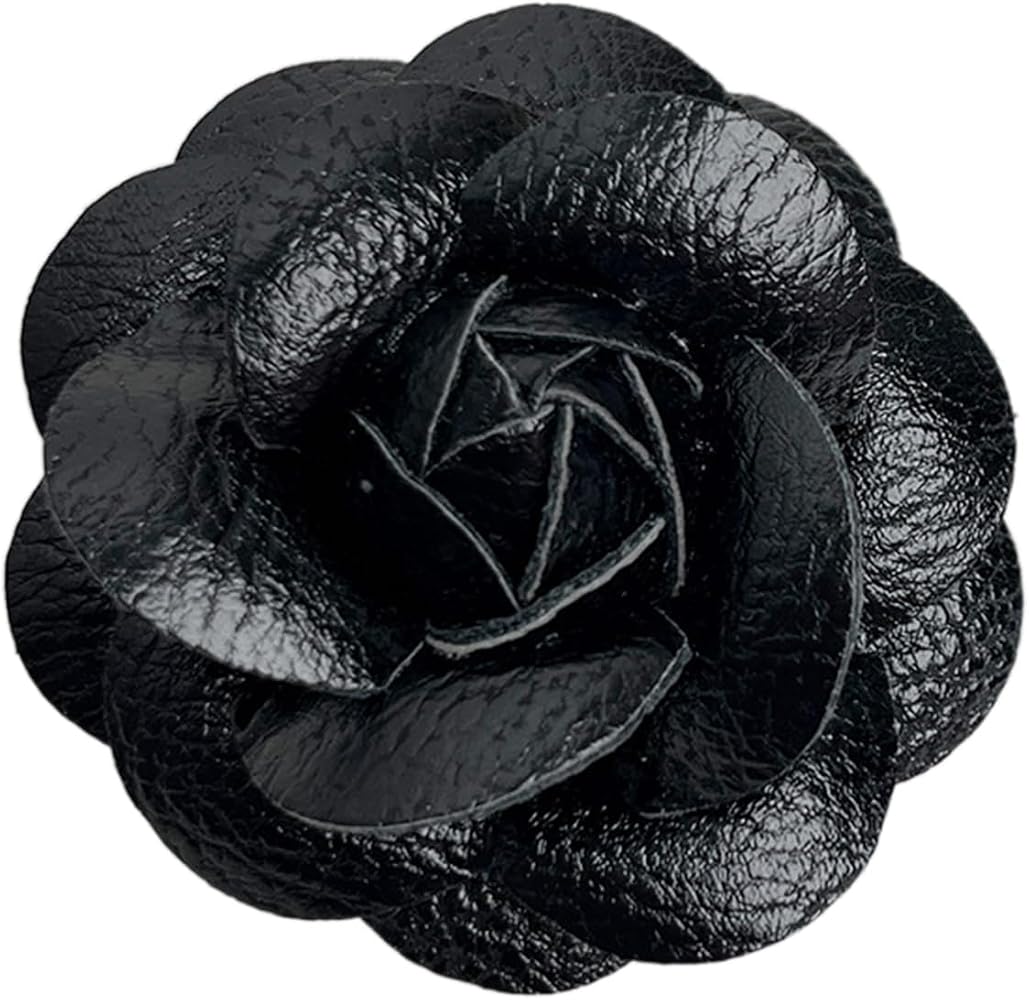
In an age of overproduction of ephemeral images and graphics, choosing a floral brocade or embossed velvet amounts to taking a stand in favor of craftsmanship and the long-term. Fashion houses use the complexity of these patterns to highlight the manufacturing process, emphasizing reuse and technical sophistication over rapid digital printing.
Indian Expertise Takes Center Stage
While Europe is rediscovering the power of the structured floral motif, the Indian subcontinent has long possessed the technical vocabulary necessary for this form of expression. Local workshops have an innate mastery of this “grammar of texture,” whether it involves block printing, the Kalamdani or Bagh styles, or Jamdani, which directly weaves the floral motif into the fabric.

During Hyundai India Couture Week 2026, this mastery of craftsmanship shone on the runways. Designers such as Rahul Mishra, Tarun Tahiliani, and the Rohit Bal label worked with heavy silks, opulent velvets, and heritage textiles. Their elaborate hand-embroidery embodies the very essence of this global trend, proving that textural richness often takes precedence over the design itself.
The Indian ready-to-wear market, moreover, is embracing this aesthetic on a massive scale. Brands like Biba build entire collections around these variations, navigating between micro-repetition and bold, statement embroidery. Nicobar features its prints on tops and kurtas, while Global Desi modernizes the silhouette with kurtis and flowing hybrid dresses. The House of Masaba label upholds its reputation with highly saturated floral patterns, elevated to the status of a signature style. In a more heritage-inspired vein, Bandhej relies on smaller patterns reminiscent of the Sanganeri technique, and Injiri seamlessly blends handcrafted artistry with ancestral weaving. W for Woman, for its part, translates this complexity into ensembles suited for everyday wear.
The Liberation of Men’s Wardrobe
The loss of naivety and the darkening of the floral motif explain its widespread and unapologetic adoption by men’s fashion. By shedding its summery lightness and its association with beach shirts, the floral print has become compatible with the rigor of tailored wear. Thick shirts, structured jackets, and hybrid pieces incorporate the print as an element of a strict graphic composition.
Brands such as Ethnix by Raymond and Manyavar demonstrate the relevance of this approach by applying woven or embroidered flowers to Nehru jackets and bandhgalas. For its part, Rare Rabbit illustrates the evolution of men’s ready-to-wear by offering graphic, dark, and sharp patterns designed for the city.
For the industry as a whole, the message for Fall-Winter 2026–2027 is unequivocal. It is no longer enough to simply recolor a spring fabric in autumnal hues. Floral patterns must emerge from heavy fabrics—wool, velvet, or metallic thread. Torn from its original garden, the flower now belongs to the enclosed world of the workshop, becoming tangible proof of a fashion that prioritizes structure over mere decoration.