
For decades, the expression of financial success has followed a flashy and strictly codified visual language. The accumulation of stamps in a passport from long-haul flights, the display of leather goods heavily emblazoned with logos, or the perpetual quest for the special privilege guaranteeing exclusive access to the most prestigious venues constituted the be-all and end-all of social status. The global elite lived under the gaze of others. Yet this definition of opulence now seems singularly outdated. The bar for distinction has shifted from the material to the immaterial. True wealth no longer lies in flaunting what one owns, but in safeguarding what, in theory, cannot be bought: attention, silence, and the integrity of one’s mental space. Inner peace has become the ultimate collector’s item.
The Failure of the Overloaded Schedule
There was a time, not long ago, when chronic unavailability served as a calling card. Responding that one was swamped, juggling two meetings, and racing against the clock functioned as proof of social importance. Today, this model of hyper-productivity is showing signs of wear and tear even among the highest achievers. The new status symbol is embodied precisely in the opposite: absolute control over one’s schedule.
What is now extremely rare is the ability to slow down the pace, particularly during the early hours of the day. Schedules are being deliberately lightened, and social or professional commitments are being filtered with unprecedented rigor, in favor of routines marked by great simplicity. Personal sovereignty replaces the race for visibility. Knowing how to close one’s door to escape the ambient clamor, set one’s own boundaries, and refuse the immediacy of demands now defines a much more subtle social hierarchy. The one who possesses true power is no longer the one who rushes from one appointment to the next, but the one who decides not to go.
The Art of Tranquility
This psychological shift is logically reshaping the contours of the high-end service industry. For a long time, well-being was reduced to having access to a private gym or adhering to a strict diet. The concept now encompasses a much broader spectrum, touching on emotional balance, the quality of deep sleep, mental clarity, and the nature of human relationships.
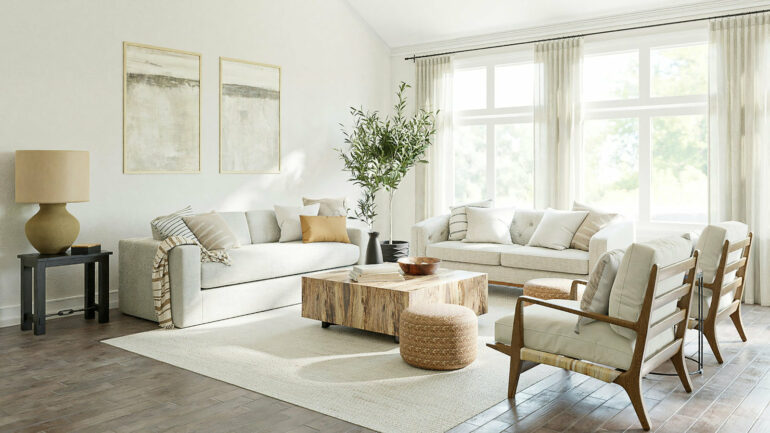
The home, in particular, is no longer seen merely as a place for entertaining, but as a sanctuary from the outside world that must be shielded from external stressors. This approach is driving some companies to offer a new kind of expertise. The firm Proof & Peace exemplifies this approach by conducting highly personalized environmental audits right within people’s homes. The goal is to identify and reduce exposure to household toxins through precise assessments. The air we breathe and the materials that surround us are subject to meticulous risk management. Preventive health care thus becomes an integral part of interior design.

At the same time, owning significant material assets (second homes, yachts) creates a mental burden that the new standards of luxury seek to eliminate. Organizations like Coastal Peace of Mind are positioned precisely around this promise of eliminating friction. By discreetly managing an estate or overseeing a yacht, these new-generation concierge services operate behind the scenes. Regular property inspections, coordination of various service providers, preventive maintenance: everything is tailored so that the owner never has to deal with the logistics of their own comfort. The service no longer aims to dazzle with spectacular gestures, but to guarantee a total absence of inconvenience. Delegating one’s worries becomes the ultimate service.
The Emotional Function of Materials
Our relationship with objects follows this same path of intentional simplicity. The era of frantically accumulating decorative artifacts meant to demonstrate purchasing power is over. The contemporary aesthetic of restraint prioritizes the psychological impact of an object on its owner. People choose to live with fewer possessions, provided that these have been rigorously selected and carry strong personal significance.
Curated spaces like Sense Serenity give tangible expression to this philosophy. Guided by artists, the selection focuses on pieces designed to complement a slower pace of life. Here one finds woven blankets, bags, and scented candles that are not meant to catch a guest’s eye, but rather to anchor a daily routine. The understated nature of these objects carries on the artisanal tradition of hyper-precision, while adding an almost therapeutic value. Design is no longer conceived solely to be beautiful or functional; it is crafted to lower the heart rate and stabilize mood.
Ultimately, this comprehensive redefinition of conventions reflects an absolute quest for freedom. Whether expressed through the choice to continue working from home, the establishment of a peaceful family rhythm, or the creation of unwavering rituals, the goal remains the same: to dictate one’s own rules for interacting with the outside world. Peace of mind is no longer merely a vague spiritual aspiration. Today, it constitutes a perfectly legible social language and the driving force behind a rapidly expanding market, aimed at those for whom absolute luxury consists, purely and simply, of buying the right not to be disturbed.