
Make Texture a preferred source on Google to support us
Add Texture to GoogleThe Obsession with Traceability: A Deep Dive into Singapore’s Watchmaking Paranoia
On the velvet displays of dealers across the Malay Peninsula, steel and gold are no longer enough to call the shots. Amid the buzz of Singapore’s secondhand market, even a perfectly functioning timepiece instantly loses its luster if it’s presented without documentation. The local enthusiast—whether seeking a quick investment or a collector’s piece—no longer buys just a timepiece: they buy a dossier, a genealogy, a three-dimensional certainty. This shift in value—which shifts the focus from the dial to the accompanying documentation—is completely redefining the rules of the high-end market.
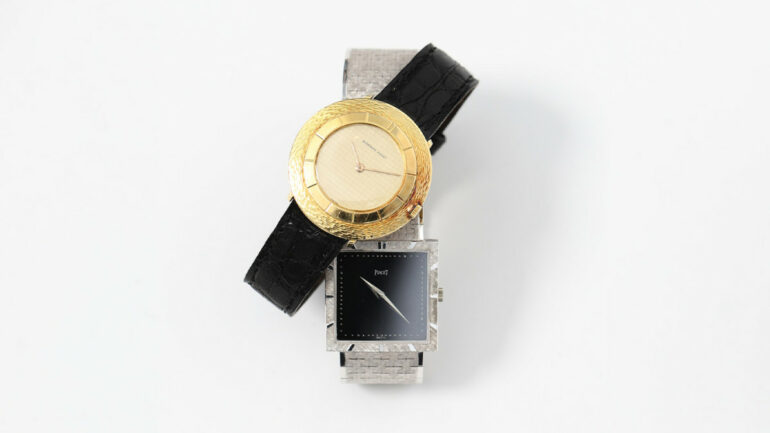
Presenting a standalone piece—referred to as a “watch only” in dealer jargon—amounts to exposing oneself to an immediate and severe price reduction. The market penalizes the absence of accessories with a drop in value ranging from 5% to 25%. This range, closely scrutinized by experts and pricing guides, is not an exact science: it narrows or widens depending on market sentiment, the rarity of the dial, and the age of the manufacturer. A margin of error of 5 to 15% is commonly accepted, although for certain models, the discount can soar beyond 25% when the presentation box is missing. Beyond the financial loss, the very liquidity of the item is compromised. A watch without documentation sells slowly, raises doubts, and requires tough negotiations, whereas a complete set changes hands with almost immediate ease.
The Breakdown of a Perfect File
But what exactly is a buyer looking for when they demand absolute completeness? The example of Rolex, the gold standard of this secondary market, illustrates the scope of this requirement. The concept of a “full set” is akin to a set of Russian nesting dolls, where each element validates the one before it. The inspection begins with the cardboard outer box, which must contain the characteristic green presentation case. Inside, the instruction booklets and card holder complete the set.
However, the heart of the matter lies in the certification elements. The evolution of the warranty card illustrates this drive for security. Since late 2020, the modern accompanying documents have been redesigned, eliminating the handwritten entry of the original purchaser’s name. The piece of plastic has transformed into a technological shield: an invisible NFC chip, gold-speckled edges that are complex to replicate, and an engraved purchase date that triggers the countdown for the five-year international warranty. The consistency between these elements and the serial number stamped on the case must be exact.
Even seemingly trivial details carry significant weight. The green seal—the famous “Superlative Tag” attached to the bracelet—is far more than just an ornament. Its mere presence embodies a very precise technical promise: that of certified chronometric accuracy, guaranteeing a precision deviation strictly between -2 and +2 seconds per day. Losing this seal is like stripping the watch of part of its technical narrative.
Perforated paper: a relic of a bygone era
While technology ensures the authenticity of contemporary productions, the vintage market operates on an archival logic. For models released by manufacturers before 2006, authentication relies on the original documents known as “punched papers.” The watch’s serial number is not printed on them but is directly punched into the thickness of the paper. This technique from a bygone era now serves as a formidable bulwark against counterfeiters, as the paper’s texture and the type of perforation require specific expertise and tools that are extremely difficult to replicate convincingly.
At watch fairs in Singapore, these vintage certificates elevate the watch to the status of a historical artifact. The market premium skyrockets when these documents bear additional markings, such as those found on so-called “double-name” certificates. A period authentication stamped by a prestigious retailer such as Tiffany & Co. transforms the transaction. The object ceases to be a mere variation on an industrial model and becomes a frozen testament to an era and a specific partnership. For the collector, preserving the box and these weathered papers is akin to protecting a legacy that can be passed down.
Avoiding Hybridization and Counterfeiting
This obsession with documentation is by no means an aesthetic whim. It responds to a structural threat that is corroding global trade: the assembly of hybrid watches and high-end counterfeiting. So-called professional models, originally designed for exploration or diving, are the primary targets of these manipulations.
Massively popular models like the GMT-Master II or the Submariner find themselves in dangerous waters when separated from their original packaging. Without the warranty card or original receipt, the buyer risks purchasing a “Frankenstein” watch, in which the movement, dial, or bezel has been replaced with non-genuine parts—or even components from clandestine workshops. While more formal and classic models, such as the Oyster Perpetual or the Datejust, face slightly less pressure, they are by no means exempt from this rule. The document acts as an absolute safeguard against ambiguity regarding the watch’s history.
The Local Ecosystem: The Value of Traceability
Singapore’s geography plays a major role in this dynamic. This financial hub boasts an exceptionally high concentration of collectors and specialty shops. Dealers there have implemented rigorous verification protocols, systematically cross-referencing the data engraved on the steel with the information on the certificates, scrutinizing the condition of the booklets, and assessing the consistency of the entire set.
A strong trend is emerging within this closed ecosystem: the extreme premium placed on sets bearing the stamp of a local authorized dealer. A complete set validated by an official Singaporean distributor provides clarity regarding its origin that instantly instills confidence. It eliminates doubts associated with shady parallel imports and guarantees that the piece began its life within a recognized and monitored distribution channel.
It is still possible for the enthusiast whose sole desire is to wear a beautiful timepiece every day to set these requirements aside. Buying a bare watch does indeed lower the entry barrier into this exclusive world. However, anyone who views watch collecting through the lens of value preservation, passing it down to future generations, or investment knows that the deal is a done deal. In this market, where opulence coexists with suspicion, cardboard, plastic, and perforated paper have become the ultimate markers of prestige.