Make Texture a preferred source on Google to support us
Add Texture to GoogleBudapest is more than just the steam rising from its century-old thermal baths or the grandeur of its Haussmann-style boulevards. Behind its neo-Gothic facades and imposing domes, the Hungarian capital conceals a unique artistic history, marked by forced exiles, daring heists, and aesthetic resilience in the face of political censorship. From Byzantine goldsmithing to 20th-century optical experiments, the city offers a museum journey that, through its artifacts, chronicles the transition from a medieval kingdom to a turbulent European modernity. Exploring these works means immersing oneself in a national identity where the sacred rubs shoulders with the tragic, and where the avant-garde has often had to proceed in disguise.
Symbols of Power and Memory
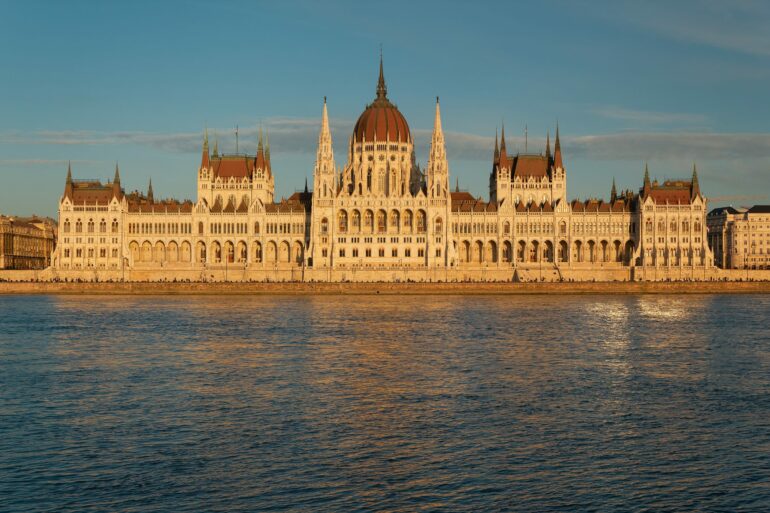
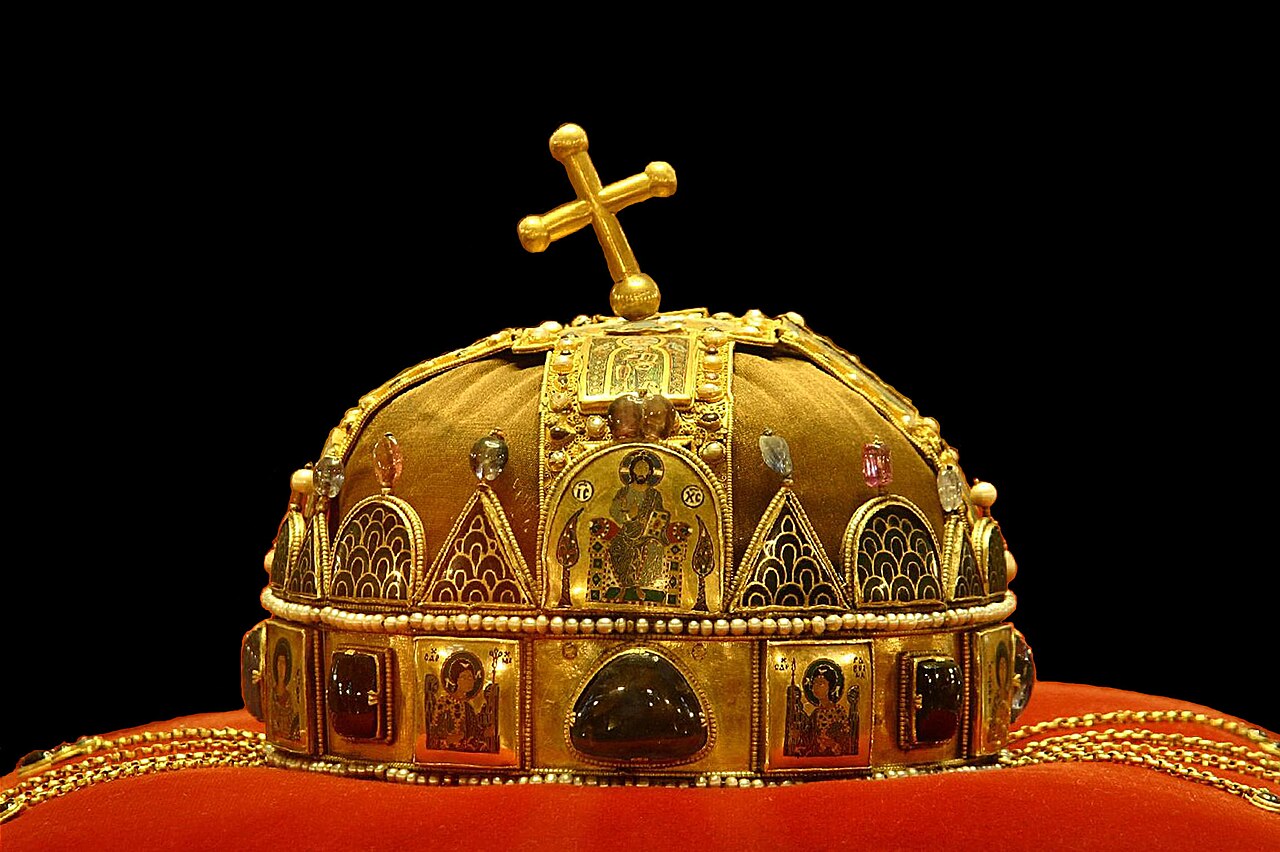
The tour inevitably begins beneath the dome of the Hungarian Parliament (Országház), where the Holy Crown of Hungary (Szent Korona) is enshrined. This blend of Byzantine and Central European goldsmithing, dating from the 11th to the 12th century, transcends the simple function of a royal regalia. Adorned with gold, enamel, and precious stones, it is distinguished by its slanted cross—a unique feature that contributes to its legendary aura. Its recent history is one of exile: taken to Fort Knox in the United States for safekeeping after World War II, it was not returned to Hungary until 1978. Transferred from the National Museum to the Parliament in 2000, it is under strict surveillance. EU and EEA citizens can visit for 7,000 HUF (approximately 18–19 €), while visitors from outside the zone pay 14,000 HUF (36–38 €) for the official guided tour.
Just a few steps away, on the banks of the Danube, art shifts from opulence to wrought iron. The Shoes on the Danube Bank Memorial (Cipők a Duna-parton), designed by filmmaker Can Togay and sculptor Gyula Pauer, is an installation of 60 pairs of shoes set in stone. Unveiled in 2005, this understated yet powerful monument pays tribute to the Jewish victims shot by the Arrow Cross fascist militia along the riverbank during the winter of 1944–1945. This freely accessible artwork transforms the Pest embankment into a much-needed space for reflection, reminding us that the city’s history is also inscribed in the void left by those who have disappeared.
The Old Masters: From Raphael to Bruegel
The Budapest Museum of Fine Arts (Szépművészeti Múzeum) houses treasures whose presence in Hungary sometimes borders on the miraculous. Raphael’s Esterházy Madonna, painted around 1508, is one such piece. This small, unfinished panel (28.5 × 21.5 cm) has had an eventful history: added to the Esterházy princes’ collection in 1812, it was at the center of the “theft of the century” in November 1983. Recovered a few months later in a Greek monastery, it is now the jewel of the Old Masters collection. Admission to the permanent collection is 5,800 HUF (approximately 14.50–15.50 €).
The museum also houses a drawing of paramount importance: Leonardo da Vinci’s Study for the Head of a Soldier in the Battle of Anghiari. Created around 1504–1505 in charcoal and black chalk, this work is extremely fragile. Due to its sensitivity to light, it is not on permanent display but is featured in temporary exhibitions or special presentations organized by the Department of Graphic Arts.
The Spanish collection, for its part, boasts *The Water Carrier* (*La Aguadora*) by Francisco de Goya. Painted between 1808 and 1812 during the Spanish War of Independence, the work captures a figure from the common people with monumental dignity. Finally, *The Preaching of Saint John the Baptist* by Pieter Bruegel the Elder (1566) rounds out this European panorama. Originating from the noble Batthyány family, this painting illustrates the Flemish master’s skill in depicting crowds and landscapes, offering a depth of field that contrasts with the intimacy of Italian portraits.
Tragic Realism and Resilient Modernity
Across the river, at Buda Castle, the Hungarian National Gallery (Magyar Nemzeti Galéria) focuses on the artistic soul of the nation. Mihály Munkácsy occupies a central place there with *The Last Day of a Condemned Man* (1870). This monumental oil on canvas, which earned the artist the gold medal at the Paris Salon, marks the beginning of Hungarian tragic realism. It depicts the tradition of the *siralomház*—the final moments granted to the loved ones of a condemned man—in a striking chiaroscuro atmosphere.
The 20th-century Hungarian art scene is represented by more introspective voices, such as that of Lili Ország. Her work *Wall of Icons II (Blue)*, dated 1969, bears witness to a life marked by the Holocaust. By blending Kabbalistic symbols, fragmented script, and repetitive Christian iconography, this modernist artist managed to circumvent communist censorship to explore the themes of memory and persecution. Her compositions on fiberboard can be seen in the contemporary art collections of the National Gallery (admission: 5,800 HUF).
The Revolution of the Eye and Geometry
Budapest is also the birthplace of global visual revolutions. The Vasarely Museum, located in the Zichy Palace in Óbuda, pays tribute to Victor Vasarely (born Győző Vásárhelyi). His work *Zèbres* (1939), a pre-kinetic study using gouache and chalk, is considered the birth of Op Art. By playing with the alternating contrast of monochromatic bands without linear outlines, Vasarely redefined the perception of movement in art. Admission to this museum, a branch of the Szépművészeti Múzeum, costs 2,800 HUF (approximately 7–7.50 €).
Finally, Dóra Maurer embodies the Hungarian neo-avant-garde. A leading figure in geometric art, she explores formal structures through works such as *Curved Plane with Wings*. Her work, which challenged the academic conventions of her time, continues to influence the contemporary art scene by questioning spatial perception and the rigor of forms.