

Make Texture a preferred source on Google to support us
Add Texture to GoogleThe walls fade away, giving way to a bustling harbor, a lush jungle, or the steep banks of the Bosphorus. The eye wanders, deceived by a perspective that pushes the physical boundaries of the room. Panoramic wallpaper has been achieving this visual marvel for over two centuries. Originating in France during the Directoire and reaching its peak during the Restoration, this immersive technique radically transformed the concept of interior design. In contrast to the mechanical repetition of patterns—stripes, flowers, damask—that had previously dominated bourgeois walls, the continuous design unfolds a narrative across the entire space. The bedroom or the grand salon ceased to be mere enclosed spaces; they became theaters of light and shadow, antechambers open to the world.
The emergence of these paper landscapes was part of the social upheaval of the early 19th century. In the wake of the Revolution, a new elite gained financial power. It sought immediate status symbols capable of matching the prestige of the old nobility, without having to wait the months—or even years—required to produce a Gobelins tapestry or a painted fresco. The printed paper industry, then in the midst of a technical revolution, seized upon this demand. French manufacturers devised colossal designs, often requiring the assembly of dozens of panels without any detail in the design being repeated.
Exoticism in the living room and tales of exploration
The subject matter of these early wall murals drew directly from the excitement surrounding the Age of Discovery. Europe listened to the navigators’ tales with fascination. In 1804, the industrialist Joseph Dufour made a big splash with *Les Sauvages de la mer Pacifique*. Designed by the artist Jean-Gabriel Charvet, this wallpaper encapsulated the expeditions of James Cook and La Pérouse. Beneath Parisian ceilings, walls were covered with stylized coconut palms, scenes of Tahitian dance, and indigenous figures draped in the manner of Greco-Roman statues—revealing the enduring influence of Neoclassicism. The impact was immediate. The panoramic wallpaper served as both an educational tool and a showpiece—a vast illustrated encyclopedia that allowed hosts to discuss geography or botany during high-society dinners.
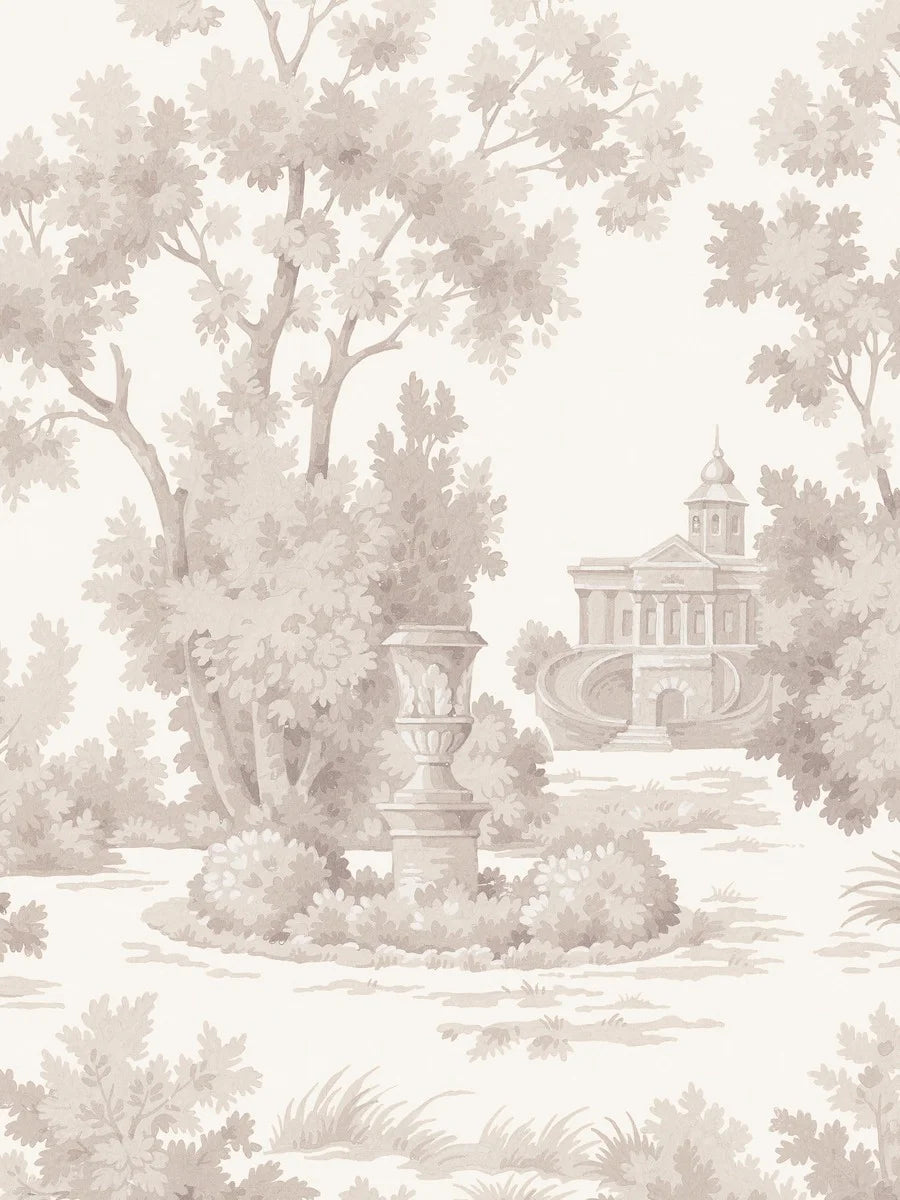
The themes of these paper scrolls extend far beyond the South Seas. Manufacturers turned to mythology, military campaigns, and scenes of hunting with hounds. One of the most prized aesthetics, however, remains grisaille. Rendered in shades of gray, sepia, or almond green, it mimics bas-relief sculpture and ink drawings. Less expensive because it requires a limited color palette, grisaille appeals above all for its architectural precision, adding structure to entryways and dining rooms without overwhelming the surrounding furniture.
The Silent Choreography of Wooden Patterns
The visual simplicity of these designs masks a dizzying complexity of execution. Woodblock printing is a delicate engineering process. To grasp the scale of the task, one must observe the operations at the Zuber Manufactory, founded in 1797 in Rixheim, Alsace. Every element of a landscape—the veins of an oak leaf, the sails of a ship, the drapery of a figure—must be carved in relief on a wooden block. Pear wood is consistently chosen for its extreme density and lack of pronounced grain, ensuring sharp, clean lines. For the finest contours, the artisans insert thin strips of brass directly into the matrix.
A single continuous design may require the engraving of several thousand blocks. The Alsatian workshop, which still houses the original blocks—now classified as Historic Monuments—orchestrates a precise ballet with each new edition. The printer coats the wood with tempera—a water-based, gelatinized paint that is matte and chalky—then positions it on the strip with millimeter precision, guided by tiny metal pins. A heavy hand-operated press tilts to press the block against the paper. The process is repeated for each shade. A single strip may thus undergo about a hundred successive passes, requiring drying time by the fireplace after each application.
The best-kept secret of this production lies in the creation of the sky backgrounds. The famous gradient, known as “iridescent,” cannot be achieved through block printing. It is brushed by hand, from bottom to top, using wide boar-bristle brushes. The artisan blends the fresh colors into one another, from the off-white of dawn to the deep blue of the zenith, creating a luminous, almost vibrant backdrop against which the botanical motifs will be set.

The texture of the material versus the digital surface
While this craftsmanship endures, it faces the rapid proliferation of digital printing. High-definition printers now make it possible to print any image on a wall-sized scale onto non-woven substrates that are very easy to install. This flexibility in execution has reignited interest in wall murals. Today’s designers can crop a forest on demand, move a tree to spare a doorframe, or saturate the pigments of a digitized archive.
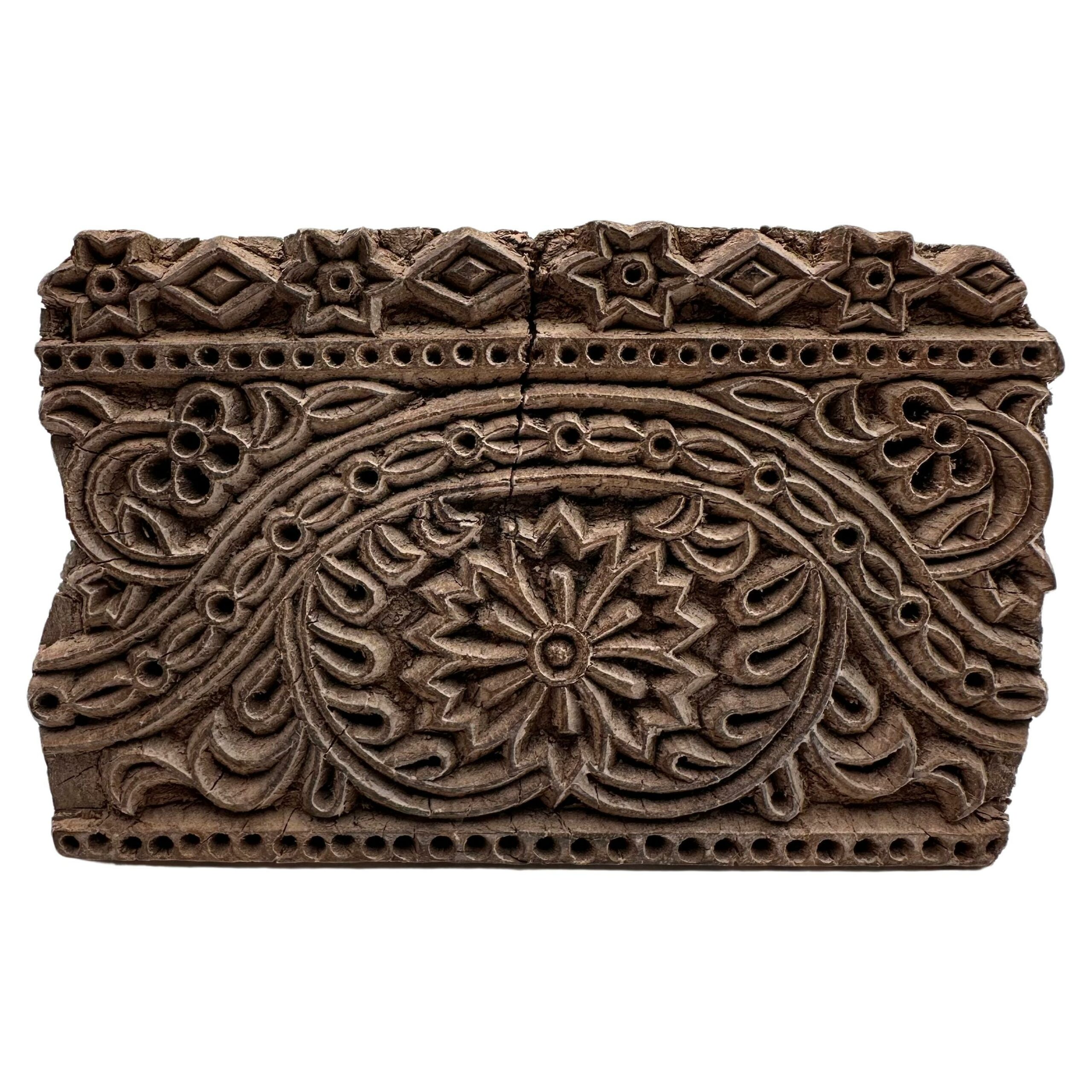
The trained eye, however, can instantly tell the difference. Digital printing, no matter how sophisticated, produces a flat surface. Traditional woodblock printing leaves a physical imprint. Each press of the block deposits a layer of paint that dries in slight relief. To the touch, one can sense the subtle edge of the color, the roughness of the gouache, and the thickness of a petal layered over the foliage. It is this raw texture—this minute imperfection born of human hands—that catches the low-angled light and brings the decor to life as the hours pass.
The Wall as the Cornerstone of Interior Design
The panoramic view has long since broken free from the confines of historic homes to establish itself as a groundbreaking element in interior design. Designers play with the juxtaposition of eras and the clash of scales. The dogma of strictly pairing panoramic wallpaper with classic wood paneling or Empire-style furniture is a thing of the past. A lush 19th-century landscape now adorns the walls of a raw, unfinished apartment, creating a striking contrast with a minimalist dining table or polished steel wall sconces. The ornamental richness of the wallpaper breaks up the coldness of contemporary lines.
Fabric and wallpaper houses such as Maison Pierre Frey regularly unearth treasures from their archives to reissue them, while also commissioning new works from visual artists. The approach to space has also evolved. Decor no longer systematically seeks to encircle the perimeter of a living room. It focuses on a single wall to emphasize the depth of a living space, or fills a cramped space—a small entryway, a powder room—to create a dizzying loss of perspective. By blurring physical boundaries, the printed image expands the space.
The history of French wall decor illustrates a constant quest for domestic escape. Whether patiently printed on old pearwood blocks or reinterpreted through technology, the continuous landscape retains its power to captivate. Faced with the Views of North America—the very ones Jacqueline Kennedy chose to wallpaper the White House diplomatic reception room in 1961—the eye inevitably gets lost in the details of Boston Harbor or Niagara Falls. The partition disappears, giving way to the horizon, transforming the architecture into a starting point.