

Make Texture a preferred source on Google to support us
Add Texture to GoogleThe appeal of overcrowded destinations in the Mediterranean or major European capitals seems to be giving way to a search for tranquility and uniqueness. In a travel industry often criticized for its uniformity, attention is shifting toward destinations whose balance depends on the preservation of their social fabric and architectural integrity. A selection published by Architectural Digest magazine in September 2026, written by editor Charlotte Collins, highlights seventeen villages around the world presented as alternatives to the beaten path. The goal is no longer simply to see, but to experience the serenity of places where local heritage still resists the pressure of mass tourism.
The Geography of Silence Between Fjords and Lakes
The panorama presented by Charlotte Collins highlights human settlements that derive their character from their geographic isolation. In Norway’s Lofoten archipelago, fishing communities of about 300 residents redefine luxury through the simplicity of their vernacular architecture and the absolute tranquility of their coastal surroundings. These villages—exemplified by Reine and Nusfjord—stand in stark contrast to the density of towns like Oia or Positano, which the magazine often cites as counterexamples to an authentic travel experience.
On the other side of the globe, in Colombia, the village of Guatapé exemplifies an entirely different form of preservation. Situated on the shore of a lake, this village stands out for its use of color on its facades—a distinctive feature that reinforces the village’s visual identity without compromising its heritage. This chromatic approach to architecture is also found in Mexico with Taxco de Alarcón, included in the selection for its rugged terrain and built heritage, which bear witness to a rich local history, far removed from standardized hotel complexes.
A Federation to Protect the Exceptional
This editorial recognition is part of a broader movement to protect small urban communities. The preservation of these architectural gems is championed in particular by The Most Beautiful Villages in the World (Les Plus Beaux Villages de la Terre). This international nonprofit organization was founded in 2012 in Gordes, France, and has established its headquarters in Collonges-la-Rouge. Today, it brings together regional associations from France, Belgium (including Wallonia), Italy, Spain, Switzerland, and Japan.
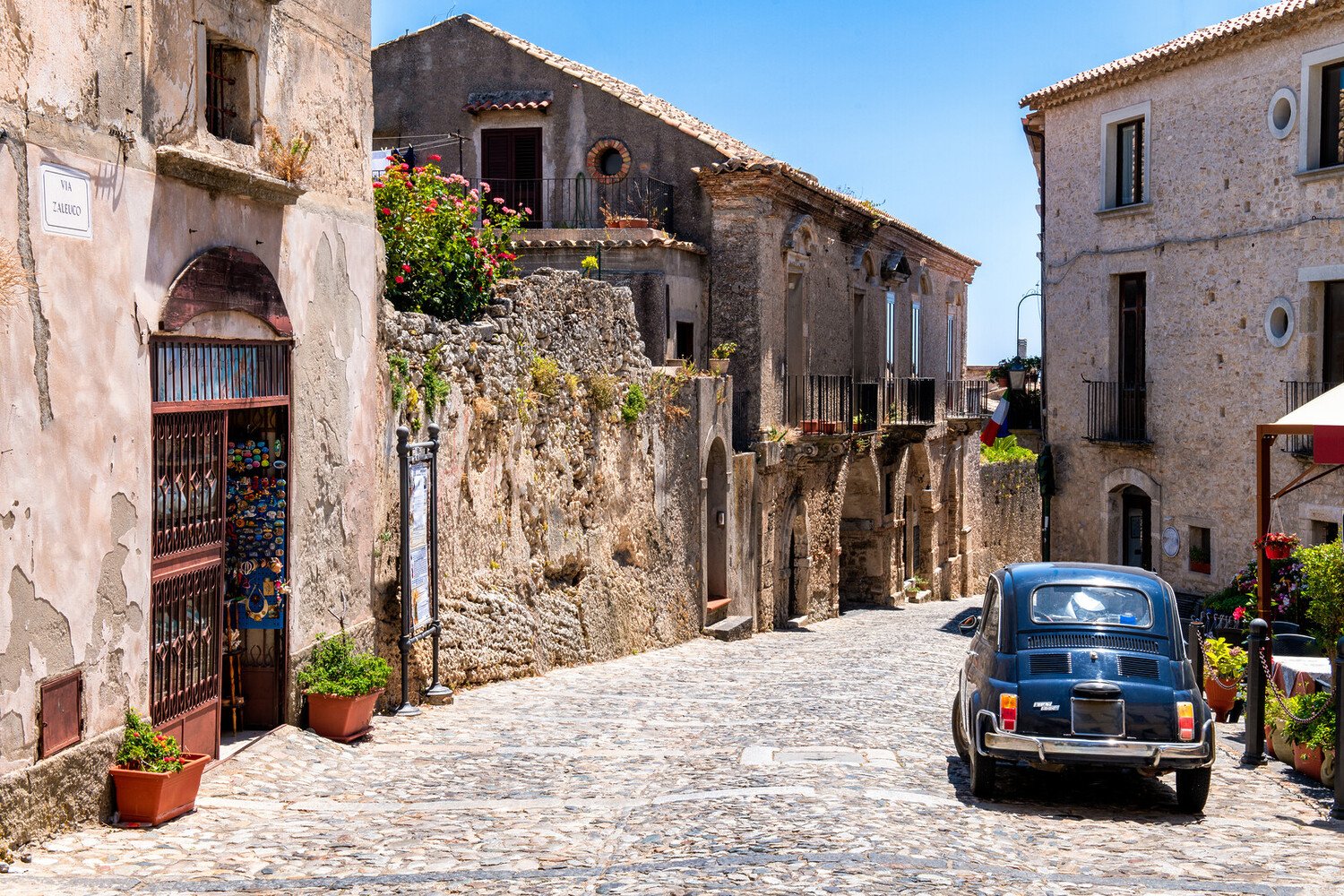
The federation’s goal is to promote sites that, although sometimes off the beaten path, possess historical and aesthetic value worthy of special attention. By bringing together organizations such as I Borghi più belli d’Italia and Los Pueblos Más Bonitos de España, the federation ensures that tourism development remains compatible with residents’ lives and the preservation of historic buildings.

European Variations and an American Incursion
Architectural Digest’s selection serves as a reminder that Europe remains an inexhaustible source of villages with intact heritage. In France, the town of Pérouges retains its medieval charm, while in Italy, Orta San Giulio offers a quiet alternative to the great northern lakes. In Spain, Frigiliana showcases white architecture with distinct historical influences. The village of Hallstatt, in Austria, also features in this overview, although its growing international fame is gradually distancing it from the status of a “little-known” place, as defined by the magazine’s journalistic perspective.
The originality of this September 2026 list also lies in the inclusion of North American destinations—a region traditionally less associated with the concept of “most beautiful village” in the European heritage sense. La Conner, in Washington State, is thus cited as a notable stop for travelers seeking architectural character in the United States.
The Complexity of Fame
The decision to present these places as destinations that readers have “probably never heard of” is an editorial choice intended to pique curiosity. However, the demographic and tourism reality is more nuanced. The populations mentioned—such as the 300 residents of the Norwegian villages—are subject to seasonal fluctuations, and certain sites, like Guatapé or Hallstatt, already enjoy strong regional recognition.
This selection is not intended to be an exhaustive scientific ranking, but rather an invitation to reconsider how we engage with space as visitors. The interest in architecture and local heritage, as championed by Charlotte Collins, suggests that the future of luxury travel may lie in discretion and respect for these small, fragile urban structures, sheltered from the fast-paced tourist circuits.