
The Domestication of Metal
Heavy industry sometimes lurks in the corners of our living rooms. Aluminum, with its apparent coldness and mechanical precision, evokes images of assembly lines and functional architecture. Bending it to suit the intimacy of a living space is a balancing act. It is precisely this tightrope that Andrea Trimarchi and Simone Farresin have ventured to walk. The two founders of the Formafantasma studio took advantage of the 2026 edition of Salone del Mobile.Milano to present the result of their latest collaboration with the Italian manufacturer Pedrali. Integrated into the scenography of the #PedraliGentleHabitat exhibition, their new furniture line takes a raw technique and infuses it with unexpected softness.
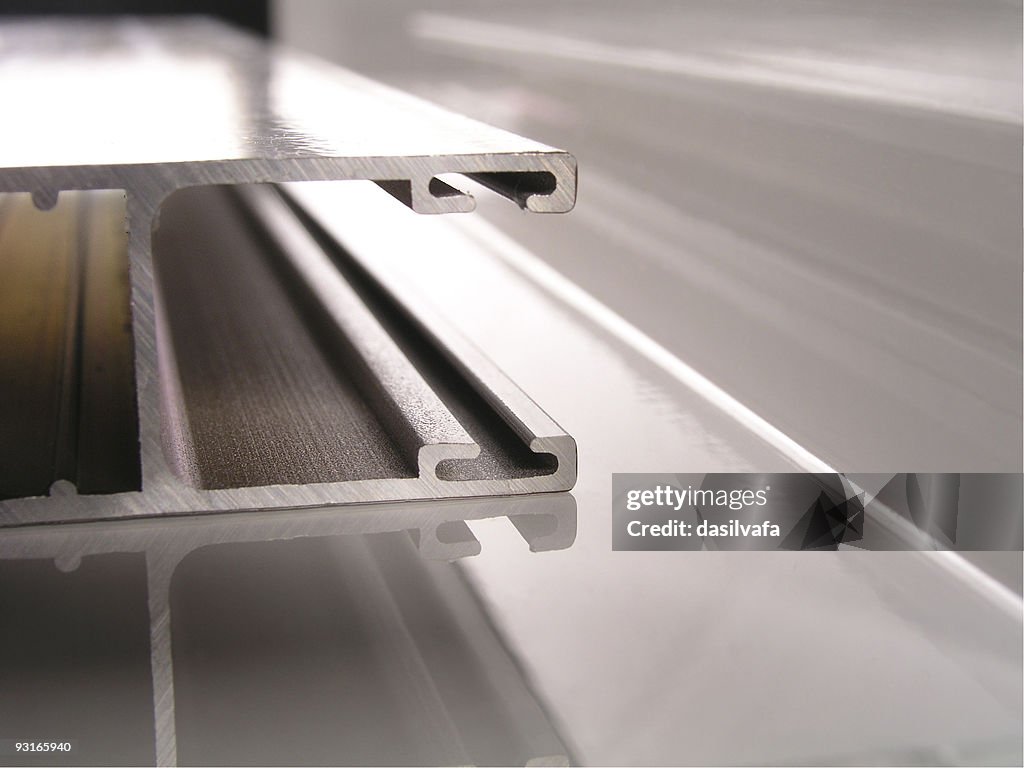
The starting point for this project lies neither in a design nor in purely formal inspiration, but in a manufacturing process: extrusion. This technique, which involves forcing material through a die to give it a continuous shape, serves here as the foundation for a broader exploration of reducing complexity. By choosing to explore the limits of this industrial method, the designers have succeeded in creating pieces where the economy of means never comes at the expense of aesthetic rigor.
The Architecture of Emptiness
The result of this single-material approach takes the form of coffee tables and console tables. The entire design language of the collection is based on a precise structural concept. The base abandons the idea of a solid block in favor of an assembled structure. Three extruded aluminum profiles, distinguished by their concave faces, interlock with one another. This joint creates a pillar with a completely hollow core. The material is hollowed out and refined to its limit of efficiency.
This choice of a hollow center significantly lightens the structure, both in terms of weight and visual appearance. The aluminum takes on an ethereal quality. The concavity of the three basic elements serves not only to ensure stability; it also acts as a light sensor. The inward-curving surfaces capture ambient light, modulate shadows, and soften the inherent rigidity of the metal. The fluid transitions between each profiled section create a continuous, almost organic rhythm. From this perspective, the piece ceases to be a mere utilitarian object and becomes a kinetic element that reacts to its environment.
Variations on a Continuous Profile
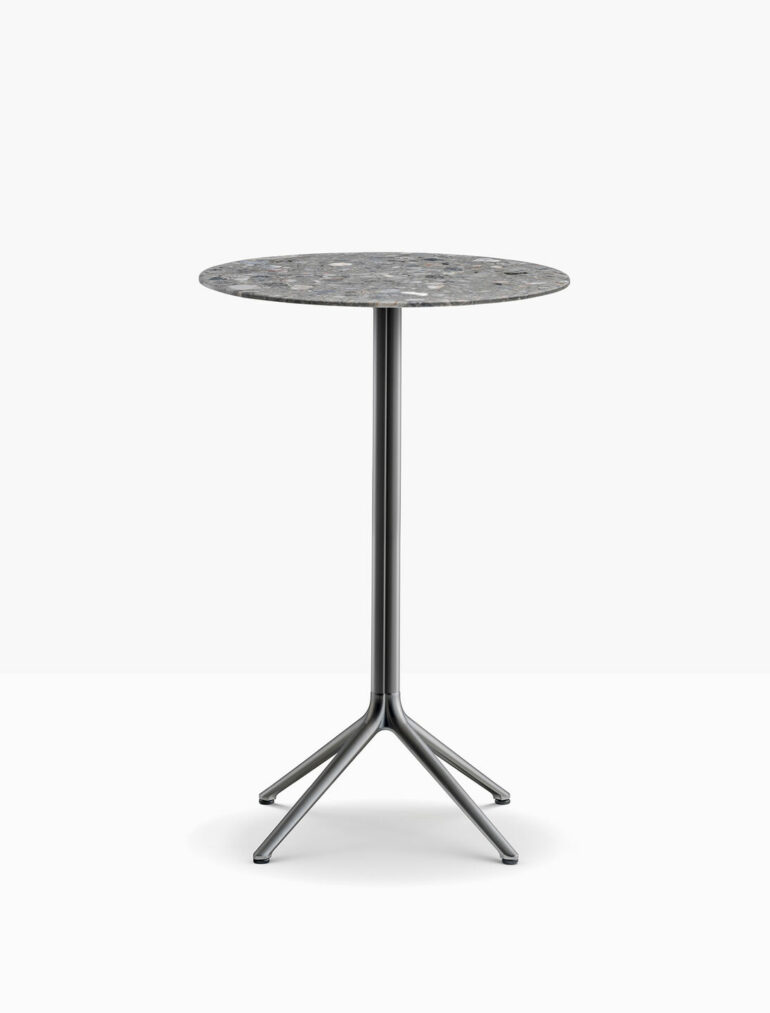
The exclusive use of recycled and recyclable aluminum anchors the project in a philosophy of sustainability, reinforced by the material’s natural resistance to the effects of time. This foundation, conceived as a matrix, offers great typological freedom. For coffee tables, whether square or round, the three-dimensional base is used individually. When supporting the larger tops of rectangular tables or console tables, the system is simply duplicated.
The tabletop itself extends the clean lines of the design while adding a subtle nuance. In some versions, the designers have incorporated a slight downward fold. This unbroken fold, which runs along the entire perimeter, encircles the flat surface and defines the object’s boundary with absolute precision. To complete the break from the raw, cast-metal look, the metal is coated with high-gloss lacquer finishes or treated with anodization. The surface treatment erases the last traces of the factory, firmly anchoring the furniture in a sophisticated decorative style.
The Extracted Function
The choice of the name for this line, Estratto, encapsulates Formafantasma’s philosophy. The Italian term literally refers to the action of pulling or extracting. The designers embrace the word’s dual meaning. First, in a very straightforward sense, it refers to the technical reality of extrusion—the process of forcing material through a die.
But beyond the factory manufacturing method, Estratto evokes the idea of extracting a unique possibility from within an infinite system. Extruded aluminum emerges from the machines in the form of a virtually endless profile. Cutting this profile to make a table leg means isolating a fragment of it. As the designers point out, the challenge is to extract a specific domestic function from a continuously produced element. The table is no longer simply manufactured; it is extracted from an uninterrupted industrial flow, frozen at a precise length to take its place at the center of a room.