
Make Texture a preferred source on Google to support us
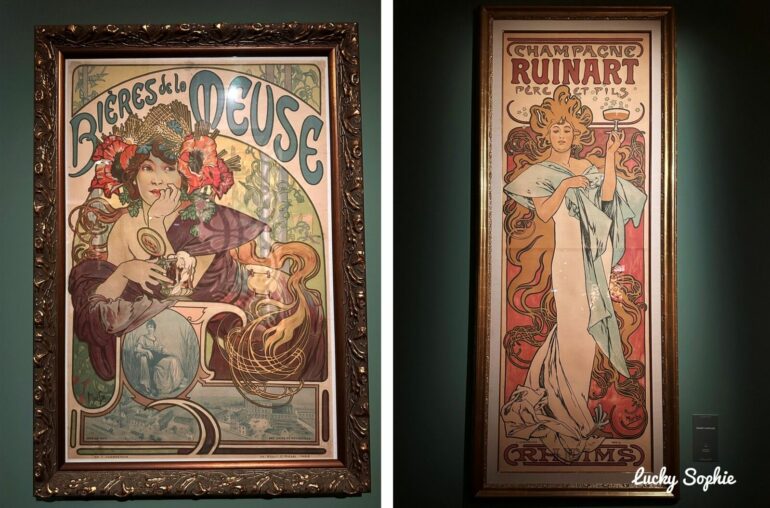
Add Texture to GoogleAll it takes is a sinuous, almost organic line to instantly recognize the artist’s hand. Even before deciphering a single letter at the bottom of a poster, the eye instinctively recognizes the meticulous interlacing of plant motifs, the fluid drapery that seems to float in an undefined space, and the haughty profile of an idealized female figure. Alphonse Mucha did not merely accompany the effervescence of Art Nouveau at the dawn of the 20th century: he literally dictated its visual grammar, establishing an absolute standard that continues to inspire contemporary creation. While his Parisian compositions have long shaped the European imagination and defined the aesthetics of an era, this graphic vocabulary of rare precision is now set to cross the Atlantic for an unprecedented geographical encounter.
The Anatomy of a Universal Language Under the Mexican Sky
It is outside his favorite haunts, in the heart of Mexico, that this unexpected retrospective will unfold. Starting in the fall of 2026, the Museo Kaluz will host a major cultural event: the very first monographic exhibition of this scale specifically dedicated to the Czech master in Mexico. The exhibition, aptly titled The Magic of the Line, will be on view at the museum from October 8, 2026, to February 8, 2027. The curators’ stated ambition goes far beyond that of a simple heritage exhibition. The stated goal is to dissect the inner workings of a style that, over the decades and through successive trends, has become a foundational component of popular culture and a reference deeply rooted in our visual landscape.
To support this analysis, the exhibition design brings together a rich selection of nearly 130 historical pieces. This collection, made possible through direct collaboration with the Mucha Foundation’s archives, allows visitors to appreciate the immense variety of media the artist worked with. His world-famous posters—which catapulted him to instant fame on the boulevards of Paris—share the space with lithographs of surgical precision, rare book illustrations, and original period objects. This intimate encounter with the original works traces the methodical evolution of Mucha’s distinctive style. Visitors are invited to examine the origins of these famous slender silhouettes, to understand the art of symmetrical decorative compositions, and to observe this stylized nature that takes over every inch of free space on the paper.
From Advertising Commission to the Immersive Revolution
The power of Alphonse Mucha—and undoubtedly the secret to his exceptional longevity in art history—lies in his fully embraced connection with the burgeoning industrial sector and the commercial world. In his view, beauty was not meant to remain cloistered amid the gilded splendor of bourgeois salons or in the silence of galleries. It was meant to radiate onto the streets, adorn the city’s facades, and ennoble the packaging of everyday products. The exhibition precisely documents this democratization of art by bringing to light commissions of great historical value, including a seminal advertising piece created for Nestlé in 1897. This rare document illustrates how the artist applied his formidable ornamental standards to mass consumption, permanently erasing the hierarchical boundary between traditional fine arts and the early days of modern marketing.
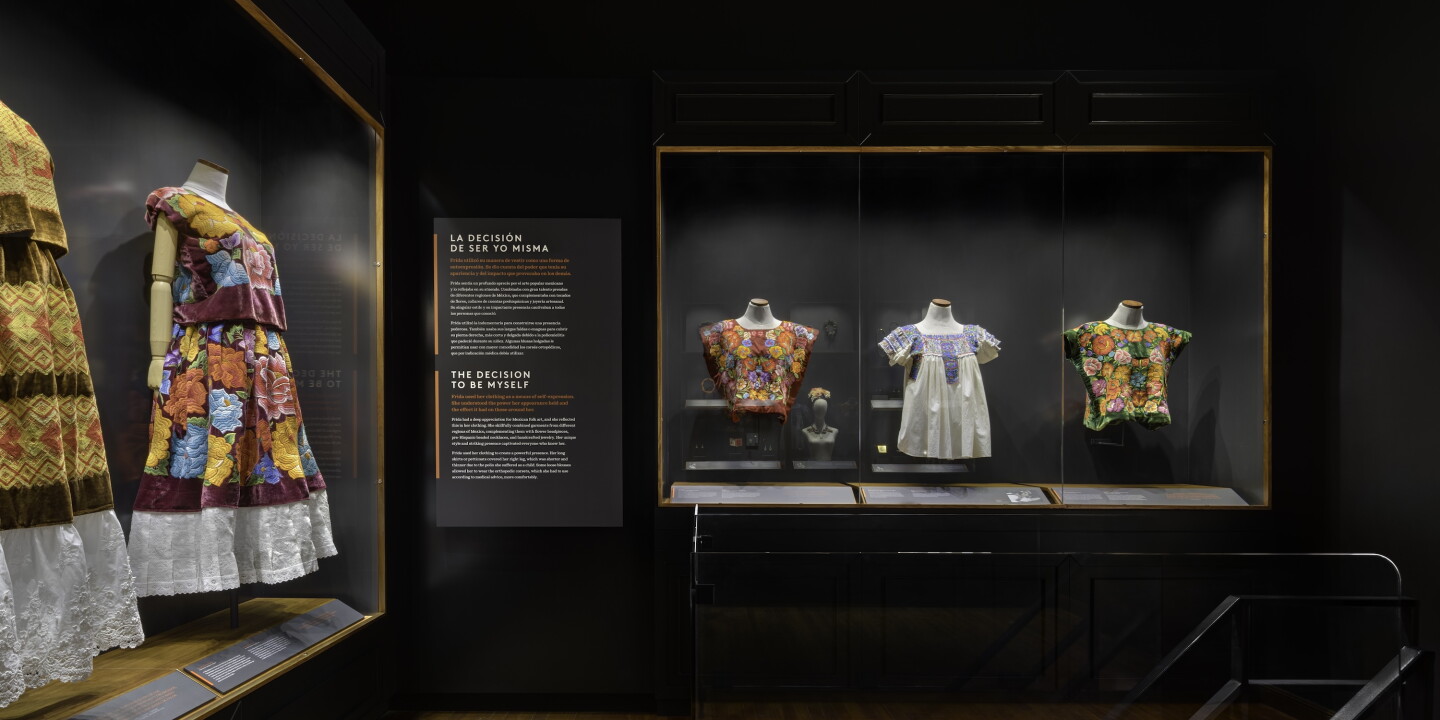
However, the Museo Kaluz refuses to confine this vibrant work to the silence of display cases alone. Mucha’s brushstrokes, originally intended to capture the attention of passersby in public spaces, now find a whole new realm of expression thanks to contemporary technology. As an extension of the traditional tour, visitors are transported into a radically different dimension. Titled “The Magic of Art Nouveau,” this second segment offers a physical immersion into the image.
This installation was designed entirely by the specialized teams at the Grand Palais Immersif. A historical detail that brings a journey spanning more than a century full circle: this experience benefits from the direct support of Nestlé. The company thus weaves a spectacular thread connecting its status as a visionary patron at the end of the 19th century with its role as a sponsor of a contemporary installation. Within this space, the frames burst open. The intimate lithographs dissolve, transforming into large-scale projections. The dizzying interplay of curves and the richness of the color palettes take over the room’s architecture to envelop the visitor, demonstrating that the graphic framework of Art Nouveau masterfully withstands the test of digital gigantism.
Theory versus Aesthetic Allure
To echo this dual visual impact—the meticulous observation of a century-old illustration on one hand, and the head-on impact of a digital animation on the other—the Mexican institution was keen to incorporate a component of analytical reflection. Behind its undeniable decorative allure, Mucha’s work raises profound questions about the reproducibility of the image and the power of design.
With this in mind, the museum is launching a specialized educational program alongside the exhibition. This series will take the form of four thematic events—announced as “charlas” and “conversatorios”—which will be held throughout 2026 and 2027. These forums for public discussion will aim to extend the aesthetic experience by examining how a visual language developed during the heyday of the Belle Époque continues, in a thought-provoking way, to shape the codes of contemporary beauty.