
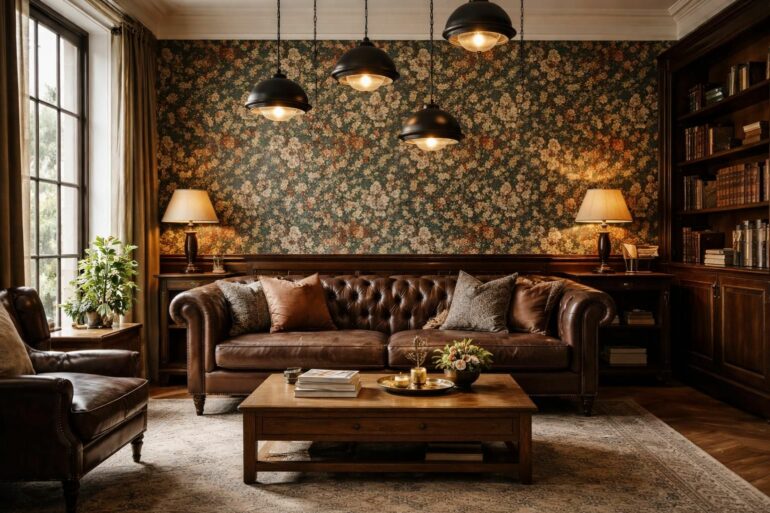
The sky hangs low, and the rain beats against the windows with that steadfastness characteristic of northern latitudes. Light fades early, forcing residents to retreat indoors. It is here, within this enclosed space, that an aesthetic show of strength unfolds. The British living room offers a scathing rebuttal to the gray skies. Far from the dogmas of contemporary minimalism, which preach emptiness and icy transparency, the aesthetic from across the Channel cultivates a subdued opulence. It asserts the right to accumulation, the memory of objects, and the layering of eras. This famous “cozy chic” is achieved neither by applying a ready-made formula nor through rigid symmetry. It stems from a meticulous staging of natural disorder, a constant dialogue between the formal and the casual. British reserve is reflected here in a stubborn rejection of ostentation in favor of visceral comfort, where every trinket and every fringe on an armchair justifies its presence through its use.
The Foundations of Down-to-Earth Domesticity
The immersion begins the moment you step through the front door. The British entryway sets the tone: it is designed to be functional and sturdy, always maintaining a connection to the earth. The floor, often covered with cement tiles featuring geometric patterns or wide, waxed oak planks, withstands the comings and goings of rubber boots caked with mud from the surrounding countryside. A sturdy cast-iron umbrella stand, a bench for taking off shoes, and painted wainscoting halfway up the walls immediately establish a rustic atmosphere.
This unapologetic rusticity finds its natural extension in the kitchen, the heart of the home. The modern appliances are concealed behind painted wooden cabinet fronts. In the center, the imposing enameled cast-iron stove stands like an altar to domestic life, radiating a steady warmth that inevitably draws in guests and pets alike. Copper pots hang above a central island improvised from an old draper’s table, while mismatched tableware is displayed unashamedly on open shelves made of raw wood.
Patina as a Mark of Authenticity
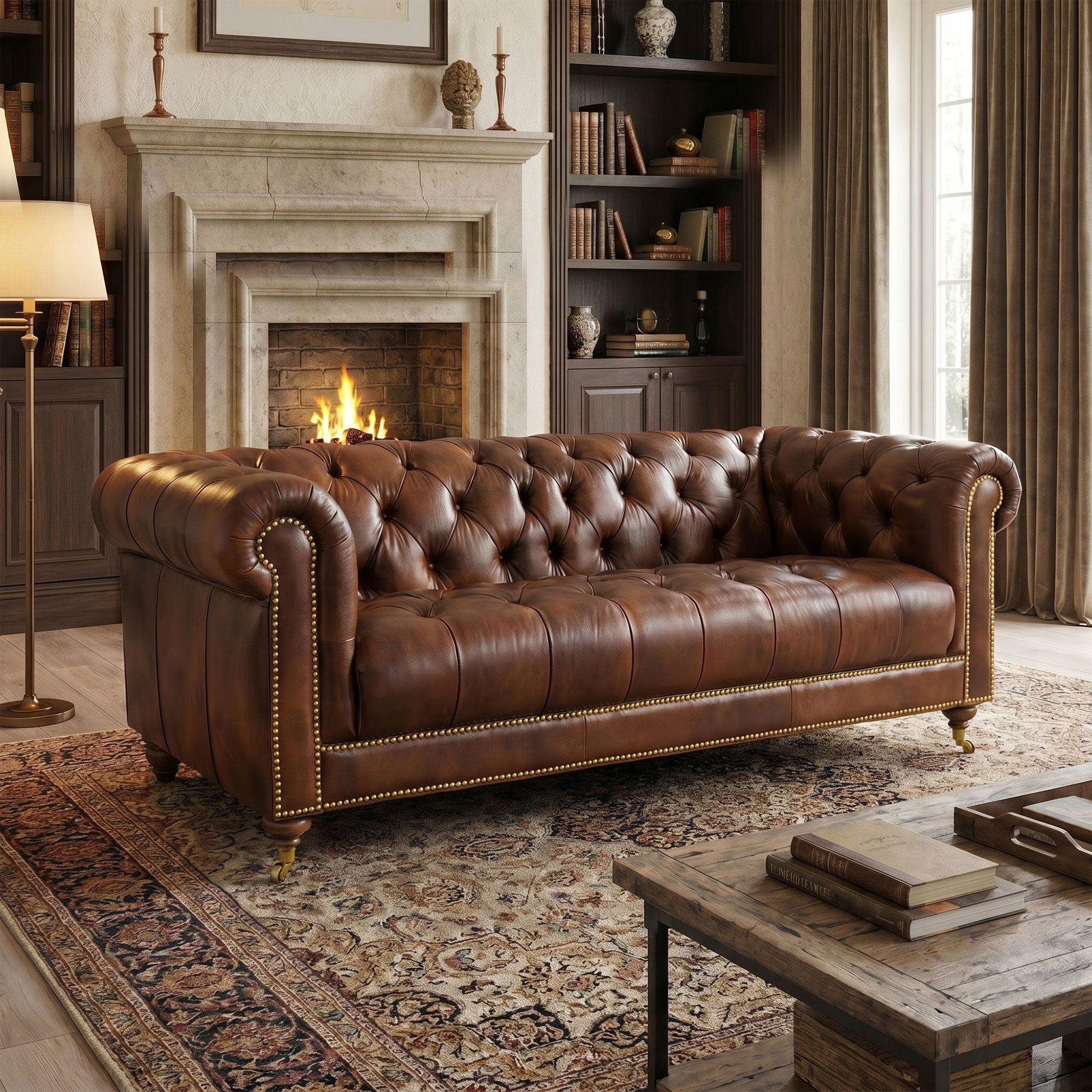
In living spaces, nothing arouses more suspicion than a brand-new piece of furniture. British elegance is fundamentally rooted in the idea of heritage. A scratch on a walnut console table, the cracked leather of a club chair, or the frayed fringes of an Oriental rug are not flaws to be hastily concealed. They are marks of nobility. This acceptance of the passage of time shapes the character of the space. Dark woods, primarily solid mahogany or burl walnut, dominate the furniture, anchoring the decor in a reassuring sense of gravitas.
One inevitably comes across the imposing Chesterfield sofa. Its deep tufting and rolled armrests have stood the test of time without losing their relevance. However, its stately appearance is systematically softened by its owners: a cashmere throw draped with studied nonchalance, a pile of embroidered cushions, a dozing hunting dog. The piece loses its status as a museum exhibit and becomes, once again, a simple tool for comfort.
The Art of Accumulation and the Use of Patterns
While Japanese design schools shy away from visual cacophony, the English style embraces a bold layering of patterns. The secret to this harmony lies in a sense of proportion rather than in mathematical rules. Opulent floral prints, a direct legacy of the Arts and Crafts movement, openly flirt with strict club stripes or tartan checks.
On the walls, wallpaper is the obvious choice. Botanical designs, pioneered by historical figures in textile design such as William Morris, continue to adorn living rooms, dining rooms, and rooms with sloped ceilings. These intertwining patterns of foliage, pomegranates, and birds subtly blur the boundary between the warmth of the interior and the dampness of the lush garden.
This visual density also extends to works of art. Wall-to-wall bookshelves climb all the way to the ceiling, overflowing with dog-eared volumes and hardcover novels worn thin from reading. The walls are covered with frames hung in an asymmetrical, sprawling pattern. Botanical engravings, oil paintings on canvas by forgotten masters, ink sketches, and family portraits are stacked from the baseboard to the crown molding. This use of space is not at all oppressive; it creates a protective cocoon within which the eye wanders from one detail to the next.
A Palette of Depth
There is little room for an obsession with pure white in this decorative style. To counter the lack of natural light, the English approach takes the opposite tack: it relies on muted, dense, and enveloping hues. British paint manufacturers, such as long-established brands like Farrow & Ball and Little Greene, formulate complex pigments—rich in earth tones and chalk—that react spectacularly to changes in light throughout the day.
Woodwork, doors, and door frames are finished in deep olive green, peacock blue, earthy burgundy, or dusty old rose. These saturated colors absorb glare. When evening falls, artificial lighting takes over in a highly targeted manner. Harsh overhead lights are avoided in favor of a constellation of low-hanging light sources. Table lamps topped with pleated silk shades, patinated brass reading lamps near the reading chairs, and wall sconces casting a soft, low-lying glow structure the space. The shifting glow of a fireplace fire completes this lighting scheme, sculpting areas of shadow that reinforce the feeling of cozy seclusion.

Textiles for Tactile Comfort
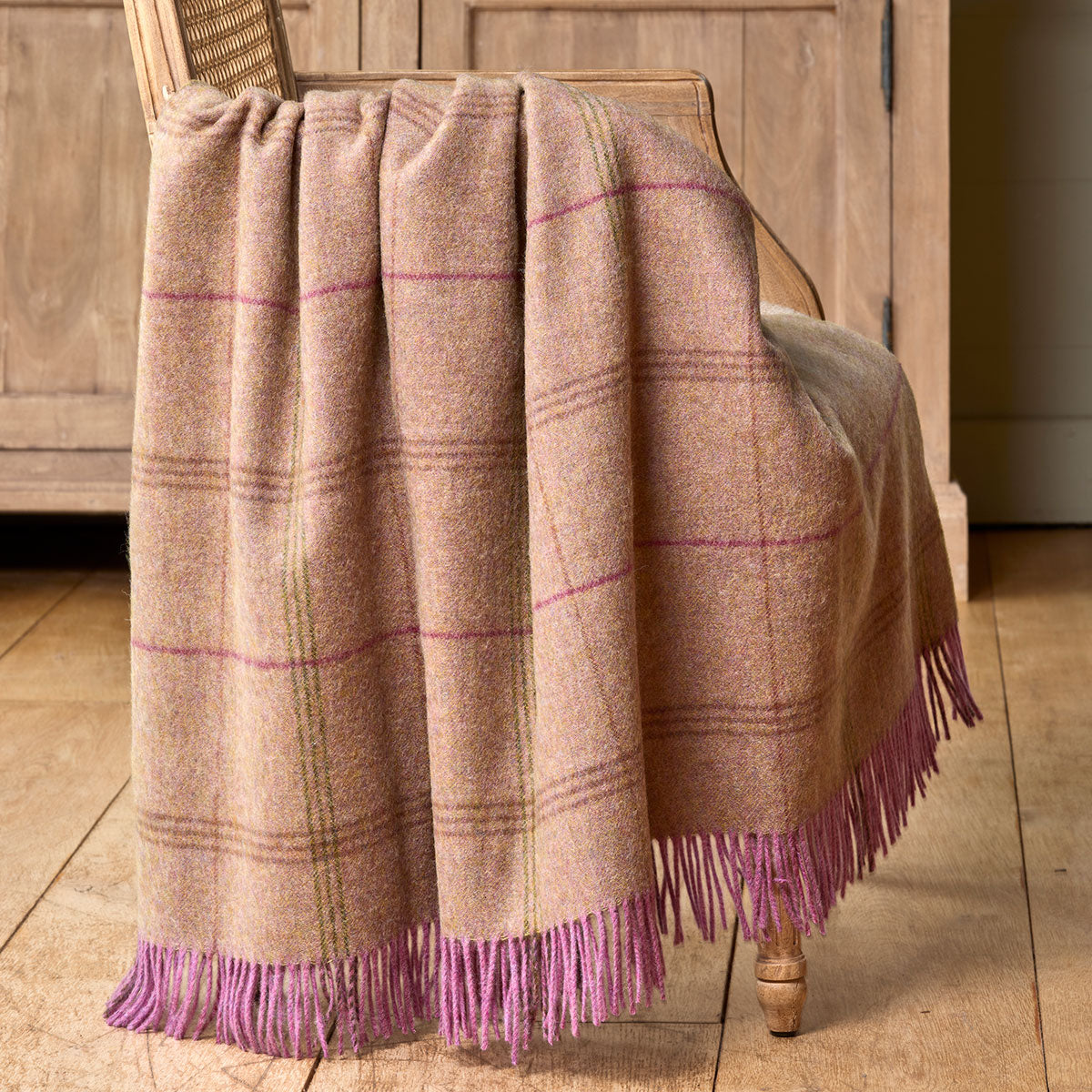
Furniture and color set the scene, but fabrics give it its tactile dimension. British upholstery doesn’t skimp on fabric. The windows—often sash windows or bow windows—are adorned with heavy, lined curtains. Paired with lambrequins and thick trimmings, they fall generously, even trailing across the hardwood floor, blocking drafts while dampening the room’s acoustics.
Genoese velvet, glossy chintz, Hebridean tweed, and raw linen coexist without hesitation. The diversity of textures calls for physical contact. The deep sofa invites you to sink into it, the padded footrests encourage languid postures, and the layered rugs—usually a wide sisal rug edged with leather and covered with an antique Persian kilim—add warmth to the floor. The overall feel is reminiscent of a tailor-made garment—heavy yet perfectly suited to the outdoor climate.
A Twist: Eccentricity as a Counterpoint
The subdued atmosphere could quickly descend into museum-like boredom were it not for the eccentricity that is the very essence of British style. English interiors never take themselves entirely seriously. They embrace fierce clashes and stylistic missteps. A classically crafted Roman bust sits alongside a stuffed pheasant under a glass dome; a brutalist industrial-style pendant light hangs next to a cushion embroidered with an irreverent slogan.
This constant incongruity—whether subtle or outrageous—prevents the decor from becoming stale. It reflects the residents’ rebellious spirit, giving them the freedom to inject a bit of bite into a setting that would otherwise buckle under the weight of tradition. This is where true chic reveals itself: the elegance of someone who has mastered the classics well enough to allow themselves to playfully subvert them.
The Long-Term Vision
The layout of these interiors is geared toward a specific social purpose. The armchairs do not obediently line up in front of a flat-screen TV. Instead, they converge toward the fireplace or face one another, facilitating conversation or quiet togetherness. The coffee table in the center of the room often takes the form of a large ottoman upon which rest solid-silver trays, steaming porcelain teapots, cut-glass decanters, and tall stacks of beautiful books.
The space is designed to celebrate the slow passage of time. Whether it’s solitary reading by the embers or the unchanging ritual of five o’clock tea accompanied by scones, the setting becomes the stage for the action. The enduring success of this style does not rest on a fixed aesthetic formula, but on its ability to satisfy a need for stability. By blurring the boundaries of time, the English living room acts as a refuge where the frenzy of the outside world is sharply cut off by the thickness of a velvet curtain.