
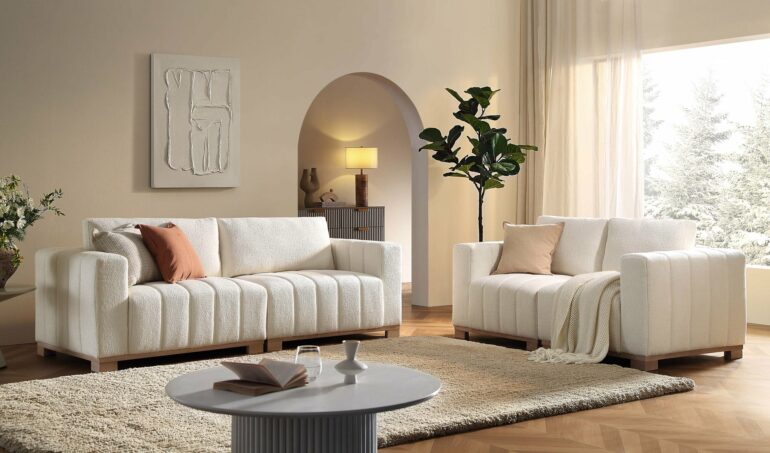
Stepping into a space designed according to the principles of understated luxury produces an immediate physical effect. The eyes find peace, and the heart rate seems to slow. The eye, accustomed to the visual overload of our times, first seeks a spectacular focal point, an obvious signature, a flash of brilliance. It finds none. Instead of ostentation and glitz, the atmosphere exudes a quiet presence, an authority that relies on no display of power. This approach to interior design definitively turns its back on extravagance to establish a language rooted in restraint. It is no longer the object that shouts its value; it is the space as a whole that whispers its standards. Far from being a mere decorative trend, this philosophy redefines elegance by grounding it in three strict pillars: an obsession with detail, the nobility of texture, and absolute mastery of volume.
The illusion of minimalism
At first glance, an untrained eye might describe these interiors as bare, even austere. The scarcity of objects and the absence of surface ornamentation throw one off. Yet, as one becomes more familiar with the space, the density of the design becomes strikingly apparent. Discreet luxury tolerates no half-measures, precisely because there are no visual artifices to mask a design flaw. This is the paradox of this aesthetic: it demands a colossal effort to appear entirely effortless.
Here, the aesthetic stands in stark contrast to what is commonly called minimalism. The latter often involves a process of subtraction. Minimalism strips away and hollows out, sometimes verging on a clinical coldness—whether intentional or imposed. Discreet luxury, on the other hand, does not seek to strip the room of its substance, but rather to refine it to its truest expression. The elements are few, to be sure, but they infuse a restrained warmth. The atmosphere that emerges is anything but austere; it is deeply lived-in, anchored by centerpieces whose presence speaks for itself.
It’s also important to clear up a common confusion regarding the Japandi style. The neutral color palettes and the omnipresence of nature might suggest a direct connection. However, their intentions diverge when it comes to the concept of perfection. While the Japanese-Scandinavian influence celebrates irregularity, the patina of time, a certain cottony softness, and the charm of imperfection, understated luxury demands a very different kind of precision. It requires clean lines, millimeter-perfect alignment, and a finish of almost surgical precision. The atmosphere is not one of the poetry of imperfection, but of the legal precision of proportion.
The hand takes over from the eye
Since pattern has been eliminated and gloss banished, material becomes the sole true language of interior architecture. Glossy surfaces—often associated with a somewhat dated modernity or superficial luxury—give way to textures that invite touch. The experience becomes deeply tactile. We rediscover the muted irregularity of hand-carved plaster, the mineral-like coolness of unpolished natural stone, or the reassuring roughness of solid wood, whose grain lies just beneath the fingertips.
Textiles meet the same standard of authenticity. Heavy linen, thick wool, and looped yarn find their way into upholstery and draperies. Shine is tolerated only in the form of brushed metals, whose matte patina absorbs light rather than reflecting it harshly. The quality of these materials must not only be seen—it must be experienced in everyday life.
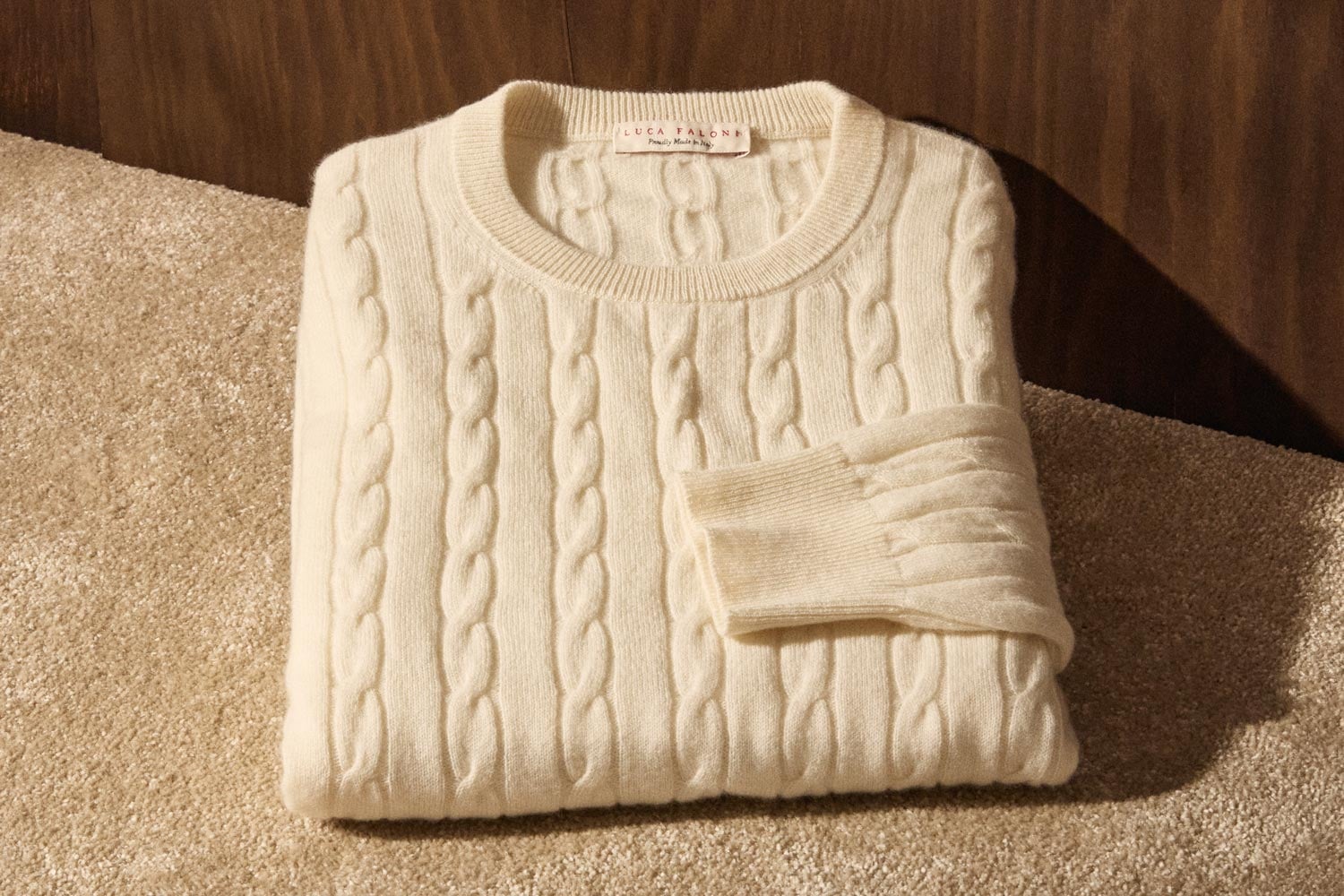
To let these textures breathe, color takes a back seat. The chromatic palette acts as a silent revealer. The color spectrum navigates carefully around warm whites, greige, the depth of taupe, the softness of an earthy brown, the subtlety of a muted green, and the density of a charcoal tone. The absence of stark color contrasts prevents visual overload. But this vocabulary of materials and hues would collapse without the management of an invisible element: emptiness. In this design language, unoccupied space is never a void to be filled. It provides essential breathing room—the framework that allows a perfectly crafted piece of furniture to express its silhouette.
Rejecting the disposable and erasing the machine
Behind this serene façade lies a radical stance against obsolescence and the unbridled consumption of images. A sofa whose seat density has been meticulously designed, a large table carved from a solid block of wood, a cabinet whose joints defy the passage of time: these pieces are not mere furniture; they are anchors. Discreet luxury rejects imitation, hasty veneering, and cheap copies. It reconnects with the notion of the long term, characteristic of historic interiors that spanned decades without batting an eye. Clutter obscures the message; clarity arises from a rigorous selection of objects designed to stand the test of time.

This relationship to time and function finds its most contemporary expression in the integration of technology. Absolute comfort today requires state-of-the-art equipment, but elegance dictates that it be concealed. It is no longer a matter of displaying flat-screen TVs like trophies or letting home-automation consoles dictate the aesthetics of a wall. Luxury, from now on, is the speaker that is recessed and becomes invisible, the screen that blends into the wood paneling, the lighting that adjusts without revealing its source, and the home automation controls concealed behind a smooth surface. The goal is clear: to avoid the look of a high-tech office at all costs. The human mind must be able to disconnect from the technological aspects of its living space, retaining only the services it provides.
The Scale of Volumes: From Grand Vision to Precision-Engineered Details
While the philosophy remains constant, its application differs fundamentally depending on the setting. In a single-family home, the architecture itself becomes the vehicle for this serenity. Generous volumes allow for a majestic display of materials. Continuously poured floors erase the boundaries between rooms, natural light dictates the layout of living spaces, and the woodwork frames the landscape without competing with it. Space has the freedom to stretch out.
When transposed into an apartment, the situation changes. Precision is taken up a notch to compensate for the scarcity of square meters. The layout then becomes a true engineering feat, akin to precision mechanics. The lack of spaciousness is overshadowed by the intelligence of the design. Every inch of headroom, every nook and cranny is utilized by fully integrated, sleek storage solutions without ostentatious handles. Uncluttered surfaces become essential. Everything fits together so that the eye can glide over the space without ever stumbling upon an uncontrolled visual obstacle.
Minimalism in Small Touches
Changing the aesthetic to achieve this demanding simplicity does not necessarily require a complete demolition of what already exists. It is a process of refinement that often begins with the walls. Replacing a pure, cold white with a more organic, matte shade instantly alters a room’s visual acoustics. The transition then unfolds through the renewal of everyday touchpoints. A door handle whose brushed metal feels substantial in the hand, a light switch with a muted click, a tabletop where you can feel the natural grain, a curtain whose drape is weighted by the quality of its fabric: it is these details—whether perceived consciously or not—that create a sense of luxury.
The most complex step is undoubtedly subtraction. Doing away with flashy finishes, eliminating every visible cable, and removing superfluous decorative objects that serve only to fill a void. Discreet luxury does not tolerate clutter, even when it is sophisticated. It demands strict, almost austere discipline—silencing the superfluous so that the material itself can finally speak.