
Make Texture a preferred source on Google to support us
Add Texture to GoogleIn Riehen, just outside Basel, the museum landscape is about to take on a whole new dimension. Since its opening in 1997, the Beyeler Foundation has established itself as a global benchmark, thanks to Renzo Piano’s light-filled, airy architecture. Thirty years later, the Swiss institution is reaching a pivotal milestone by unveiling what it now calls “The New Complex.” Rather than a simple lateral extension, the project features an architectural fragmentation designed by Swiss architect Peter Zumthor, a Pritzker Prize laureate. This expansion, with a total cost estimated at approximately 120 million Swiss francs (or nearly 109.7 million pounds sterling), redefines not only the artistic journey but also the relationship with the Rhine landscape.
The Wyss House: A Monolith of Earth and Bronze
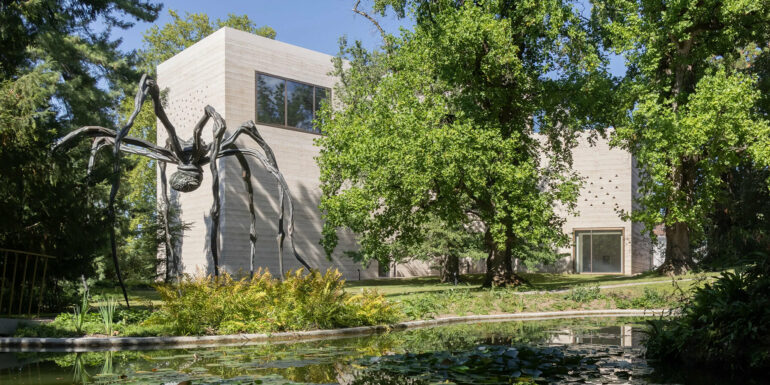
At the heart of this transformation stands the Wyss Museum, or Maison Wyss, a structure that contrasts sharply with the horizontal transparency of the original building. Peter Zumthor designed a monolithic structure rising three stories high, whose Y-shaped layout was dictated by nature itself: its sinuous silhouette respectfully winds around the park’s centuries-old trees. The building’s aesthetic is rooted in a raw yet warm materiality. The facades are made of tamped concrete incorporating limestone aggregates from the Swiss Jura, giving the walls a yellow-ochre hue that captures the region’s shifting light. This mineral quality is punctuated by large bronze-framed windows, creating a constant visual dialogue between the galleries and the surrounding canopy.
With the addition of this new wing, the exhibition space increases by 1,500 m², complementing the original 3,800 m² designed by Renzo Piano. This expansion addresses a growing need for flexibility to showcase the masterpieces of the permanent collection while hosting large-scale temporary exhibitions. The selection of Zumthor, chosen unanimously by a jury in 2017, signifies a commitment to architectural longevity. Here, luxury lies not in ostentation, but in the precision of detail and the quality of textures—hallmarks of the Haldenstein-based architect’s practice.
A pavilion dedicated to the museum’s social life
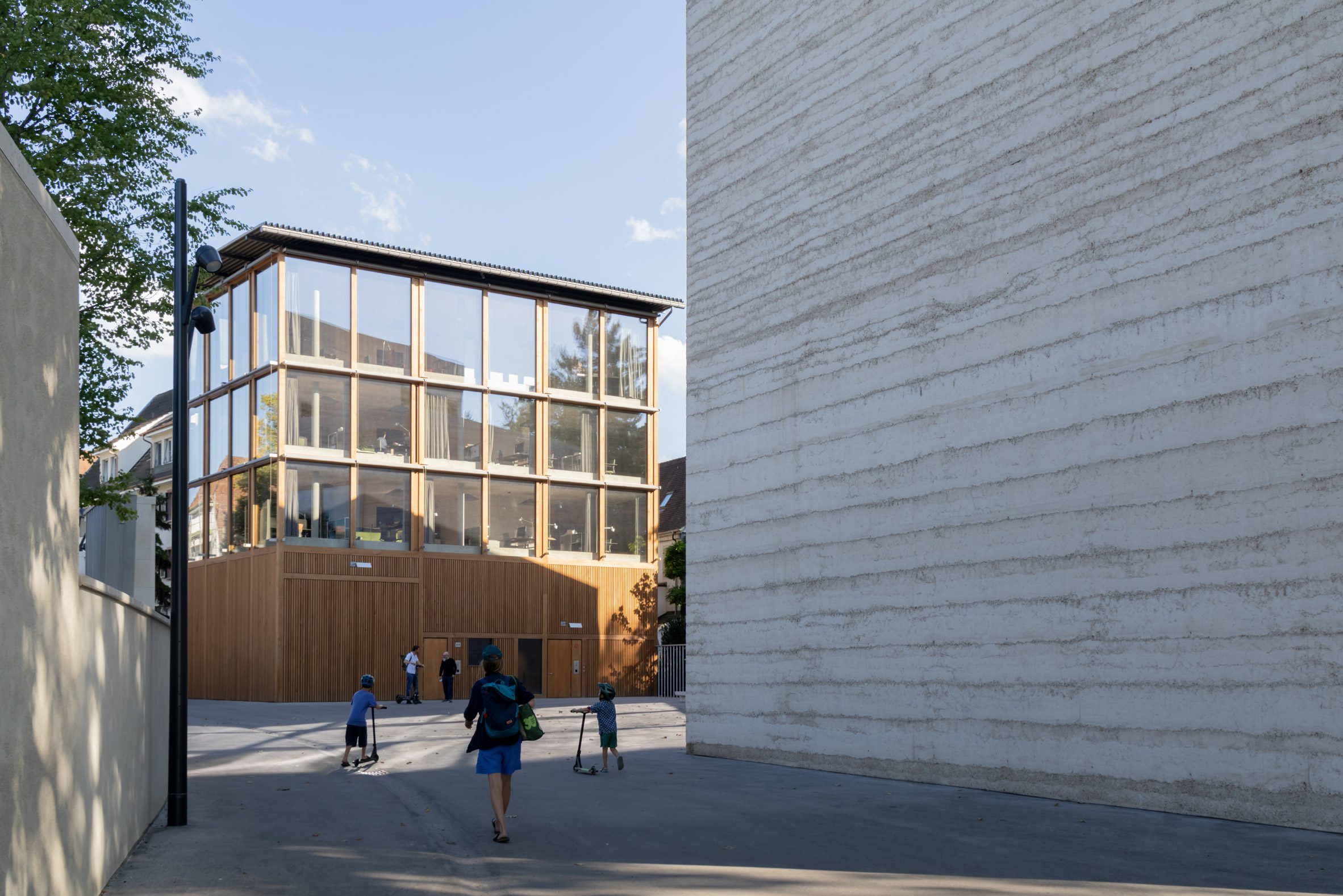
Set back from the exhibition building, the Ammann Pavilion offers a radically different approach. While the Wyss House is a sanctuary for art, this second building—clad in pear, cherry, and oak wood—is intended to be a place for exchange and conviviality. A low-rise, largely glass-enclosed structure, it serves a hybrid function: a public lounge freely accessible during the day, it transforms in the evening into a space dedicated to cultural events, recitals, and concerts. This versatility underscores the Beyeler Foundation’s ambition to be no longer merely a stopover for art lovers, but a true hub of social and intellectual life.
The third pillar of this project, the Erlen Torhaus, ensures the operational viability of the entire complex. This wooden guardhouse, adjacent to the new museum, conceals a complex logistical system. Connected via an underground passage to the Wyss House, it manages administrative operations and the delicate transport of artworks, thereby separating technical requirements from the visitors’ aesthetic experience. This discreet network helps preserve the serenity of the site, a central element of the foundation’s identity.
Expanding the Landscape: A Doubled Park
One of the most striking aspects of this development is the opening to the public of a historic plot of land that was once private. By adding approximately 10,000 m² of space, the Beyeler Foundation has nearly doubled its green space to nearly 20,000 m². This new landscaping is accompanied by a meticulous restoration of 18th-century buildings. These historic structures have been given a contemporary purpose, now housing art education workshops, a music lounge, an orangery, and an experimental space.
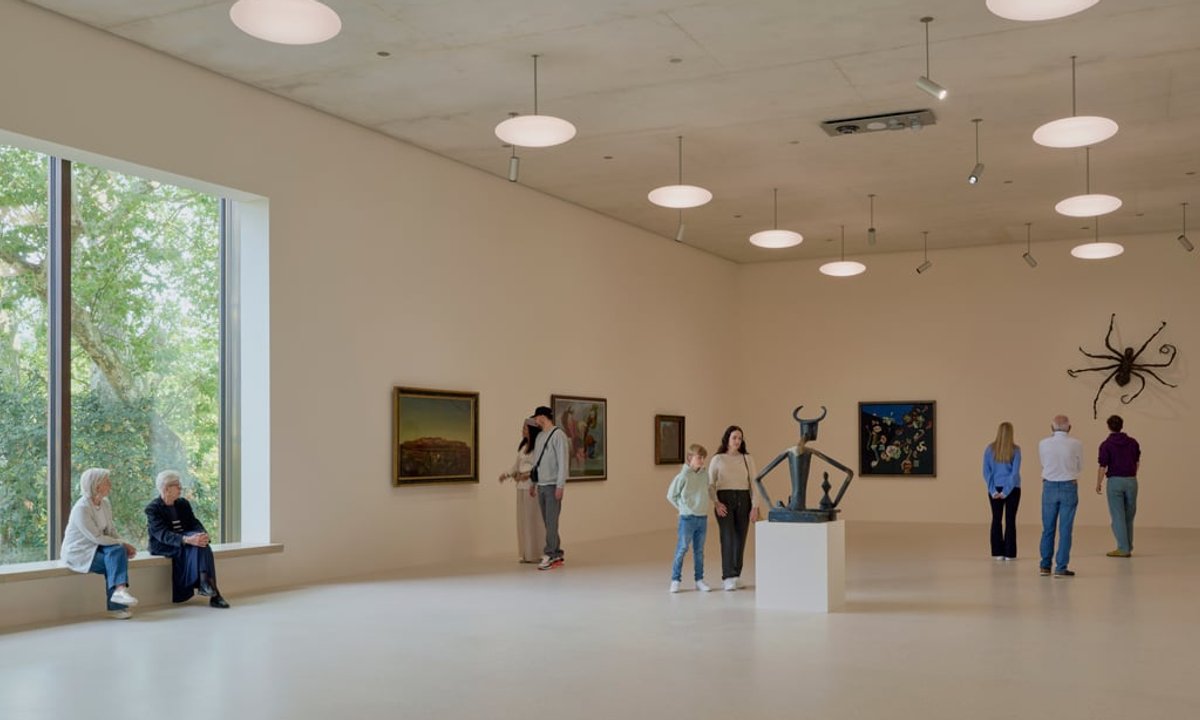
This expanded garden serves as the setting for a permanent sculpture trail. Major works, such as Louise Bourgeois’s giant spider *Maman* and installations by Pierre Huyghe and Rachel Whiteread, stand alongside pieces by Fujiko Nakaya, Maurizio Cattelan, Alexander Calder, and Jenny Holzer. In the spring of 2027, this green setting will be complemented by a garden specifically designed by the artist duo Fischli/Weiss, reinforcing the symbiosis between art and nature that has defined the Riehen institution since its inception.
Constellations: An Inauguration in Motion
To celebrate this new era, the foundation is presenting an inaugural exhibition titled “Constellations.” On view from fall 2026 through the end of 2027, this exhibition highlights the richness of the permanent collection, enhanced by significant private loans, notably from the Daros Collection. The number of works on display is expected to evolve: while initial estimates suggest 150 pieces, the lineup could expand to as many as 230 works over the course of the seasons, offering a constantly fresh perspective.
Funding for this monumental expansion relies on a particularly robust model of private philanthropy. Hansjörg Wyss, a central figure in the foundation, contributed significantly to the construction of the exhibition building that bears his name. The support provided by Thomas and Doris Ammann for the social pavilion, as well as that of Christoph and Sibylla Müller for the park’s redevelopment, illustrate the strength of Swiss philanthropy. No public funding has been reported for this project, which remains the result of private commitments and partner foundations.
The opening schedule has been designed to allow for a gradual transition. A pre-opening phase, characterized by limited access and reduced capacity, will take place from September 26, 2026, to January 14, 2027. It is only starting on January 15, 2027, that “The New Complex” will be fully open to the public, 365 days a year. This expansion thus underscores the Beyeler Foundation’s commitment to looking toward the future, offering a space where the quiet elegance of Zumthor’s architecture engages in dialogue with the lightness of Piano’s.