
Make Texture a preferred source on Google to support us
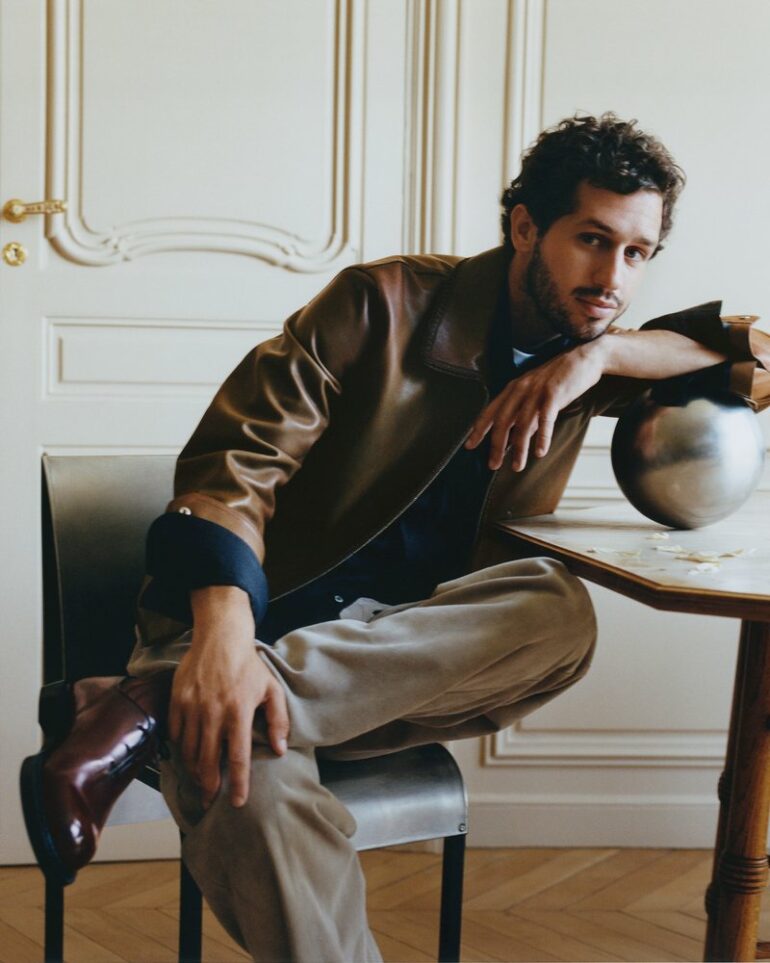
Add Texture to GoogleThe times have imposed a frenetic pace on men’s fashion, which is often forced to shout to make its presence felt on the runways. In contrast to this frenzy, Berluti has decided to silence the external clamor for its Fall-Winter 2026 campaign. Estelle Hanania’s camera does not linger on spectacular architecture or distant landscapes, but instead settles on the intimacy of a Parisian apartment. This choice of setting, far from being incidental, serves as a statement of intent. Luxury, stripped of its ostentatious arrogance, returns to its original purpose: to adorn everyday life with quiet refinement. The garment recedes into the background in favor of the overall look, blending into the domestic space with the natural ease of a familiar object.
Captured on film, the photographic series boasts a distinctive texture—a grain that catches the light and freezes time. Film photography lends a materiality that directly echoes the brand’s artisanal craftsmanship. Within this intimate setting, the apartment’s weathered wood paneling interacts with the finely crafted leathers, while orchids placed here and there lend an organic touch to the whole. What we are observing is no longer a collection, but a suspended slice of life. The furniture, selected with the utmost rigor, serves as a showcase for men’s fashion that rejects ostentation. Here, elegance is expressed through movement and everyday use, proving that a space only reaches its full potential when it is truly lived in.
The Duality of a Masculine Aesthetic
To embody this vision rooted in reality, Berluti orchestrates an encounter between two personas, two attitudes that, rather than opposing one another, trace the contours of a multifaceted man. On one hand, Victor Belmondo commands a physical presence marked by an instinctive ease. Slipped into loose-fitting pants and a leather jacket, the actor makes the clothing his own with apparent effortlessness. The generous cut accompanies the body rather than constraining it, suggesting an almost sensual approach to the material. The look is raw, direct, and rooted in a very European kind of nonchalance.
Across from him, Lee Jun-ho offers a completely different interpretation of the same aesthetic vocabulary. The look suddenly becomes more vibrant. By pairing a structured blue suit with a pink shirt, he introduces a chromatic tension that enlivens the silhouette. The precision of the tailoring clashes with the lightness of the hues, infusing the ensemble with sparkling energy. This duality, embraced by the house, confirms a clear intent: to break free from the dictates of a single silhouette. Berluti presents a malleable wardrobe—a repertoire of shapes and colors capable of navigating from the precision of a suit to the casual ease of a piece with loose sleeves, without ever losing its balance.
Clothing conceived as an enduring object
The integration of the wardrobe into this private space takes the aesthetic reflection even further. The accessories and signature pieces from the Fall-Winter 2026 collection cease to be mere additions and take on an almost sculptural status. The Un Jour bag, casually placed near an orchid, blends into the room’s layout with the same legitimacy as a designer lamp or an art book. This staging blurs the boundaries between fashion and interior design. Objects circulate, come to life, and become rooted in the setting.

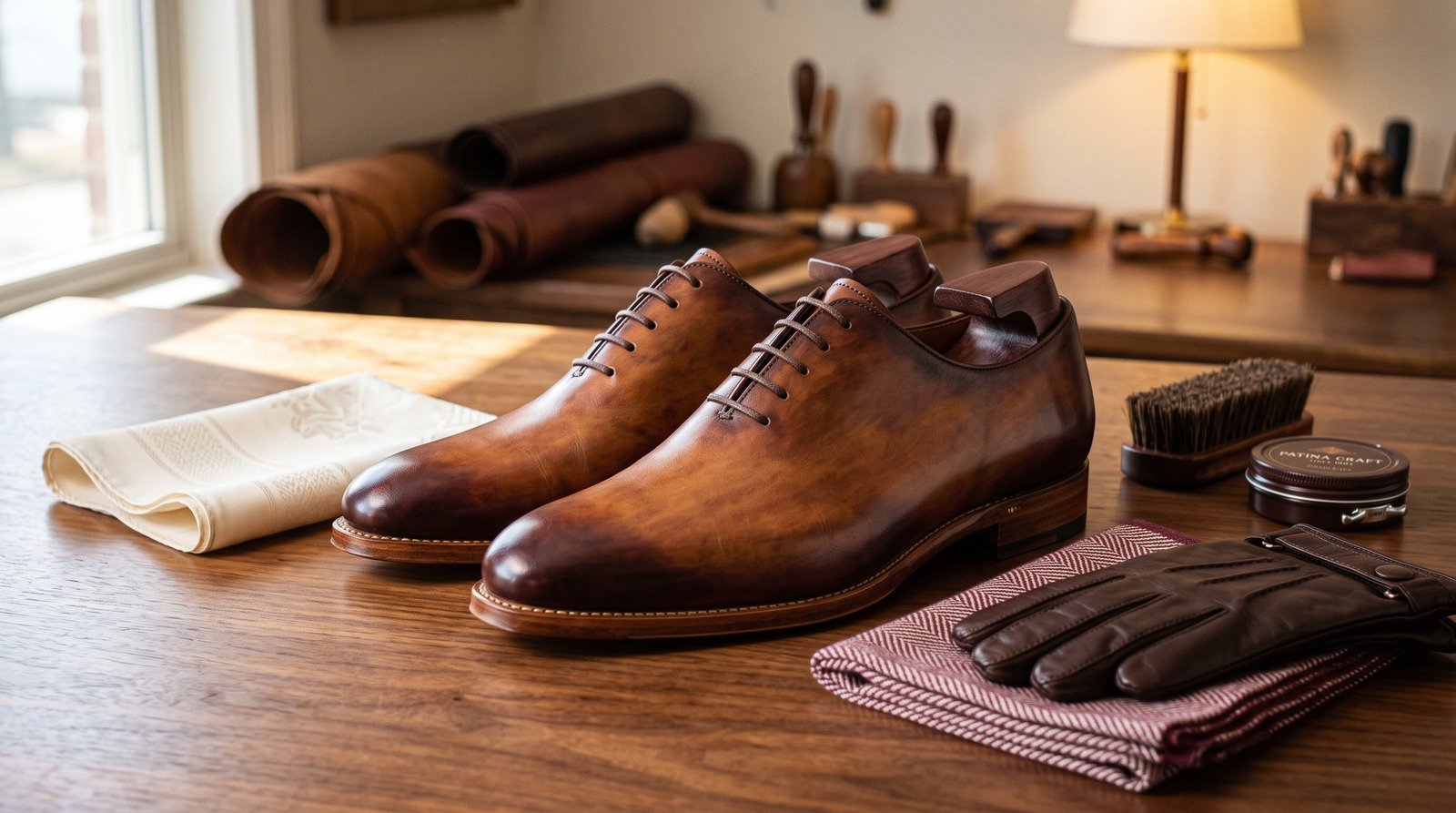
This organic approach highlights the very foundations of the collection, which was unveiled earlier during Paris Fashion Week. Critics, including *Vogue*, had noted the richness of the color palette—dominated by deep jewel tones—and the complexity of the textures. The brand’s heritage as a bootmaker shines through in every surface treatment. The patinated leathers—the house’s signature—find a direct visual echo in the aged woodwork of the Parisian apartment. The wardrobe’s key pieces revolve around this craftsmanship taken to its peak: the precision of a Forestière jacket, the unexpected suppleness of a lightweight shearling jacket, or the reassuring presence of Rombo boots.
Even the footwear balances heritage with urban pragmatism. The 1895 shoe maintains a deep connection to classic tradition, while the Stellar sneaker breaks away from that formality with a more contemporary approach to movement. The entire stylistic collection demonstrates a desire to pit the nobility of time-honored craftsmanship against the harsh demands of contemporary city life.
The quiet strength of continuity
Behind this campaign lies the brand’s entire current philosophy. At a time when the men’s fashion market demands aesthetic upheavals every season, hoping to spark desire through systematic disruption, Berluti stays the course with serene determination. No radical shifts are announced, and no spectacular stunts are employed to grab attention. The house prefers to forge its own path, refining—season after season—a very specific vision of the men’s wardrobe.
This rejection of urgency reflects a rare confidence in the strength of its own heritage. Continuity becomes a declaration of independence in the face of fleeting trends. The aesthetic developed in this Parisian apartment proves that true sophistication lies in the subtle interplay of materials, in the precision of a drape, and in the way leather captures the light of a late afternoon. Ultimately, the Fall-Winter 2026 campaign reminds us of a truth that is often forgotten: clothing is not designed to dominate the wearer or the space they inhabit. It is meant to settle in, gently, and endure.