
Make Texture a preferred source on Google to support us
Add Texture to GoogleThe Store as a Weapon of Mass Seduction
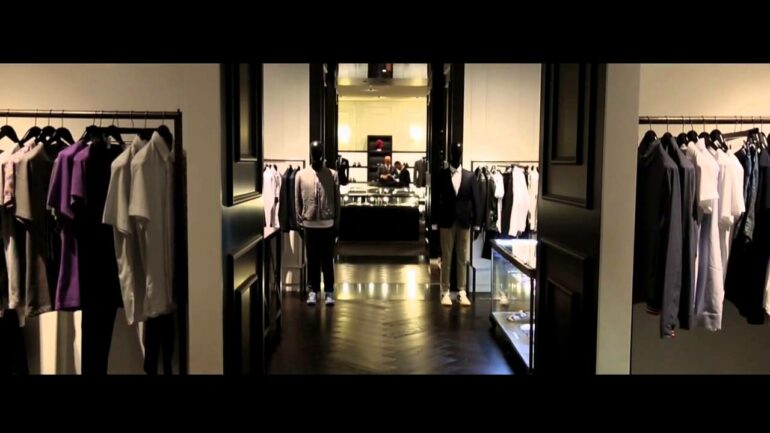
Brick-and-mortar retail no longer has a monopoly on immediacy. Faced with the formidable efficiency of digital distribution, brick-and-mortar stores are facing an existential crisis that they can only resolve by outdoing the competition. Customers no longer have any reason to travel solely to purchase a product. They need an excuse, an atmosphere, a break from the routine. It is precisely this psychological gap that Australian retailer Harrolds is capitalizing on. By reestablishing its presence within Westfield Sydney, at the bustling heart of Pitt Street, the brand does more than simply line up racks of merchandise. It orchestrates a show of strength centered on presence and the long-term experience, transforming the act of shopping into a sophisticated choreographed experience.
This architectural and commercial offensive comes at a time of rare intensity for the company. Harrolds’ recent history has been anything but smooth sailing. Founded in Melbourne, the company has forged a distinguished reputation in men’s fashion, skillfully blending the precision of traditional tailoring with the boldness of contemporary design. Yet this aesthetic authority did not shield the group from financial turmoil, recently forcing it into receivership. This sudden slump makes this new reopening feel like a do-or-die situation. Re-entering the physical retail space on such a grand scale after such a dark period reflects a very clear understanding of the industry: survival depends on taking the physical retail experience to its absolute limit.
Spatial Choreography and Brand Diplomacy
The floor plan of the Sydney space carefully avoids the pitfalls of a sprawling department store. Arasch Enayat describes this initiative not as the addition of yet another branch on a map, but as the creation of a standalone destination, designed to embody the brand’s spirit. The interior architecture is built on a sophisticated material palette. The floors and surfaces are clad in Italian marble, framing custom-built fixtures that fragment the space to give it an almost residential rhythm. The space unfolds into three distinct zones, designed to draw visitors in rather than direct them toward a cash register.
Within this meticulously controlled space, the coexistence of the brands is a complex diplomatic exercise. Zia Khorram emphasizes the importance of absolute clarity for each partner. Here, Harrolds employs a strategy of respectful isolation—a common approach in the grand temples of European luxury—but adapted to a more intimate scale. Brioni, Lardini, Stefano Ricci, and Thom Browne are not lost in a vague, multi-brand mass. Each brand has its own territory and its own visual identity. The boutique acts as a curator, providing a shared space for aesthetic identities that are sometimes diametrically opposed, while ensuring that each designer’s signature style remains perfectly intact and recognizable to the discerning eye.
Hospitality that makes you forget the transaction
The driving force behind this new model does not lie in the inventory. The inventory, though well-stocked with shoes, perfumes, and lifestyle items, takes a back seat to the service infrastructure. The brand focuses entirely on personalized, hands-on support. The presence of private lounges and an integrated bar challenges the consumer’s traditional mindset. People no longer come simply to try on a jacket. They settle in and linger over a cup of coffee, a glass of champagne, or a glass of wine. The financial transaction is subsumed within a ritual of hospitality.
This approach requires a complete overhaul of the sales staff’s role, shifting toward that of a host and private advisor. The styling and tailoring services—long embedded in the Melbourne-based brand’s DNA—take on an almost theatrical dimension here. The store becomes a stage where the customer plays the leading role, assisted by experts tasked with curating their wardrobe. It is a direct response to the coldness of algorithms: to recreate human depth, interaction, and conversation. The approach has the merit of directly addressing the weak point of online shopping, pitting touch, smell, and dialogue against the passivity of a screen.
The risky gamble of flawless execution
While the theory is appealing, putting it into practice leaves no room for error. High-end experiential retail is a precision engineering endeavor. Setting up a sophisticated bar and laying out square meters of Italian marble requires a significant initial investment. Maintaining an impeccable level of service on a rainy Tuesday morning—months after the excitement of the grand opening—requires pure discipline. In this type of environment, any lack of precision instantly shatters the illusion. If the welcome feels insincere, if the advice is off the mark, the setting quickly becomes an empty shell.
Setting up shop in a highly competitive center like Westfield Sydney immediately exposes the brand to the critical eye of an extremely discerning clientele. Harrolds makes no secret of its ambitions: the company aims to establish this store as the benchmark for its future projects. The Pitt Street flagship thus serves as an open-air laboratory. The goal is to test the viability of a model where the mere accumulation of merchandise gives way once and for all to the orchestration of thoughtful experiences. The stakes go far beyond simply revitalizing a brand in the wake of a financial crisis. It directly challenges the ability of a multi-brand retailer to establish its own added value—its own signature approach to customer service—in the face of customers who could just as easily turn directly to the designer houses. The answer will be measured not by the glitz of the store windows, but by the meticulous consistency of service over the long term.