
Make Texture a preferred source on Google to support us
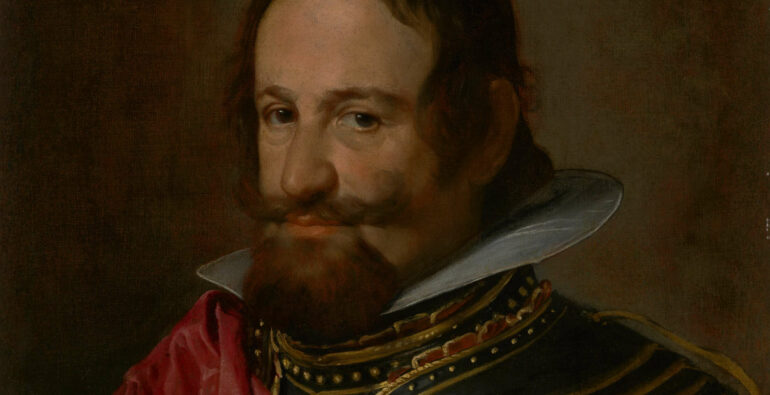
Add Texture to GoogleThe announcement, made on September 23, 2026, marks a turning point for Spanish art in the United States: the J. Paul Getty Museum in Los Angeles has just confirmed the acquisition of a rediscovered masterpiece by Diego Velázquez. The Portrait of the Count-Duke of Olivares, painted around 1626, is the very first work by the Sevillian master to join the permanent collections of the California institution. This addition to the collection is all the more significant given that, until now, no museum on the West Coast owned a painting by the artist whom Manet dubbed the “painter of painters.” This bust portrait of Gaspar de Guzmán y Pimentel, the most powerful man at the court of Philip IV, emerges from a long period of obscurity to stand out as a major testament to the genesis of Velázquez’s style.
The Genesis of an Image of Power
The painting depicts Gaspar de Guzmán y Pimentel, Count-Duke of Olivares, the valido (prime minister) whose influence over the Kingdom of Spain was absolute for more than two decades. Velázquez, who owed much of his rise to the patronage of this man, delivers here a striking image of authority. The minister is depicted in a half-length portrait, clad in dark armor embellished with gilding and crossed with a red sash, the insignia of his military rank. His gaze, directed squarely at the viewer, exudes a calm severity characteristic of 17th-century Spanish ceremonial portraits.
For centuries, knowledge of this specific composition relied on an indirect source: an engraving by the Flemish artist Paulus Pontius, itself based on a drawing by Peter Paul Rubens. The rediscovery of the original canvas now allows us to study Velázquez’s hand directly on a subject that art historians previously knew only through graphic interpretations. The technique used—oil on canvas, dated 1626—corresponds to the period when the painter was consolidating his position in Madrid, shortly after his permanent appointment at court.
Technical Analysis: The Master’s Repentimenti
Beyond its iconographic interest, the portrait has revealed its secrets through in-depth scientific examinations. Radiography and X-ray imaging have revealed numerous pentimenti—these revisions that bear witness to the artist’s creative process. These analyses show that Velázquez made several structural adjustments while painting the work: retouching is visible on the model’s shoulder and ear, while a sword guard was covered by a later layer of paint.
The most notable discovery, however, lies beneath the surface of the armor. Technical examinations have revealed traces of a fur cloak, a garment that was originally intended and corresponds to the drawing made by Rubens. This detail suggests that Velázquez initially followed the Flemish master’s model before subsequently choosing to transform the civilian costume into battle armor. This change underscores the evolution of the image the Count-Duke wished to project: that of a war leader and protector of the state, rather than that of a mere courtier.

A Journey from Madrid to Los Angeles
The work’s historical journey is closely linked to the diplomatic issues of the time. According to research, the portrait was commissioned during the summer of 1626 to serve as a diplomatic gift. Olivares is said to have presented it to Cardinal Francesco Barberini during his diplomatic mission to Madrid. An inventory of the Barberini collection, compiled in Rome in 1631, explicitly mentions a portrait of the Count of Olivares, described as a head and bust in armor. While the formal identification of the Getty painting with this 1631 inventory entry is based on a cross-referenced documentary deduction, the consistency of the dates and the description makes the hypothesis very compelling to curators.
In the 20th century, the painting remained in the Coppellotti Collection in Asti, Italy, largely out of the public eye. Its return to the forefront of the global art scene gained momentum in 2025, when Salvador Salort-Pons, director of the Detroit Institute of Arts and a renowned specialist in Spanish painting, identified the work in a private collection while conducting research for an exhibition. Following a scholarly article published in ARS Magazine, the painting was briefly acquired by a private collector before being sold to the Getty Museum for an undisclosed sum.
Timeline and Museum Plans
The arrival of this major work changes the dynamic of the East Pavilion at the Getty Center, where it will be on public view beginning in the fall of 2026. This acquisition is not merely a local enrichment; it is part of a program of institutional collaboration. After its initial presentation in Los Angeles, the portrait will travel to Michigan.
From January 24 to July 25, 2027, the work will be one of the central pieces in the exhibition *Velázquez & Olivares: Early Years at Court*, organized by the Detroit Institute of Arts. This loan highlights the crucial role played by Salvador Salort-Pons in the rediscovery of the painting and, through its juxtaposition with other works from the same period, illustrates the artist’s rise to prominence at the Spanish court. This portrait, a testament to a political and artistic alliance between an ambitious minister and a painter of genius, thus regains a prominent place in the narrative of European art history.