
Make Texture a preferred source on Google to support us
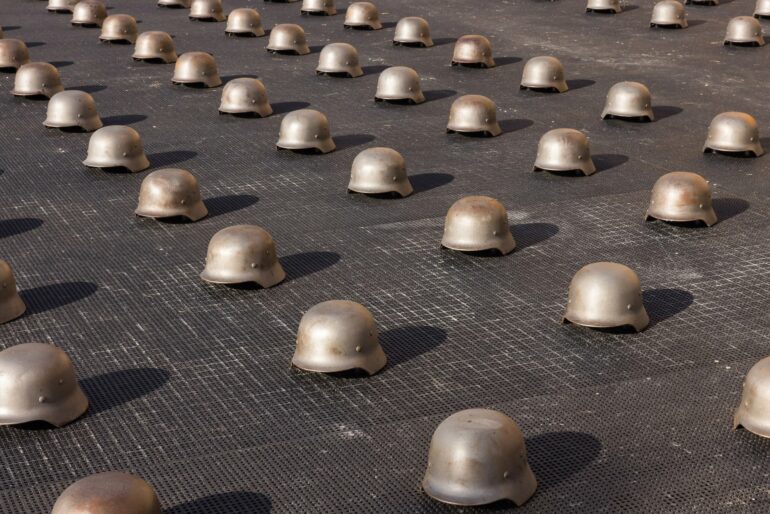
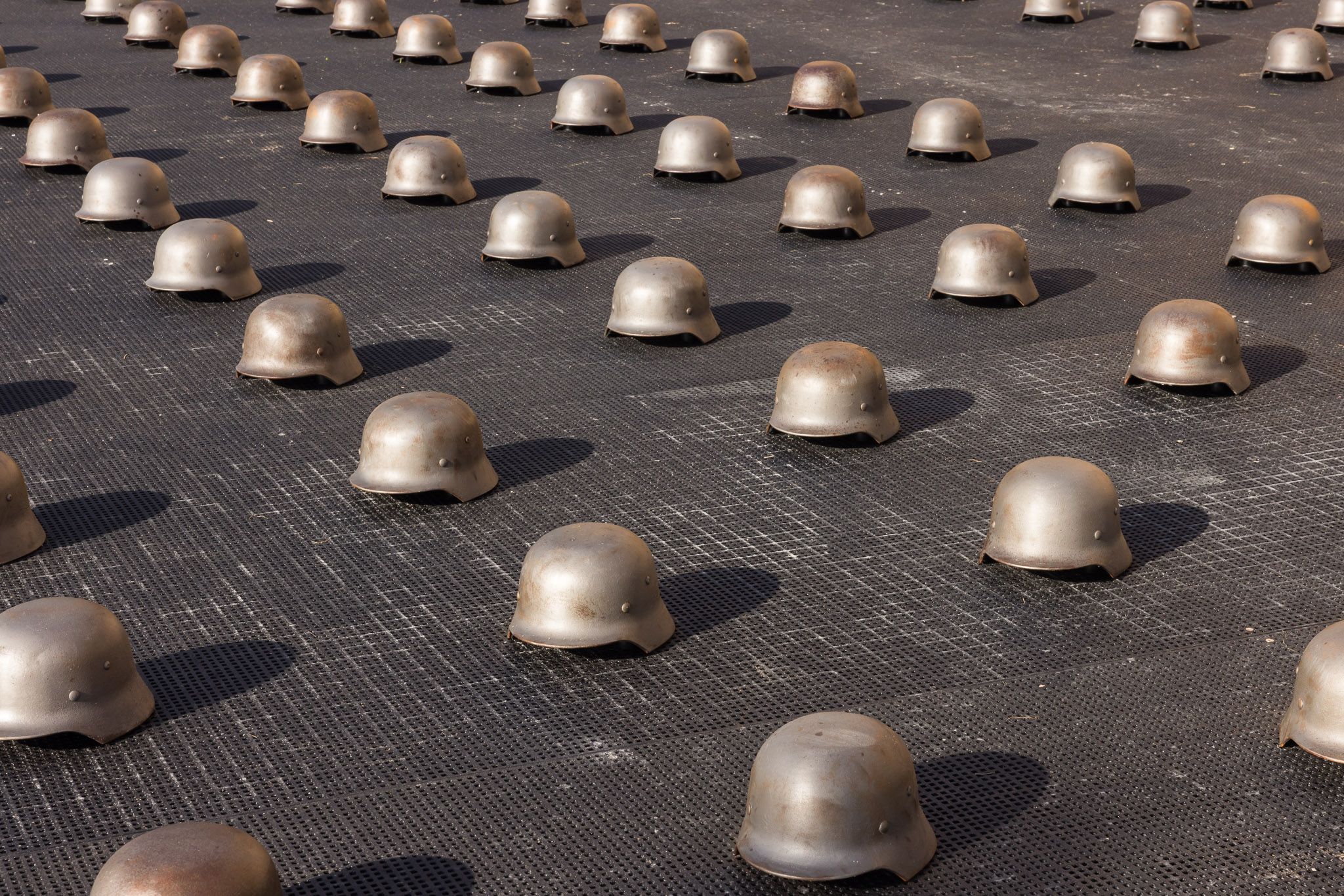
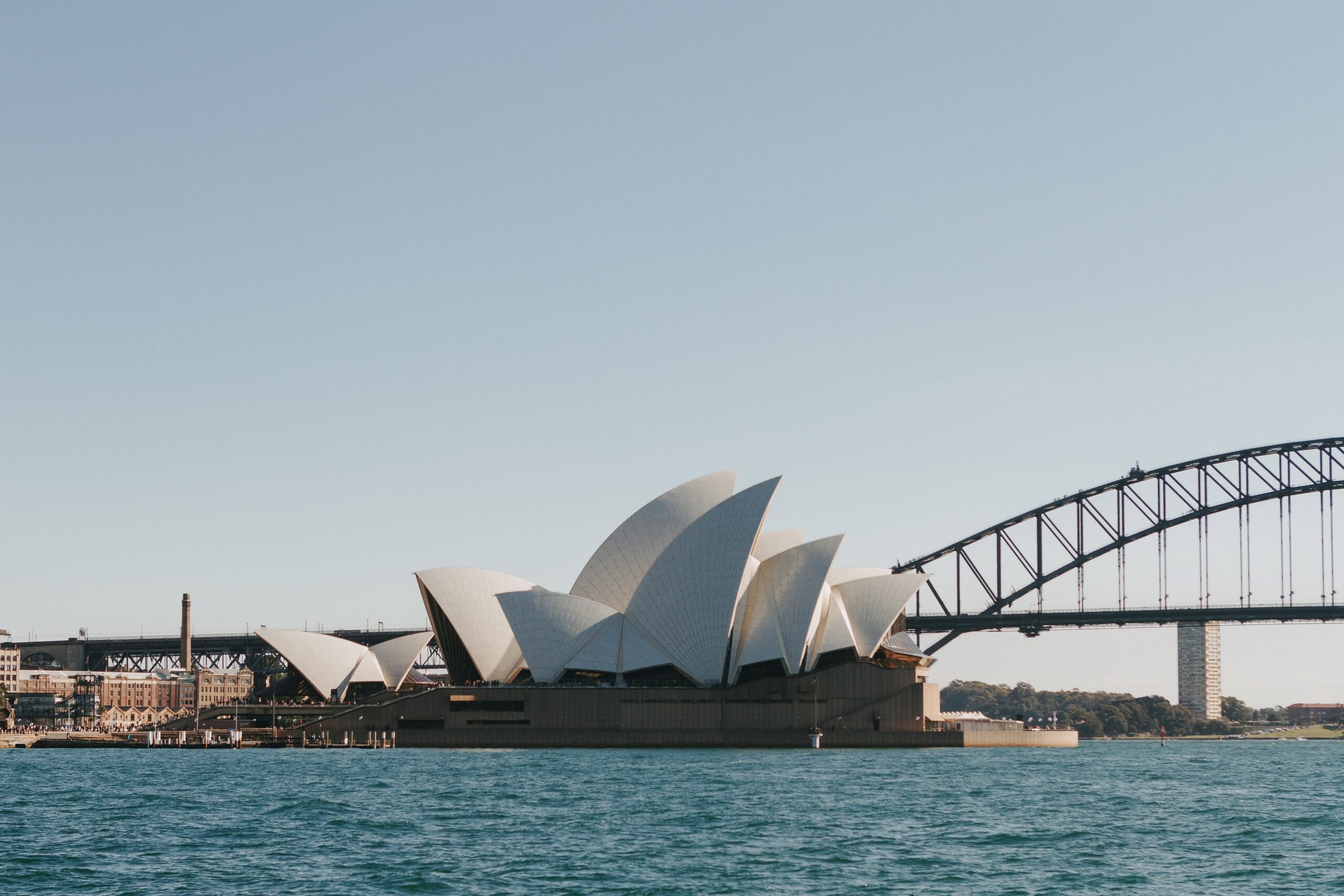
Add Texture to GoogleOn the lawn at Tallawoladah, where the view usually takes in the architecture of the Sydney Opera House and the steel arches of the Harbour Bridge, a new and austere presence has just taken root. Facing the waters of Sydney Harbor, five hundred cast-iron combat helmets are lined up with military precision, forming a structure forty meters long. Unveiled on Friday, September 25, 2026, the work titled *Mushrooms* transforms the esplanade of the Museum of Contemporary Art Australia (MCA Australia) into a space for reflection on the fragility of peace. Commissioned as part of the 2026 Neil Balnaves Tallawoladah Lawn Commission, this monumental installation by Ai Weiwei is scheduled to occupy the public space for seven months, according to the art press, spanning from the Australian spring of 2026 through the fall of 2027.
The Materiality of Waiting
The work is arranged in ten regular rows set on a raised platform. For Ai Weiwei, the choice of cast iron is not merely a matter of sculptural durability, but stems from a desire to give physical weight to absence. Each helmet is a 1:1-scale reproduction of models used during the conflicts of the 20th century. The manufacturing process was entrusted to artisans at a foundry in China, where each piece was cast in an individual mold. This attention to detail extends to the meticulous recreation of the protective inner padding—those soft elements designed to protect the human head, now frozen in the hardness of metal.
At the center of this iron army, a pedestrian walkway has been created. It invites the public not to remain mere spectators of a compact mass, but to wander among the sculptures. As visitors walk through the artwork, they find themselves surrounded by these steel helmets, whose shape is strangely reminiscent of a mushroom cap. This forced stroll between the rows of cast iron creates a face-to-face encounter with the protective object—now a relic—highlighting the anonymity of those who wore them.
A genesis rooted in political powerlessness
The starting point for *Mushrooms* dates back to a specific event on the European diplomatic calendar. In February 2022, on the eve of Russia’s invasion of Ukraine, the German government announced the delivery of 5,000 military helmets in support of Kyiv. This gesture, perceived at the time as derisory in the face of an imminent major armored offensive, sparked the artist’s reflection. For Ai Weiwei, this institutional response illustrates a profound—even superficial—lack of understanding on the part of contemporary leaders regarding the human condition and the challenges of the future.
The work, however, is not merely a reaction to current events in the media. It is based on documentary fieldwork that began nearly ten years ago. After exploring the global refugee crisis in his documentary *Human Flow* (2017), filmed in 23 countries, the artist made four trips to Ukraine. He traveled close to the front lines to speak with soldiers, observing firsthand the physical and psychological toll of the conflict. It was from this encounter with the scorched earth and the soldiers’ daily lives that the vision for these five hundred helmets emerged, standing like metallic outgrowths on the grass in Sydney.
The mushroom, between decay and nuclear threat
The title *Mushrooms* plays on a multi-layered meaning steeped in anxiety. Visually, the rounded dome of the combat helmet immediately evokes the fungal kingdom. But beyond the visual analogy, the artist explores the biological symbolism of the mushroom: an organism that thrives in darkness and feeds on decay. In this interpretation, the mushroom symbolizes both the end of life and the possibility of renewal, emerging from the debris of the past.
The imagery is also darker, referring directly to the mushroom cloud—a technological specter that once again haunts global strategic discourse. This dimension is complemented by a linguistic nuance specific to the artist’s native language. In Mandarin, the term used to refer to the mushroom cloud is also used to describe procrastination or a wait that seems to go on forever. This idea of being stuck resonates particularly with the static arrangement of the work on the lawn at Warrane. The artist, moreover, rejects the notion of mere provocation: this is not a political joke, but an observation on the persistence of war in the 21st century.
A Free Presence in Urban Space
Funded by The Balnaves Foundation in memory of businessman and philanthropist Neil Balnaves AO, the installation is free to the public. This choice of an outdoor space, outside the museum’s walls, is crucial. By placing *Mushrooms* in a high-traffic area like the Tallawoladah lawn, Ai Weiwei forces us to confront the issue of armed violence within a setting dedicated to leisure and tourism. The contrast is stark between the lightness of the surroundings and the dark mass of the cast iron.
For Ai Weiwei, we live in an era where the lines between peace and war have become blurred, with both shaping the very identity of our time. By exhibiting these five hundred replicas of protective gear, he hopes to prompt reflection on this seemingly endless cycle. The work does not offer a solution; it embodies uncertainty. Building on research conducted by the artist’s studio, in collaboration with Galleria Continua and Lisson Gallery, *Mushrooms* stands as a temporary memorial to a future whose form remains, for the artist, desperately uncertain.