

Make Texture a preferred source on Google to support us
Add Texture to GoogleThe love affair between America and the German minivan has hit another snag. Just as “van life” enthusiasts and electric vehicle aficionados were anticipating the ID. Buzz’s rise to prominence on transatlantic roads, the timeline has just taken a major hit. On September 24, 2026, Volkswagen Group of America officially informed its dealers that the model’s return would not take place before the first half of 2027. This delay, which results in the outright cancellation of the 2026 and 2027 model years in the United States, now pushes the vehicle’s launch to a 2028 model year. For a model whose appeal rests on the promise of freedom and spontaneity, this prolonged wait underscores the logistical and strategic challenges Volkswagen faces in an increasingly demanding North American market.
A Strategy of Technical Consolidation
This isn’t the first time the ID. Buzz has kept its American rivals on edge. After an initial launch in November 2024 for the 2025 model year, its commercial trajectory has been marked by delays. In December 2025, the automaker had already canceled the 2026 model year, hoping at the time for a return in the fall of 2026. This latest decision pushes the deadline beyond July 1, 2027. According to the group’s official explanation, this delay is not simply a matter of inaction, but rather a deliberate effort to consolidate all technical and ergonomic improvements into a single, unified launch. The idea is to present a flawless product to maximize the appeal of a vehicle that has yet to translate its popularity into solid sales volume.
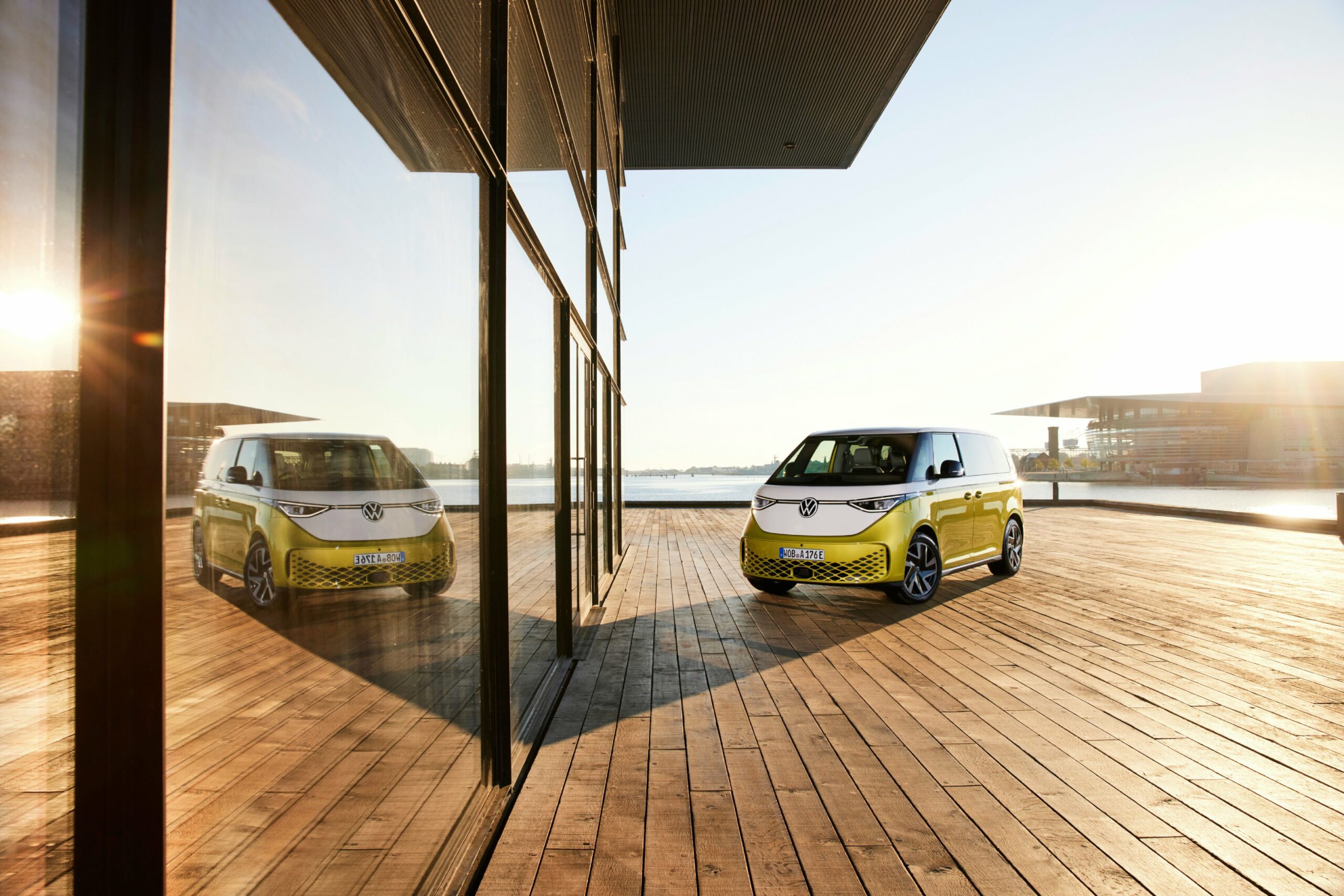
The upcoming 2028 model is thus expected to incorporate changes that have long been requested by users and automotive critics. One of the most notable changes concerns the interior ergonomics: Volkswagen is moving away from capacitive touch sliders—often considered unintuitive—and returning to physical buttons on the steering wheel. In terms of infrastructure, the vehicle will come standard with the NACS (North American Charging Standard) charging port, providing direct access to Tesla’s Supercharger network without an adapter. This software and hardware update will also include the ID.S 6 infotainment system, Vehicle-to-Load (V2L) bidirectional charging, and Digital Key integration. For fans of glamping, a “Tourer” trim level will be available, featuring a camping-specific layout with an optimized sleeping arrangement.
The Hurdle of Economic Realities
Beyond the technical adjustments, this delay comes amid a complex economic landscape for the Wolfsburg-based automaker. The ID. Buzz faces a structural disadvantage in the United States—its country of origin. Assembled exclusively at the Hanover plant in Germany, the vehicle will no longer be eligible, as of spring 2025, for the $7,500 federal tax credit granted to locally produced electric vehicles. Added to this are U.S. customs duties on European imports, a tax burden that weighs on the van’s profitability and pricing strategy. As a rough guide, prices for the 2025 model ranged from $59,995 for the entry-level Pro S (approximately 53,400 euros based on September 2026 exchange rates) and $69,995 for the 1st Edition 4Motion trim (approximately 62,300 euros). Volkswagen has not yet announced the final price for the 2028 model.

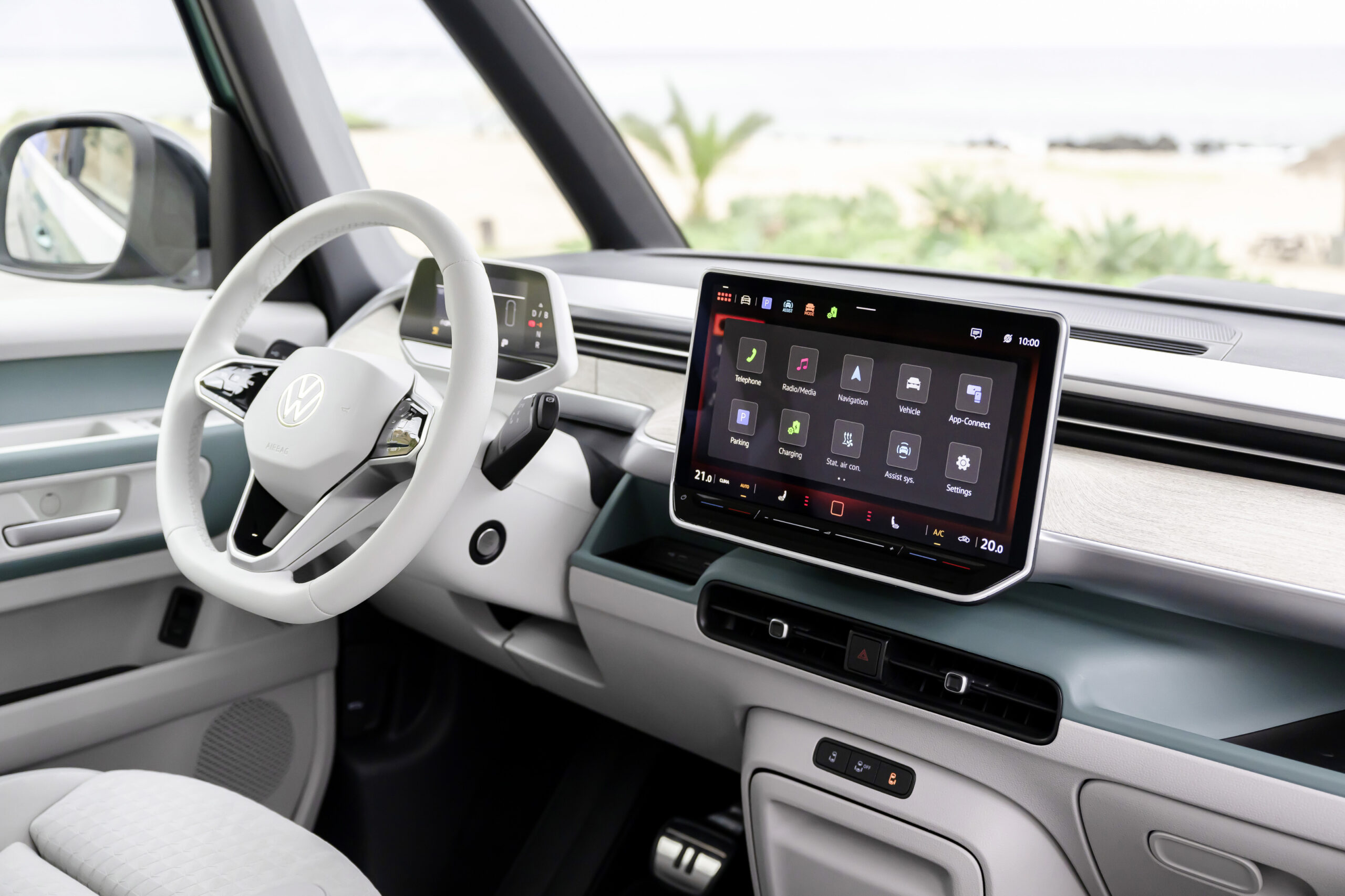
Sales figures reflect this lackluster start. In 2025, the first full year of sales, only 6,140 units were sold in the U.S. The first half of 2026 saw 2,481 units sold, primarily as a result of clearing out remaining inventory of the 2025 model. These results were hampered by a difficult start, marked by two “stop-sale” orders and technical recalls. This new two-year delay could allow the manufacturer to stabilize its production line and improve the reliability of the software features that were sometimes lacking in the first units.
Outlook to be confirmed
While Volkswagen is banking on the two-tone paint scheme—now offered as standard—to appeal to those nostalgic for the Woodstock era, range remains a central topic of discussion. The 2025 model had an EPA-certified range of 234 miles (approximately 376 kilometers) with its 91-kWh battery. Among analysts, speculation suggests that this delay could be an opportunity for the brand to implement new battery technology or increase the vehicle’s range. However, these assumptions have not been officially confirmed and should be taken with a grain of salt.
Volkswagen’s goal is clear: to transform the ID. Buzz from a novelty into a benchmark vehicle for modern families and tech-savvy travelers. By skipping two model years, the automaker is giving itself time to fine-tune the vehicle and deliver, in 2027, a version that isn’t just aesthetically pleasing but also meets the specific needs of the North American market in every respect. The launch is set for spring 2027—a deadline that will determine whether the electric van’s appeal can finally take hold over the long term on the other side of the Atlantic.