
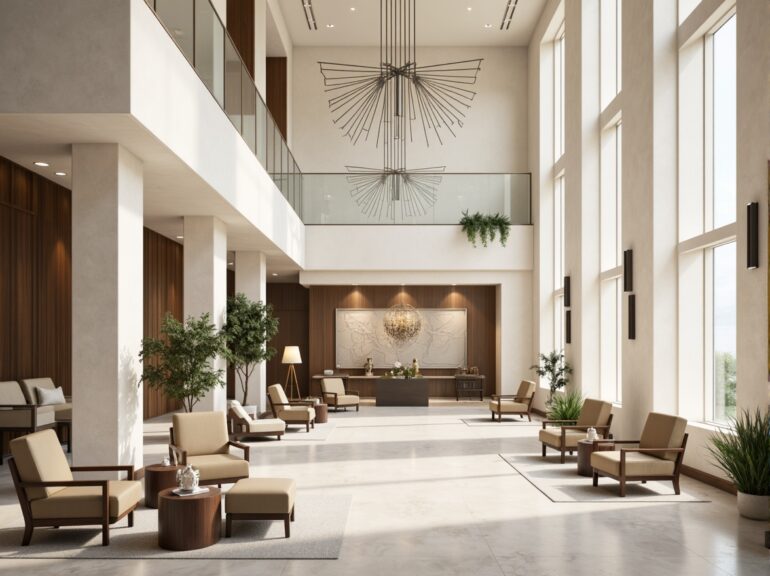
Stepping through a hotel’s doors means subjecting yourself to an immediate, almost instinctive judgment. Design psychologists agree on a specific figure: seven seconds. That’s the infinitesimal amount of time a space has to whisper in the traveler’s ear that they’ve finally arrived at the right place. Yet, in the frantic pursuit of a misunderstood versatility, this pivotal moment has become the scene of widespread confusion. The lobby, once a sanctuary for arrivals, is now buckling under the weight of conflicting demands. It is expected to be, all at once, a reception desk, an improvised coworking space, a cocktail bar, a pop-up shop, and, increasingly often, a cushioned waiting room for back-to-back Zoom calls.
This ambition to please everyone, regardless of their needs, ultimately wears everyone down. The fundamental mistake lies in the idea that a lobby must be a destination in and of itself—a place of entertainment or constant consumption. By saturating the space with utilitarian functions, the modern hotel industry has created a new travel ailment: low-level acoustic fatigue. Nothing is more exhausting for the mind than this ambient hubbub, the perpetual hissing of milk frothers, and the frantic dance of guests searching for a power outlet for their laptops. A well-designed lobby should never seek to replicate the hustle and bustle of the city, but rather set itself apart from it with quiet authority.
The Tyranny of the Social Hub
The recent obsession with the concept of the “social hub” has transformed prestigious venues into sophisticated train station lobbies. There, liveliness is often confused with atmosphere. The irony is that the requirements for a memorable lobby are not overwhelmingly complex. They rest on one ironclad rule: make a good first impression without making a fuss. When a space claims to be a lounge without possessing the right choreography or the right audience, it falls into the trap of artificial staging. True luxury does not lie in the accumulation of services, but in a place’s ability to offer a refuge—a respite where the eye can rest without being drawn to a commercial offer or digital distraction.
In this setting, laptops become intruders that take over the tables, disrupting the visual and auditory balance. A lobby should not make it its mission to sell scented candles or memberships to trendy coffee shops. Its function is nobler, more abstract: it is a threshold, a breath of fresh air, a necessary moment of pause before delving deeper into the experience of the stay. It is this restraint, this form of architectural modesty, that allows the traveler to regain their composure.
The Architecture of Silence in Tokyo
To understand the power of a lobby that embraces its role as a sanctuary, one must look to Japan. At Aman Tokyo, suspended high above the urban hustle and bustle, the space expresses itself through a monumental scale that, paradoxically, never overwhelms the individual. Everything here is a matter of balance. The color palette remains deliberately muted, highlighting the nobility of stone and wood under the soft light filtered through washi paper structures. The layout follows an almost ceremonial symmetry: low sofas are arranged with millimeter-precise accuracy, creating a striking contrast with the high ceilings. This emptiness is not an absence, but a presence that commands calm.
Here, the ambient buzz that plagues so many other establishments is banished. There’s no scramble for a spot near an electrical outlet, and the clatter of coffee machines doesn’t shatter the silence. The clarity of the sightlines and the confidence in the proportions are enough to establish a natural authority. It is the perfect illustration of a hospitality that feels no need to overdo it, preferring to reassure the guest with disarming simplicity.
The Resurrection of the Okura
Emotional attachment to a lobby can sometimes reach unexpected heights, as the story of the Okura Tokyo has shown. In 2015, the decision to demolish the original 1962 building—a masterpiece of modernism—and replace it with a more contemporary structure sparked a veritable public outcry. It wasn’t just a hotel that was being destroyed, but a certain idea of Japanese elegance. Faced with this pressure, the designers undertook a reconstruction with forensic precision.

To recreate an exact replica, the proportions of the original lobby were laser-scanned. The acoustic properties, the color temperature of the light, and even the density of the materials were measured with scientific rigor. Today, the space features the same carpet that absorbs the sound of footsteps, the same crystal lanterns floating beneath a wooden ceiling, and the same armchairs arranged in a pattern reminiscent of plum blossoms. Despite the space’s golden hues and the potential crowds, an unshakable serenity emanates from it. This is proof that thoughtful design can tame time and human activity to preserve a soul.
The Choreography of Arrival
In New York, other establishments are exploring a different but equally effective approach to preserving the integrity of their reception areas. The Manner Hotel serves as an instructive example in this regard. It exudes an atmosphere of Italian grandeur—generous without being cluttered. The secret to this fluidity lies in a simple yet radical design decision: the check-in process, often a source of friction and long lines, has been discreetly relocated one floor down.
By freeing the main lounge from the constant flow of new arrivals and their luggage, the hotel allows the lobby to return to its role as a lounge. The space is no longer an administrative transit area, but an authentic living space where the flow of movement is seamless. It feels breathable. This separation of functions helps maintain the atmosphere of a private residence rather than a commercial lobby. It is in this intelligent management of foot traffic that the future of grand hotels takes shape: less noise, more presence.
Ultimately, the ideal lobby isn’t the one that offers the most services, but the one that provides the smoothest transition. It shouldn’t pressure you to stay, even if the quality of its design might tempt you to do so. Its success lies in its ability to give you enough calm and composure to continue on your way, whether to your room or out into the world. In an age saturated with constant stimulation and visual distractions, this sense of restraint and mastery of space undoubtedly constitutes the most compelling first impression an establishment can offer its guests.